
How to Clean and Care for Flat Lay Styling Surfaces: Hand Painted and Fabric

When I hold a flat lay up to the window before it leaves the studio, the light passes across its surface the way it moves across an old plaster wall or a wind worn cliff, catching every soft ridge and hollow, and I always feel a small tenderness for the life it is about to begin on someone else's table. Each of our hand painted flat lays carries a firsthand experience of a place, near or faraway, translated onto canvas by hand, and each of our fabric flat lays carries a quieter promise of protection woven into its fibers. Neither asks for much, yet both reward a little intention in how they are rolled, stored, carried and used. This guide gathers that care in one place, so that your surfaces can stay ready for every invitation suite, bouquet and heirloom ring you lay upon them.
Quick Answer
To care for a hand painted flat lay, store it rolled and never crease or fold it, ease light dents by ironing the back on low to medium heat, roll it gently in the opposite direction if cold weather stiffens it, spot clean with a damp cloth and lift scuffs with a white art gum eraser. Fabric flat lays are not hand painted; their vegan wool or textured velvet carries patented GREENGUARD Gold Certified stain proofing infused into each fiber, so let spills roll off and blot, use a damp terry rag for stains, and steam or iron on high to remove creases. For both, keep liquids, ink and wax contained on set and avoid household cleaners.
Hand Painted vs Fabric Flat Lays: Two Surfaces, Two Kinds of Care
The first step in caring for a flat lay is knowing which kind you own, because our two lines are made in entirely different ways and ask for different care.
Our hand painted flat lays are painted by me, one at a time, on premium cotton canvas here in Orange County, California, with materials sourced in the USA. They come in two sizes, the Petite at 26 by 20 inches and the Standard at 35 by 28 inches, and they are named for places: Matera, San Miguel, Guilin, Joshua Tree, Provence, Santorini, Monteverde, Haleakala, Havana, Sakura, Vik, Marrakech, Chefchaouen, Chateau and Avalon. Because each is made to order and painted entirely by hand, every one is unique and may vary from the photographs you see, and that individuality is the very thing worth protecting. A painted surface is a layer of paint resting on woven canvas, and its care centers on keeping that layer whole: rolling instead of folding, easing dents from the back and treating the painted face gently.
Our fabric flat lays are a different creation altogether, and they are not hand painted. They are made from vegan wool or textured velvet, measure about 34 by 25.5 inches, and are backed with organic cotton canvas. They are named for plants and trees, such as Buckwheat, Yarrow, Rye and Lotus. What sets them apart is their stain proofing: the only patented GREENGUARD Gold Certified stain proofing, non toxic and free of formaldehyde, PFAS and PFOAs, infused into each fiber rather than coated on the surface. Their care centers on letting that protection do its work and following the guidance written for these fabrics specifically.
If you are ever unsure which kind of surface is on your table, look at the name and the texture. A place name and a painted, mottled finish mean a hand painted flat lay; a plant or tree name and a soft woven or velvety pile mean a fabric flat lay. If you would like a deeper look at how these surfaces compare for wedding detail work, our complete flat lay surface guide for wedding photographers walks through each in context.

How to Store a Hand Painted Flat Lay So It Never Creases
The single most important habit in caring for a hand painted flat lay is simple to state: never crease or fold it. Our hand painted flat lays are rollable by design, so that the traveling creative can carry a complete styling ground to any shoot, and rolling is how they should live between sessions.
It helps to understand why. When a surface is rolled, the bend is spread gently across its whole length in a wide, even curve. When it is folded, all of that bending is concentrated into a single sharp line, and a layer of dried paint resting on canvas does not welcome being forced into so tight a turn. A fold that seems harmless for an afternoon can leave a lasting line across the painted face, and that line will appear in every photograph taken on that part of the surface.
Your flat lay arrives rolled on a core, secured with a band and ribbon, inside a branded tube, and that packaging is the best home for it between shoots. After a session, lay the flat lay out on a clean, flat table, check that nothing is left on its face, and roll it back onto its core with an even, unhurried motion, keeping the edges aligned so the roll does not telescope into a cone. Secure it with the band, slip it back into its tube and store the tube somewhere it will not be crushed beneath heavier gear. Standing the tube upright in a corner or laying it on a shelf where nothing rests on top are both kind choices.
In the studio, I always roll my hand painted flat lays paint side in, with the painted face turned toward the core, so that when you unroll one on your table it rests on its durable, wipeable canvas back rather than on the painted surface itself.
Avoid storing a flat lay flat beneath other objects, slid behind furniture where it can bend, or tucked into a bag where it might fold at the bottom. If you own several, give each its own core and tube rather than rolling two together, since a second surface rolled against the painted face can press texture into it or trap grit between the layers.
How to Remove Dents and Relax a Stiff Hand Painted Flat Lay
Even with the gentlest care, a hand painted flat lay may pick up a light dent from a dropped prop, a heavy box set down on it, or a moment of being pressed in a crowded car. Our guidance for these is to iron the back of the flat lay on low to medium heat, which can minimize light dents and creases.
The approach is straightforward. Turn the flat lay face down on a clean, smooth ironing surface so that the painted side is protected and nothing on the surface beneath can mark it. Set your iron to low or medium, never higher, and work across the back of the flat lay where the dent appears with slow, steady passes. Let the surface cool and rest before you turn it over to look, since the canvas settles as it cools. If the dent has softened but not yet disappeared, a little more patience at the same gentle setting is wiser than turning up the heat. Ironing the back, never the painted face, is the heart of this step.
Cold weather brings a different change. A hand painted flat lay may stiffen when it is exposed to cold or freezing temperatures, which you might notice after a winter session outdoors, a night in an unheated car or a shoot in a chilly venue. The surface may resist lying flat or may want to curl. Our guidance here is simply to roll the flat lay in the opposite direction, which helps minimize the stiffness and curling. Roll it gently against its usual curve, hold it for a short while, then unroll it on a flat surface and allow it to come back to room temperature before you style on it. Never force a cold, stiff surface flat by pressing on it, and never fold it to make it lie down.
These two small rituals, ironing the back on low to medium heat for dents and rolling the opposite way for cold, cover most of the changes a painted surface will meet in its working life. When you plan winter sessions or travel through cold places, build in a few extra minutes at the start of the shoot for your flat lay to relax.

Spot Cleaning a Hand Painted Flat Lay
A hand painted surface is a piece of artwork as well as a working tool, and I would ask you to clean it with the same restraint you would bring to a painting on your wall. Our care guidance for everyday marks on a hand painted flat lay is simple and gentle. Spot clean a hand painted flat lay with a damp cloth, working lightly and only where the mark sits, and lift scuffs with a white art gum eraser, the same soft, crumbly kind artists have long used on paper. Keep cleaning chemicals, scrubbing and soaking away from the paint, and let the surface dry fully before you roll it again.
Beyond those steps, a few principles protect a painted surface. Act gently and promptly, since a mark that is addressed calmly is far easier to manage than one that has been scrubbed in frustration. Use as little pressure and as little moisture as the care steps call for, and never saturate the surface. Please do not reach for household cleaners, solvents, stain removers or any cleaning product we have not recommended, because these can alter or lift paint and can leave a mark far more visible than the one you began with. If you are ever uncertain, set the flat lay aside and write to us at info@chasingstone.com before you try anything, since a surface left untouched for a day is always safer than one treated with the wrong remedy.
When a hand painted flat lay carries a small mark that will not lift, remember that its texture is mottled and varied by nature, and that a gentle shift in styling or framing can often place a prop, a ribbon or a few stems over that area.
Caring for Fabric Flat Lays: How the Stain Proofing Works
Our fabric flat lays were dreamt up for the moments that worry every stylist: the vase that tips, the glass that sweats, the coffee that splashes during a breakfast styling. Their protection lives within the fabric itself. The stain proofing is infused into each fiber rather than sitting on top as a coating, so that the vegan wool or textured velvet can resist spills from within while keeping the soft hand and depth that make fabric so lovely on camera.
The stain proofing on our fabric flat lays is the only patented GREENGUARD Gold Certified stain proofing, and it is non toxic and free of formaldehyde, PFAS and PFOAs. It is worth knowing what those words mean, because they reflect a choice about stewardship as much as performance. UL, the organization behind the certification, describes UL GREENGUARD Gold as setting even lower limits on chemical emissions than its standard GREENGUARD certification, and as the certification suited to products used in nurseries, schools and healthcare facilities. PFAS, which the United States Environmental Protection Agency describes in its guide PFAS Explained as per and polyfluoroalkyl substances whose components break down very slowly over time, include PFOA. Keeping these out of our fabric surfaces is one small way we try to protect our waterways and the spaces where you create.
Caring for a fabric flat lay is about letting that protection do its work and following the guidance written for these fabrics specifically. When something spills, let it roll off the surface and then blot rather than rub. For a stain that lingers, use a damp terry rag and work gently. If the fabric has picked up a crease from travel or storage, it can be steamed or ironed on high, so that it lies flat again before your next session.
As with our painted surfaces, please do not use household cleaners, bleach, solvents or stain removers on a fabric flat lay, since none of them are part of our care steps. A product meant for upholstery or laundry is formulated for a different purpose and could interfere with the stain proofing or change the color and pile of the fabric. And because fabric flat lays are not hand painted, never apply the care for our painted surfaces to them, or the reverse; each line has its own guidance for a reason. If you would like to understand how stain resistant surfaces compare with other options on set, our article asking whether spill proof photography mats are worth it explores the question in depth.

Preventing Stains and Marks on Set
The kindest care of all happens before anything needs to be cleaned. A few habits on set keep both kinds of flat lay looking as they did the day they arrived.
Flowers bring life to a flat lay and also bring water. Before laying stems on any surface, shake them gently over a sink or bucket and pat the cut ends dry with a paper towel, and keep bud vases and bowls of water on a small tray or dish rather than directly on the surface. Clipped leaves and petals can carry sap and pollen, so trim stems away from your set.
Drinks and food are a second source of marks. Glasses of cold water, champagne or iced coffee gather condensation on their outer walls, which can leave a ring where they rest, so dry the glass before placing it and set it on a coaster, a small plate or a saucer that can become part of the composition. When styling food, remember that what appears on a flat lay is for the camera; keep a separate plate for anything you intend to eat, and use small dishes, boards and linens to hold sauces, crumbs and juices away from the surface.

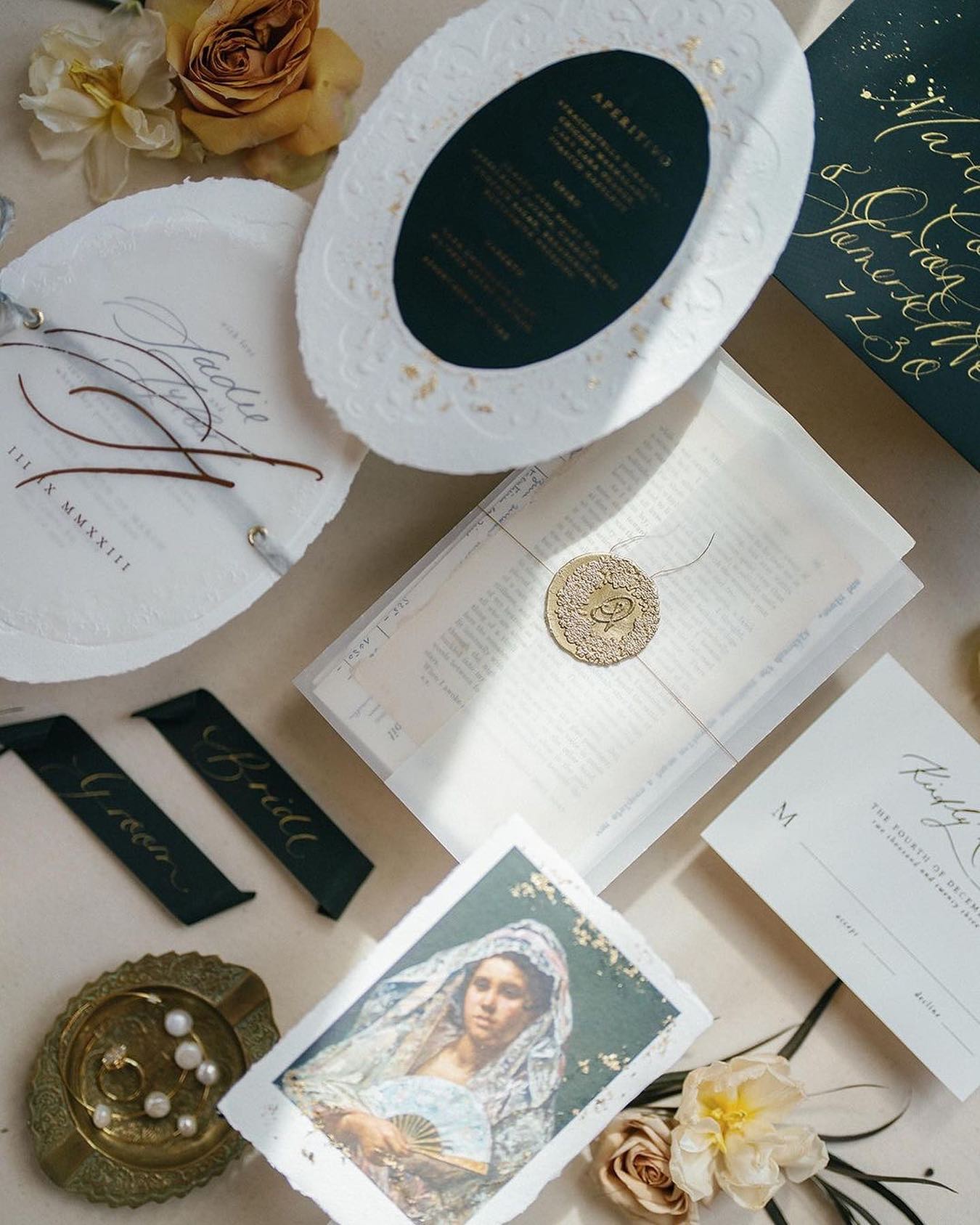
Stationery invites its own care. Freshly addressed envelopes, calligraphy and rubber stamped details may still be damp with ink, so give them time to dry fully before they touch a surface, and set inked pieces on a sheet of paper while you plan the arrangement. Wax seals should be completely cool and set before you place them, and loose sealing wax, wax beads and candles are best kept off the surface entirely. Glitter, confetti and loose dried petals scatter easily into textured surfaces, so use them only where you can lift them away by hand or with tweezers once you have the shot.
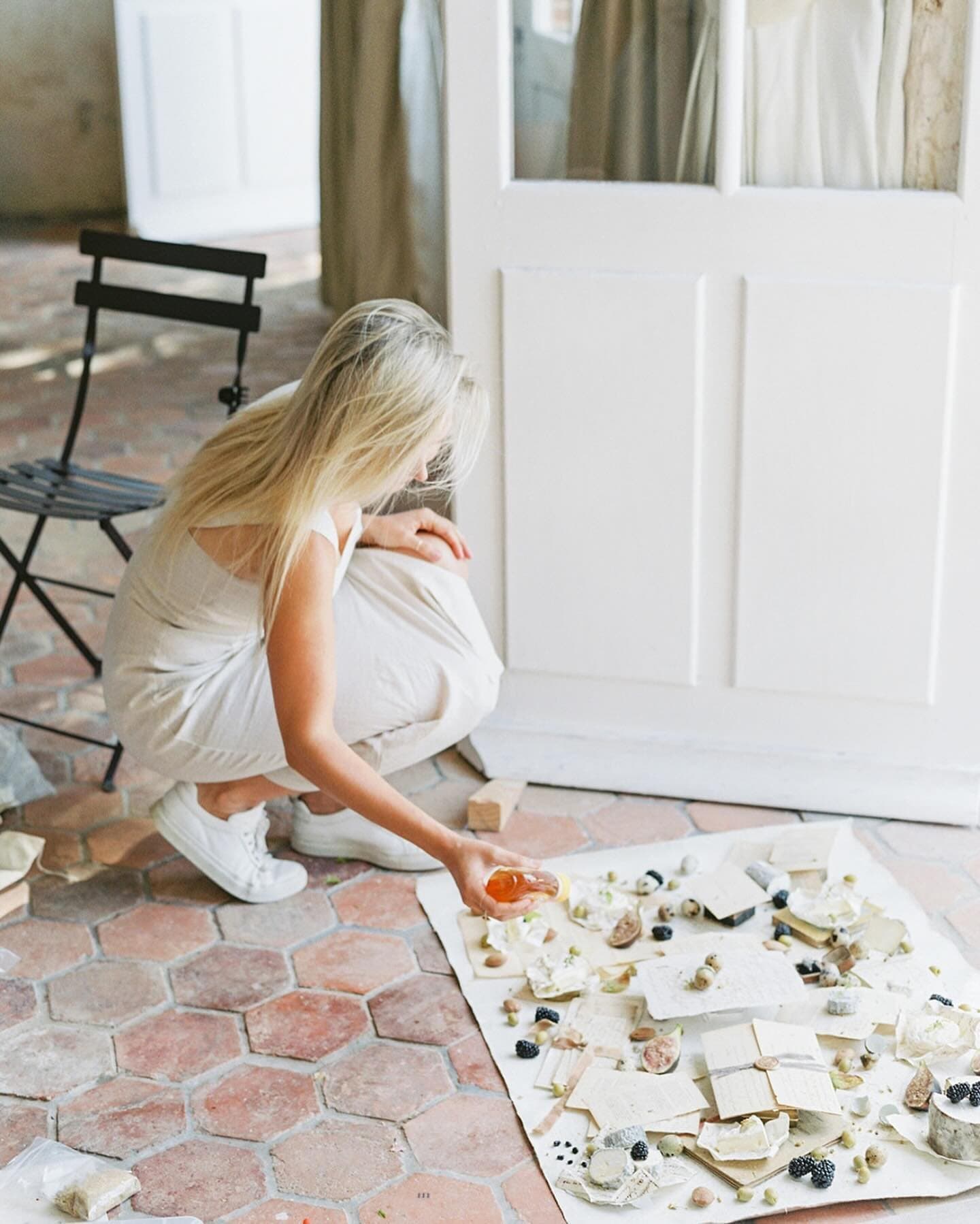
Beauty and fashion details deserve attention too. Lipstick, foundation, perfume and nail polish are all made to cling, so keep caps on, set bottles down only when they are dry on the outside, and avoid laying makeup that is open or freshly applied directly on the surface. Shoes can carry dust, grit and scuffs from the venue floor, so wipe the soles before styling and lift them into place rather than sliding them. Heavy or sharp props, such as scissors, metal trays with rough feet, pins and stands, should be set down gently and never dragged across the face of a flat lay. When a ring, a bottle or a small card needs a little help to stand upright, removable adhesive such as museum putty is safe to use on a hand painted flat lay.
Finally, consider your hands. Clean, dry hands leave far less behind, and a small towel kept at the edge of the set makes it easy to wipe them between placements. Lotion and hand cream, however lovely, are best saved for after the session.
If you share a set with others, such as a second shooter, a planner or a florist delivering details to the bridal suite, take a moment to tell them which surface is on the table and how you would like it treated. A gentle word before the details arrive, asking that vases stay on their tray, that freshly inked envelopes wait on a sheet of paper and that nothing be folded or stacked on the surface, protects your flat lay far better than any remedy afterward. On a busy wedding morning, it can also help to set your flat lay up a little apart from the main gathering of bags, bouquets and coffee cups, so that it remains a calm and protected corner of the room where each detail is placed with intention.
For more ways to keep your detail images clean and considered, our guide to 10 flat lay mistakes that make your work look amateurish gathers many of the small habits that separate a careful set from a hurried one.
Traveling With Flat Lays and Protecting Them Between Shoots
Our hand painted flat lays were made with travel in mind, rollable so that a whole styling ground can come with you to a bridal suite, a venue or a faraway destination. The way you carry them makes all the difference to how they arrive.

For a hand painted flat lay, travel rolled on its core and inside its tube, never folded into a suitcase or pressed flat beneath other luggage. Carry the tube where it will not be crushed, such as upright in a car or on top of other bags, and if you are flying, consider bringing it with you rather than checking it. When you arrive somewhere cold, give the surface time to warm and relax, and roll it the opposite way if it has stiffened. If you have traveled through a long day and see a light dent on arrival, iron the back on low to medium heat if an iron is available, and if not, simply style that area with a prop until you can attend to it properly at home. Our accessories include linen bags for painted surfaces and for fabric flat lays, which you can find among our accessories.
If you travel with several surfaces at once, a mix of hand painted and fabric flat lays alongside your backdrops, keep each in its own protection and label your tubes so that you can find the right surface without unrolling every one. Backdrops have their own care, which we cover in our guide to cleaning and storing hand painted canvas backdrops.
A short ritual before and after every session ties all of this together. Before a shoot, unroll each surface on a clean table, look across it in raking light from a window for any dents or marks, and give a cold surface time to relax. During the shoot, keep liquids, ink and wax contained and props set down gently. After the shoot, check the face of each surface, address anything according to its own care steps, roll it back onto its core and return it to its tube. Those few minutes are an act of stewardship that keeps every surface ready for the next story you tell.

Frequently Asked Questions
Can I fold a hand painted flat lay to save space?
Please never crease or fold a hand painted flat lay. Folding concentrates all of the bending into one sharp line, which can leave a lasting mark across the painted face. Our hand painted flat lays are designed to be rolled, so store and travel with yours rolled on its core, secured with its band and placed back inside its tube, where nothing heavy can press on it.
How do I get a dent out of a hand painted flat lay?
Light dents and creases can be minimized by ironing the back of the flat lay on low to medium heat. Turn it face down on a clean, smooth surface so the painted side is protected, iron only the back with slow, steady passes and let it cool before checking. If the dent softens but remains, repeat gently at the same setting rather than raising the heat.
Why is my flat lay stiff or curling in cold weather?
A hand painted flat lay may stiffen when it is exposed to cold or freezing temperatures, such as a night in an unheated car or a winter session outdoors. To minimize the stiffness and curling, roll it gently in the opposite direction from its usual curve, then unroll it flat and let it return to room temperature before styling. Never press or fold it flat.
Are fabric flat lays hand painted?
No. Our fabric flat lays are made from vegan wool or textured velvet with an organic cotton canvas backing, and they are named for plants and trees. They carry the only patented GREENGUARD Gold Certified stain proofing, non toxic and free of formaldehyde, PFAS and PFOAs, infused into each fiber. Our hand painted flat lays are a separate line, painted on premium cotton canvas and named for places.
Can I use household cleaners or stain removers on my flat lay?
Please do not. Household cleaners, solvents, bleach and stain removers can lift or alter paint on a hand painted flat lay and can interfere with the stain proofing or change the color and pile of a fabric flat lay. Follow only the care steps for your specific line, and if you are unsure, write to us at info@chasingstone.com before trying anything on the surface.
How do I clean a spill on a fabric flat lay?
Let the spill roll off the surface first, then blot gently rather than rubbing, since the stain proofing infused into each fiber is designed to resist liquids from within. If a stain lingers, work it gently with a damp terry rag. Creases from travel or storage can be steamed or ironed on high. Please keep household cleaners, bleach and stain removers away from the fabric.
What does GREENGUARD Gold mean for a fabric flat lay?
UL describes its GREENGUARD Gold certification as setting even lower limits on chemical emissions than its standard GREENGUARD certification, suited to products used in nurseries, schools and healthcare facilities. On our fabric flat lays, the certified stain proofing is non toxic, free of formaldehyde, PFAS and PFOAs, and infused into each fiber, so the protection lives within the fabric itself.
A Little Tenderness for Every Surface
Caring for a flat lay asks for very little: roll it rather than fold it, ease a dent from the back, relax it gently after the cold, keep liquids and ink contained on set, and follow the care written for its own line. In return, a hand painted surface keeps carrying its faraway place onto every table you set, and a fabric surface keeps its quiet protection ready for the spill you never saw coming. If you are dreaming up a new collection of grounds for your detail work, I would love for you to wander through our hand painted flat lays and our fabric flat lays. What story will you lay down on yours?
Shop the look