
How to Light Hand Painted Backdrops: Natural Light Techniques That Actually Work

Every backdrop I paint is built slowly, layer over layer, until the surface holds the quiet ridges and hollows of crumbling stone and weathered plaster. Those layers are only half the story, though, because texture is something light reveals. When light meets a hand painted canvas straight on, the surface can look as flat as a painted wall, and when it travels across the canvas at a gentle, glancing angle, every brushstroke catches a highlight on one side and settles into a soft shadow on the other. Learning how to light hand painted backdrops with natural light is mostly a matter of learning where to place the canvas in relation to your window, and that is what this guide is about.
This is why light is so often the answer when a new backdrop does not look quite the way a photographer hoped. For a complete overview of photography backdrops, you may enjoy our ultimate backdrop guide.
BENTONITE in natural window light that skims across the canvas, so the texture holds dimension and the bride separates gently from the background. Shop: chasingstone.com/shop-all/p/bentonite
Why Hand Painted Canvas Responds Differently to Light
Most of us learn lighting on flat, uniform surfaces such as white walls, paper rolls and vinyl backdrops, which reflect light predictably because they have very little texture for the light to interact with.
Hand painted canvas has real dimension, with brushstrokes that form tiny ridges, layers of paint that vary in thickness, and places where the weave of the canvas shows through.
When light strikes this surface straight on, it flattens all of that, bouncing back evenly so that your camera sees a fairly uniform plane of color and much of the texture recedes from view.
When light travels across the surface at a low, glancing angle, the texture reveals itself: raised areas catch highlights, recessed areas fall into tiny shadows, and the color shifts subtly across the surface as the varying thickness of paint absorbs and reflects the light.
This is the principle at the heart of everything that follows, that angle creates dimension. The more your light skims across the face of the backdrop, rather than striking it head on, the more texture and depth you will see.
Window Light: Your Best Friend (When Positioned Right)
Natural window light is gorgeous for portraits, soft, directional and flattering, and where you place your backdrop in relation to that window shapes how much of the painted texture your images will hold.
The most common setup: Placing the backdrop facing the window, with the subject between the window and the backdrop.
This feels intuitive, because the light reaches your subject, continues past them and illuminates the backdrop, so everything is lit.
The trouble is that light arriving straight on at the backdrop flattens its texture, and the hand painted canvas begins to read as a flat field of color.
The fix: Position your backdrop so its surface is perpendicular to the window wall.
If your window is on the left wall of the room as you look toward your backdrop, place the backdrop against the far wall in front of you, or on a stand, so that its face runs at a right angle to the window wall. The light then rakes across the backdrop surface at a glancing angle instead of meeting it head on.
Now the brushstrokes catch light on one edge and fall into shadow on the other, and the backdrop gains a visible, dimensional texture.
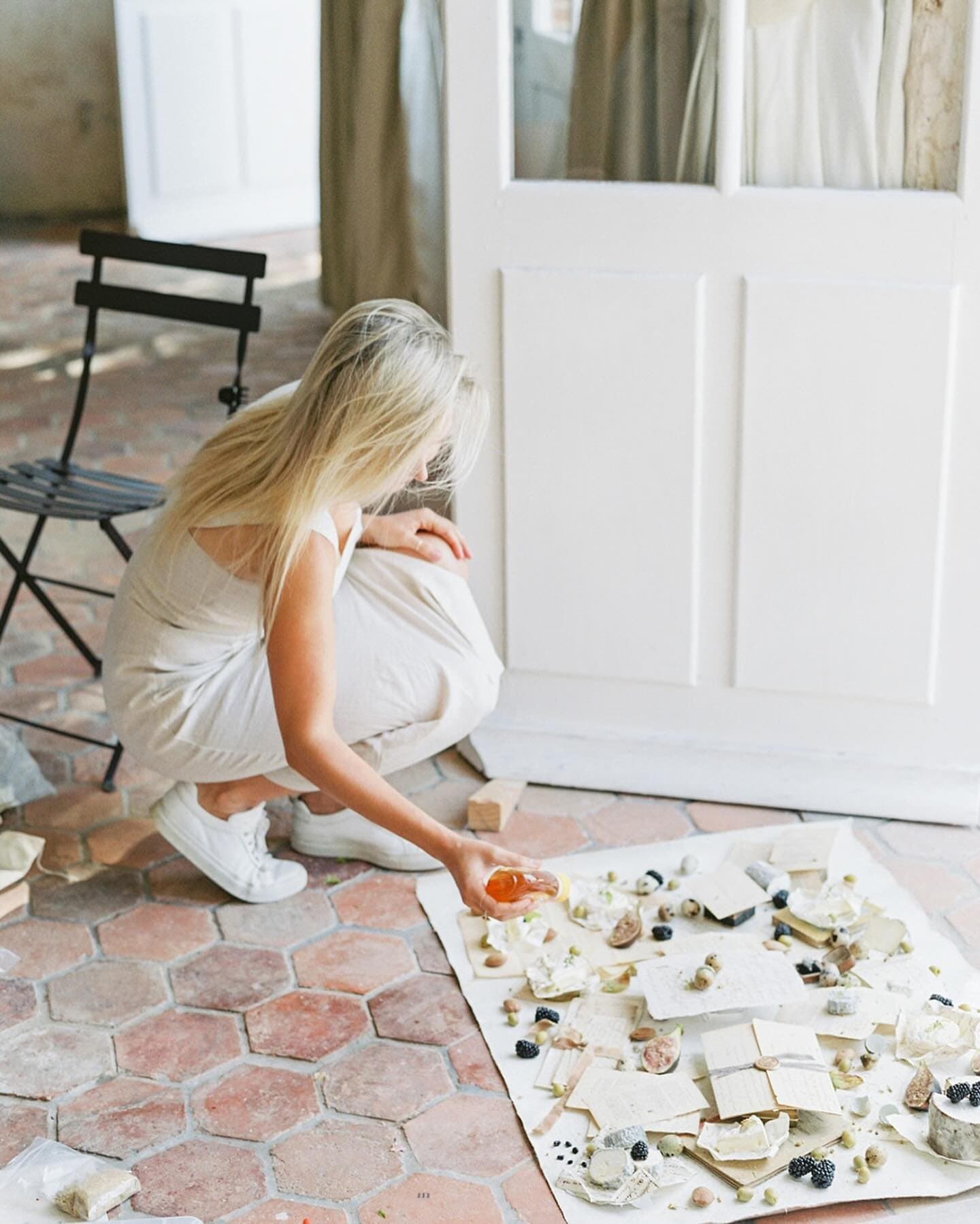
A styled tablescape lit by a window that provides soft directional light, with enough distance between subject and backdrop and an angle that reveals the texture rather than flattening it.
Subject Placement: The Distance That Changes Everything
Where you place your subject in relation to the backdrop matters as much as where you place the backdrop in relation to the light.
Too close (less than 3 feet): Your subject casts shadows onto the backdrop, the two blend together visually, and you lose separation.
The sweet spot (4-6 feet): This distance gives clean separation between subject and backdrop with no shadow interference, and the texture reads clearly without competing with your subject.
Maximum blur zone (6-8+ feet): At this distance, combined with a wide aperture and a longer focal length, your backdrop becomes a soft wash of color and texture. The individual brushstrokes dissolve into a gentle blur, while the hand painted quality still comes through as organic variation rather than flat uniformity.
When your light falls primarily on your subject, moving them further from the backdrop lets the backdrop settle a little darker, which creates natural separation without any additional work.
SILT, our dark taupe, is a lovely choice when you want moody, dramatic separation, because its depth recedes naturally when your subject is well distanced and lit.
Time of Day: The Color Shift Nobody Talks About
One of the most beautiful things about photographing a backdrop in natural light is that the same canvas can read as slightly different colors depending on when you shoot.
Early morning light, and light from open sky or shade, often reads cooler, so even a warm colorway like SANDSTONE, our light peach brown, may look a little less warm in early window light.
Late afternoon light is warmer, and golden hour pouring through a window adds warmth to everything in the room, including your backdrop, so a neutral taupe can begin to read almost peachy.
Midday indirect light tends to be the most neutral, which makes it the best time to see the truest color of your backdrop.
None of these is wrong, only different, and there is something lovely in the way a hand painted canvas shifts through the day, because one backdrop can offer several moods depending on when you schedule your sessions.
If color accuracy matters for a particular shoot, pay attention to the color temperature of your light, since a grey backdrop that looked perfect during an afternoon test might surprise you at a 9am session.
SANDSTONE with its surface turned perpendicular to a simple window, so the light skims across the canvas. Shop: chasingstone.com/shop-all/p/sandstone
The Perpendicular Principle in Practice
Here is how the setup comes together in a real room.
When I photograph our own pieces, I work in soft, diffused but bright white light of around 5300K, which I chose because it is natural for skin tones and accurate for color, and because it falls off across the canvas in a way that feels dynamic and interesting. The same qualities are what you are looking for at your own window.
Set your backdrop stand a comfortable distance from the window, with the face of the backdrop turned at a right angle to the window wall, so that the window light travels across the canvas rather than straight into it. Soft, indirect light from a window that is not receiving direct sun is the gentlest place to begin, and north-facing windows in the Northern Hemisphere are prized for exactly that consistency.
Your subject, product or flat lay setup sits about 4 to 5 feet in front of the backdrop, lit from the side by the same window, while the light continues to skim across the backdrop surface behind them.
From your camera position, facing the backdrop with the window off to one side, you will see the subject fully lit and the backdrop holding visible texture with a gentle falloff toward the side furthest from the window. The backdrop reads as dimensional and intentional, a designed element of the image rather than something that simply happens to be behind your subject.
This same setup works in any room with good window light. North-facing windows are ideal for their consistency, though any window works when you are mindful of harsh patches of direct sun.
When Direct Sunlight Actually Works
Most of this guide favors soft, indirect window light, and yet there are moments when the opposite is exactly right.
Hard, direct sunlight is challenging, with harsh shadows, bright highlights and strong contrast, and most portrait sessions call for softer light.
Sometimes, though, hard light is exactly what you want, for editorial work, fashion and dramatic portraiture, where intensity serves the image better than softness.
In these situations, hand painted backdrops can respond beautifully to direct light, because the texture breaks the light into hot spots and deep shadows that create drama rather than simply difficulty.
Deeper colorways such as BRONZITE, our dark chocolate brown, or UMBER, our dark chestnut brown, can take on a wonderful richness when hard directional light slices across them, with the texture standing forward and the color deepening into something moody and warm.
Hard light rewards experience, so if you are comfortable with dramatic lighting, I hope you will feel free to try it with your hand painted backdrop, and if you are newer to it, a short test session before a client shoot is time well spent.
Cloudy Days: The Giant Softbox
Overcast skies turn the whole sky into an enormous softbox, and the light becomes even, diffused and wrapping.
This is the most forgiving condition for backdrop work. Position your backdrop perpendicular to your largest window, place your subject 4 to 6 feet in front, and begin to shoot, and you will find the light soft enough that the texture stays visible without harsh shadows and even enough that hot spots are rarely a concern.
If your images look flat on a cloudy day, subject to backdrop distance is often the first thing worth adjusting, so try moving your subject a little further from the backdrop to create more natural separation.
The One-Window Setup Everyone Can Use
You do not need a studio or a room full of windows, only one good window and enough floor space to position a backdrop.
Here is the minimal setup:
Window: Any window that is not receiving direct sun during your shoot time, with sheer curtains to diffuse harsher light if needed.
Backdrop position: Stand or hang your backdrop so its surface is perpendicular to the window wall. If your window is on the north wall, your backdrop faces across the room from the east or west side.
Subject position: 4 to 6 feet in front of the backdrop, placed so the window light reaches them from the side rather than from behind.
Camera position: Facing the backdrop with the window off to one side of you, so the backdrop sits directly behind your subject from your point of view. The window light illuminates the side of your subject's face while raking across the backdrop behind them.
This creates the classic side-lit portrait with one thoughtful change, in that the backdrop is placed to show its texture rather than flatten it.
The setup works just as well in a spare bedroom, a living room or a garage studio, because what matters most is intention rather than equipment.
One window providing directional light, a bride turned to receive it from the side, and a backdrop far enough behind her for natural separation, which together create dimensional, refined images in almost any space with good window light.
What Changes with Darker Backdrops
Light-colored backdrops are forgiving, reflecting enough light that their texture shows in almost any setup.
Dark backdrops absorb light, so they ask for more intentional positioning if you want to keep them from falling into a black void.
If you are working with deeper colors like SILT, SERPENTINE, our dark moss green, or BRONZITE, you have two lovely options:
Option 1: Let it go dark. Position your subject further from the backdrop and let the deep color fall into shadow, which creates dramatic separation and a moody atmosphere. The texture will be less visible, but the color still comes through as a deep richness.
Option 2: Add fill light to the backdrop. Place a reflector, white foam core works well, on the shadow side of your backdrop to bounce some window light back onto the surface, which keeps the texture visible while preserving the dark, moody feel.
Neither approach is wrong, and the choice depends on the look you want for each project.
Testing Your Setup Before Client Sessions
Every new backdrop deserves a test shoot before you use it with clients, since the point is to learn how it behaves in your specific space with your specific light.
Here is a simple testing process:
Morning test: Set up the backdrop and shoot a few frames at the time you would normally schedule morning sessions, noting how the color reads, how much texture is visible and how the shadows fall.
Afternoon test: Repeat in afternoon light and compare the two, noticing the differences.
Distance test: Photograph the same setup with a test subject, a mannequin head or a vase of flowers works well, at 3 feet, 5 feet and 7 feet from the backdrop, and see how the backdrop changes at each distance.
Angle test: Without moving your subject, shoot from directly in front, then 45 degrees to the left, then 45 degrees to the right, and watch how the texture reveals itself differently at each angle.
Twenty minutes of testing spares you a great deal of uncertainty during actual sessions, so you will know exactly how your backdrop behaves before a bride is standing in front of it.
Natural light at work: one large window providing soft directional light, with the photographer positioned to use it on the tablescape, and no additional lighting equipment.
The Light You Have Is Enough
The natural light of a single good window is enough to make your hand painted backdrop look beautiful, and what it asks of you is not more equipment but a thoughtful arrangement of what you already have.
Turn your backdrop perpendicular to the light source, place your subject 4 to 6 feet in front, and position your camera so the light rakes across the backdrop surface rather than meeting it straight on, and everything else becomes gentle refinement. When you are ready to care for the canvas between sessions, our guide to cleaning and caring for hand painted canvas backdrops will help it stay beautiful for years.
Our full collection of hand painted canvas backdrops is waiting in our hand painted backdrop collection, and when you bring one into your own window light, I hope you will light it the way you would light a painting. What will the light reveal in yours?
Frequently Asked Questions
Where should I place a hand painted backdrop in relation to a window?
Turn the face of the backdrop so it sits perpendicular to the window wall, rather than facing the window. Light then travels across the surface at a glancing angle, so the raised brushstrokes catch highlights and the recesses fall into soft shadow, which is what reveals the texture. When the backdrop faces the window directly, light strikes it straight on and the canvas tends to look flat.
How far should my subject stand from the backdrop?
About 4 to 6 feet is a good starting point. Closer than about 3 feet, your subject may cast shadows onto the backdrop and the two can blend together. At 4 to 6 feet you get clean separation while the texture still reads clearly, and at 6 to 8 feet or more, with a wide aperture and longer lens, the backdrop softens into a gentle wash of color.
Does the time of day change how my backdrop color looks?
Yes. Early morning light and light from open sky often read cooler, late afternoon and golden hour light read warmer, and midday indirect light tends to be the most neutral. The same backdrop can therefore look slightly different from session to session. If color accuracy matters, check your white balance and run a short test at the time of day you plan to shoot.
How do I keep a dark backdrop from looking like a black void?
You can let it go dark on purpose by moving your subject further away so the color falls into a rich shadow, or you can bounce some window light back onto the backdrop with a reflector or white foam core on its shadow side. The reflector keeps the texture visible while preserving the deep, moody feel of colorways like Silt or Bronzite.
Can I use direct sunlight with a hand painted backdrop?
You can, especially for editorial, fashion and dramatic portraits where you want intensity. Hard light breaks across the painted texture into hot spots and deep shadows, which can look wonderful on deeper colorways. It is harder to control than soft window light, so a short test session before a client shoot is a good idea.
Related Reading
- The Ultimate Photography Backdrop Guide for 2026
- Photography Backdrop Buying Guide: What Size Do You Need?
- How Lighting Changes Your Backdrop's Entire Personality
- Best Camera Settings for Photography Backdrops: Aperture, ISO, and Distance Guide
- The Art of Imperfection: Why Hand Painted Texture Beats Machine Made Uniformity
Shop the look