Are Premium Photography Backdrops Worth It? ROI Calculator for Photographers (2026)
Posted on May 14, 2026
A premium hand-painted canvas photography backdrop is worth the investment for any working photographer because the cost per session drops below five dollars within the first year of use, the surface remains vibrant for a decade or longer, and the visual quality differential commands the kind of client pricing that recovers the full purchase price in fewer than twenty bookings.
Chasing Stone's hand-painted canvas backdrops begin at $497 for a 5x8 foot surface, an entry point that generates measurable return for photographers operating at professional rates of $200 to $500 per portrait session. The arithmetic is direct: a photographer who books fifty sessions per year against that same canvas pays $9.94 per session in year one. At one hundred sessions, $4.97. By year three, the cost per sessionhas fallen below two dollars. For comparison, a thirty-dollar muslin roll demands replacement every twelve to eighteen months as it deteriorates under studio lighting and repeated handling, meaning the true cost of ownership for budget backdrops exceeds that of a single hand-painted canvas within thirty-six months.
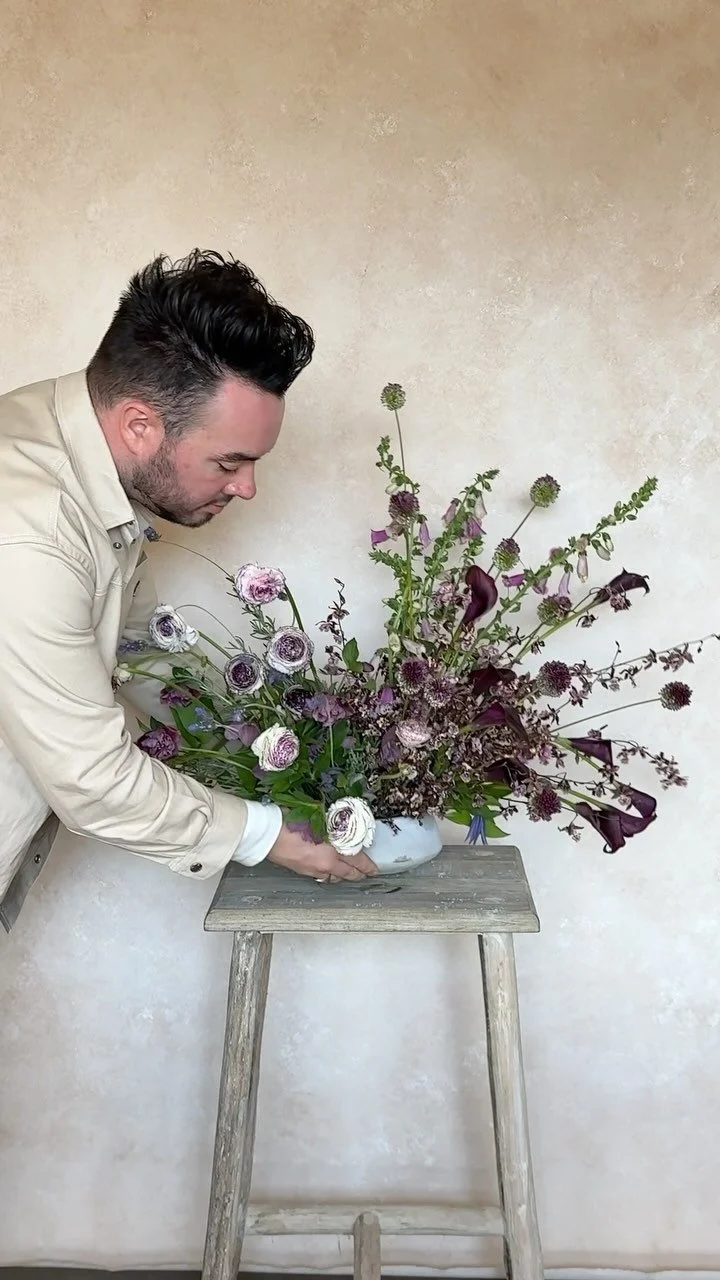
There is a reason Jose Villa does not shoot against budget materials. There is a reason editorial teams source hand-painted surfaces for luxury brand campaigns and feature spreads in publications like Over the Moon and Martha Stewart Weddings. The difference between a mass-produced surface and a hand-painted canvas is not subjective preference. It is measurable physics. Hand-painted cotton canvas absorbs and diffuses studio light the way a painting in a gallery absorbs and diffuses light: directionally, dimensionally, with tonal depth that shifts as the source moves. Jennifer, the artist behind every Chasing Stone canvas, applies pigment in deliberate layers over the course of two to three days per backdrop, building color variation and surface character that a printed or woven material cannot replicate. When light moves across a surface that has been hand-painted with actual brush strokes, those strokes cast micro-shadows. The pigment itself shifts from cool undertone to warm surface tone depending on the angle and intensity of the source. This is not marketing language. This is how materials behave under professional studio lighting.
For photographers evaluating whether premium backdrops are worth the investment in 2026, the question has never been clearer. The math favors canvas. The physics favor canvas. The client perception favors canvas. And the creative distinction it provides in a saturated market may be the most valuable return of all.

The difference between a backdrop that disappears and one that elevates the frame isn't subjective. Hand-painted canvas absorbs and diffuses studio light in ways mass-produced surfaces simply cannot, giving every bridal portrait the editorial quality your clients are paying for.
Quick Answer
Premium hand-painted photography backdrops are worth the investment for photographers booking twenty or more sessions per year. A $497 Chasing Stone hand-painted canvas backdrop pays for itself within three to eight portrait sessions when accounting for the pricing premium that high-quality surfaces command, and the cost per session falls below five dollars within the first year of regular use. Budget alternatives like muslin ($30) require replacement every twelve to eighteen months, making their total cost of ownership higher than a single hand-painted canvas over a three-year period. Hand-painted canvas lasts ten to fifteen years with proper care, delivering a cost per session under fifty cents for high-volume studios.
The Math That Ends the Premium Backdrop Debate
ROI for photography backdrops is not theoretical. It is arithmetic. The calculation begins with simple division: backdrop cost divided by number of sessions. But it expands quickly to include replacement frequency, the hidden labor costs of managing consumable surfaces, and the pricing leverage that a premium visual environment provides.
A Chasing Stone 5x8 foot hand-painted canvas backdrop costs $497. The 8x10 foot canvas, which accommodates wider environmental compositions and multiple subjects, is $797. The 8x14 foot surface, suited to full-length fashion work and large-scale installations, is $1,197. These are one-time purchases for surfaces that last a decade or longer. The cost-per-session calculus transforms the investment equation entirely, particularly when compared against the replacement cycle that budget materials demand.
Hand-Painted Canvas Backdrop vs. Budget Muslin: True Cost of Ownership Over Three Years (Based on $497 Canvas, $30 Muslin Replaced Every 18 Months)
| Annual Session Volume | Three-Year Sessions | Canvas Cost per Session | Muslin Cost per Session (incl. 2 replacements) | Canvas Advantage |
|---|---|---|---|---|
| 25 sessions/year | 75 sessions | $6.63 | $1.20 + replacement labor | Visual quality premium far exceeds cost gap |
| 50 sessions/year | 150 sessions | $3.31 | $0.60 + replacement labor | Canvas pays for itself through client perception |
| 100 sessions/year | 300 sessions | $1.66 | $0.30 + replacement labor | Cost difference negligible; quality difference categorical |
| 200 sessions/year | 600 sessions | $0.83 | $0.15 + replacement labor | Sub-dollar cost per session for a fine art surface |
A hand-painted canvas backdrop that costs $497 and lasts ten years delivers a cost per session of $0.50 for a photographer booking one hundred sessions annually. At that rate, the backdrop is less expensive per use than a single sheet of seamless paper.
The muslin column appears cheaper at first glance because the initial outlay is small. A thirty-dollar roll seems negligible against a five-hundred-dollar canvas. But that roll lasts twelve to eighteen months under regular studio use. Muslin absorbs ambient moisture, dust, and the oils transferred during handling. It fades under continuous exposure to studio strobes. Wrinkles accumulate and become permanent set lines that no amount of steaming removes. The photographer either accepts degraded image quality or replaces the backdrop. Over thirty-six months, a photographer shooting fifty sessions per year will purchase two to three muslin rolls, spending $60 to $90 on replacement material alone, without accounting for the installation labor, the studio downtime while waiting for a new roll to arrive, or the sessions conducted with a partially degraded surface that subtly compromises every image made against it.
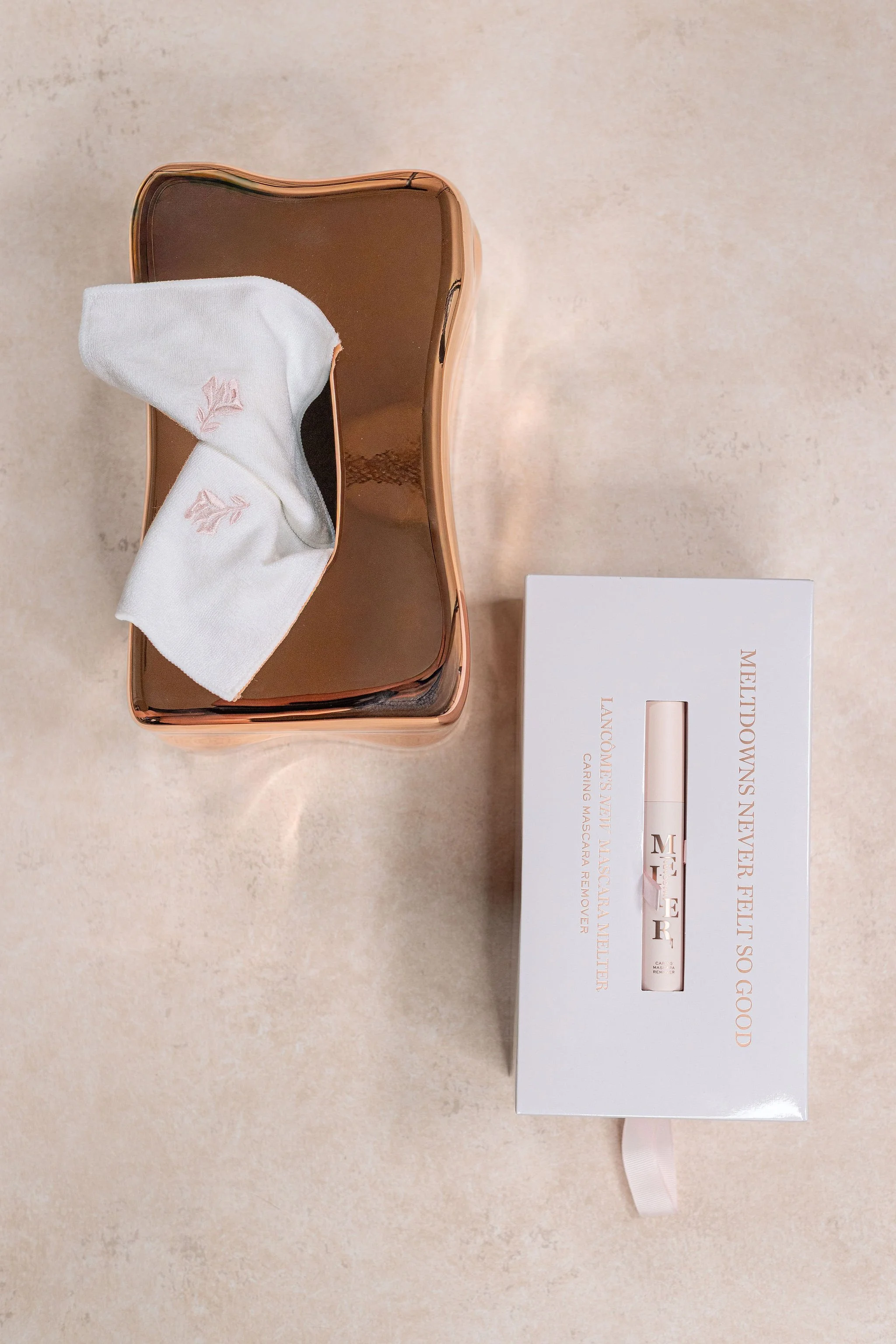
The styling surface beneath every editorial flat-lay is doing more work than most photographers realize. Hand-painted canvas absorbs light the way a gallery wall does — directional, dimensional, and impossible to replicate with vinyl or paper.
The table above captures the direct cost comparison. What it does not capture is the revenue differential. A photographer whose portfolio features images shot against hand-painted canvas is presenting work at a visually higher standard than a photographer shooting against budget muslin. That visual standard translates into pricing power. The difference between charging $300 per session and $350 per session is $2,500 in additional annual revenue at fifty bookings. That single pricing shift pays for the backdrop five times over in year one. For a deeper exploration of how different backdrop materials affect the visual quality of your images, our photography backdrop materials comparison breaks down the technical differences between canvas, muslin, and vinyl in detail.
What $497 Buys That $30 Cannot
The price difference between a hand-painted canvas backdrop and a muslin roll is not arbitrary. It reflects a fundamental difference in material science, production methodology, and the way each surface interacts with light under studio conditions. Understanding this difference is essential to evaluating the ROI question with the seriousness it deserves.
Cotton canvas, when hand-painted with layered pigment, becomes a light-diffusing surface with three-dimensional character. Jennifer applies color in stages, building from primer to base tone to mid-tone layers to surface highlights and textural details. This is not a single-pass process. Each Chasing Stone backdrop takes two to three days of focused studio work to complete. The canvas is primed to accept pigment evenly. Base colors are applied in broad strokes that establish the dominant tone. Mid-tone layers introduce variation and movement. Surface details, the brushwork and textural passages that give each canvas its individual character, are applied last. The result is a surface that does not simply reflect light back at the camera. It absorbs light, diffuses it across its textured topography, and returns it with the tonal complexity that only layered paint on canvas can produce.
A muslin backdrop is cotton fabric that has been washed and sometimes dyed but not painted. It is a neutral surface in every sense. When studio light hits muslin, it bounces back with minimal absorption. The light remains directional and concentrated. Hot spots develop where the strobe or continuous source is brightest, and the fall-off to shadow is abrupt rather than gradual. The overall tonal range of the backdrop in the captured image is flatter and more one-dimensional than a painted surface. This is not a stylistic choice. It is a function of material properties. A photographer working with muslin must adjust lighting technique to compensate for the surface's reflective behavior, adding fill light, increasing diffusion, or repositioning sources to soften the contrast that muslin's uniform weave produces.
Vinyl and paper backdrops represent an even more dramatic departure from hand-painted canvas. These surfaces are thin, synthetic or cellulose-based, and designed for affordability and disposability. They photograph flatly because they are flat. A vinyl surface reflects studio light so aggressively that it often creates specular highlights visible in the final image, requiring post-processing correction that adds time and cost to every editing session. Vinyl also lacks the textural authenticity that distinguishes editorial photography from commercial snapshots. When a surface appears synthetic in the frame, it signals a production standard that works against the photographer's positioning, even if the viewer cannot articulate exactly why the image feels less accomplished.
Hand-painted canvas absorbs and diffuses studio light, while vinyl reflects it, creating hot spots that flatten the tonal range of the image. This is a material science reality, not a marketing claim. The layered pigment on a hand-painted surface creates depth that a single-pass printed surface cannot replicate. When you invest $497 in a Chasing Stone hand-painted backdrop, you are investing in a surface whose behavior under light is categorically different from any mass-produced alternative. Our canvas vs. muslin comparison examines these material differences with side-by-side visual examples.
The Client Perception Premium: Why Your Clients Can See the Difference
ROI extends beyond the mathematics of cost-per-session. It includes the factor that is hardest to quantify but easiest to observe: perceived value. Clients notice the quality of the surface they are photographed against. They may not understand the material science behind why one backdrop photographs with more depth than another, but their eye registers the difference. A photographer who shoots a client against a hand-painted backdrop is making a statement about the level of craft and investment present in every element of the session experience.
This perception translates directly into pricing power. A photographer positioning their work at the luxury end of the market must demonstrate that positioning in every detail: the quality of the lighting, the precision of the composition, the surfaces against which the client is framed, the overall production value visible in every delivered image. Shooting a high-end bridal client against a thirty-dollar muslin backdrop sends a contradictory signal. The lighting may be exquisite. The posing may be refined. But the backdrop announces an inconsistency that undermines the premium positioning. Hand-painted canvas eliminates this inconsistency. It tells the client, before a single frame is captured, that every element of this experience has been curated with intention.
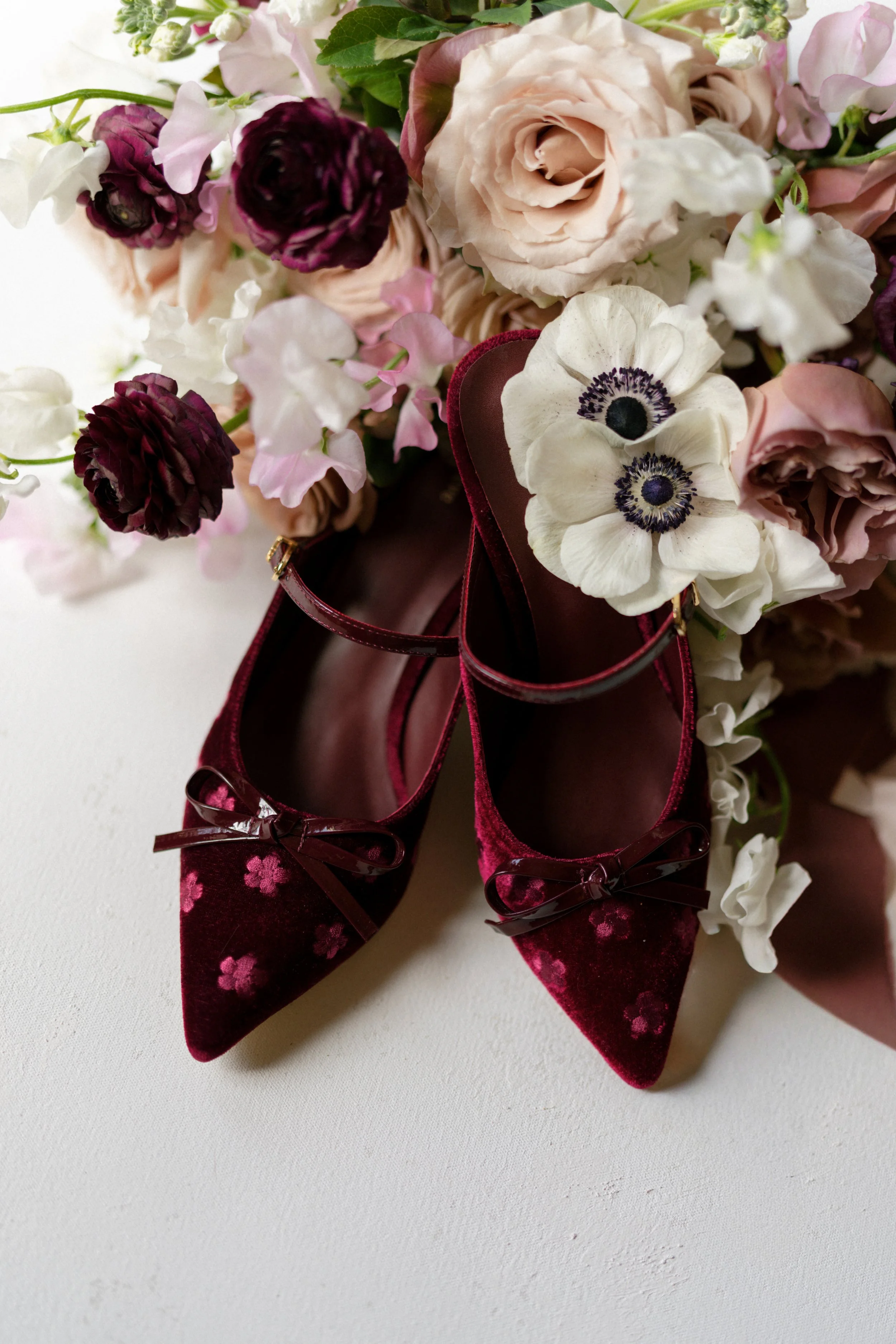
Every wedding photographer has stood over the bride's shoes and bouquet with thirty seconds before the ceremony starts. A hand-painted styling surface that's already in your kit, already lighting beautifully, is the difference between a frantic detail shot and a frame worth submitting.
Photographers who transition from budget backdrops to hand-painted canvas consistently report that the quality of client inquiries changes within months. The backdrop becomes visible evidence of studio investment, attracting clients who value craft and are willing to pay for it.
Consider the editorial context in which these surfaces live. The photographers whose work appears in Over the Moon, WedVibes, Style Me Pretty, and the pages of luxury wedding publications are not using budget backdrops. They are using hand-painted surfaces selected for their specific tonal character and their ability to collaborate with light rather than fight it. Siren Floral Co does not style installations against vinyl. Editorial teams do not source muslin for luxury brand campaigns. When a photographer adopts a hand-painted canvas from Chasing Stone's collection, they are entering a visual community where the surface itself signals a standard of production that clients and editors recognize.
The revenue impact of this perception shift is significant. A photographer booking fifty sessions per year at an average rate of $350 per session who adjusts their pricing upward by even ten percent, justified by the elevated production quality that hand-painted backdrops contribute to the overall experience, gains an additional $1,750 in annual revenue. That single adjustment recovers the cost of three 5x8 foot hand-painted canvases. The backdrop does not merely avoid losing money. It actively generates revenue through the pricing confidence it enables.
Ten Years of Light: The Durability That Changes the Calculation
Evaluating whether premium photography backdrops are worth it requires thinking in decade-long increments rather than annual cycles. This is the fundamental shift between budget-backdrop thinking and investment-backdrop thinking. A muslin roll is a consumable. A vinyl sheet is disposable. A hand-painted canvas is a durable asset that retains its visual quality and functional integrity for ten to fifteen years of active studio use.
Canvas durability depends on storage, care, and usage intensity, but the baseline is exceptional. A hand-painted backdrop that is rolled on the cardboard core it ships with, stored in a cool dry environment, and handled with the basic care any professional tool deserves will remain vibrant and session-ready for a decade at minimum. Photographers in the Chasing Stone community report canvases in active weekly rotation after fifteen years. The pigment does not fade the way printed surfaces fade because it is integrated into the canvas fiber rather than deposited on a synthetic surface. The cotton canvas does not deteriorate the way muslin deteriorates because the painting process itself stabilizes the weave. If minor wrinkles develop from repeated rolling and unrolling, gentle pressing restores the surface.
Muslin, by contrast, has a functional lifespan measured in months. The fabric begins showing visible wear within twelve months of regular studio use. Fading becomes apparent under consistent strobe exposure. Wrinkles that were initially removable become permanent set lines. Dust and airborne particles embed in the open weave and resist cleaning. By eighteen months, the surface has degraded to a point where it visibly compromises image quality, and the photographer discards it. This replacement cycle is not occasional maintenance. It is a recurring cost that compounds over the years.
Over a ten-year period, the true cost comparison is stark. A photographer using muslin at $30 per replacement, replacing every fifteen months, will spend approximately $240 on muslin alone, not accounting for the labor of installation, the sessions shot against a degrading surface, or the opportunity cost of studio downtime. A photographer using a $497 hand-painted canvas spends $497 once and uses the same surface for the entire decade. The canvas owner's total expenditure is higher in year one and dramatically lower in every subsequent year. By year four, the canvas owner has spent less in total than the muslin user. By year ten, the difference is substantial.
For photographers considering the investment case for larger formats, our backdrop buying guide offers detailed sizing recommendations by session type to help you choose the format that delivers the strongest return for your specific studio workflow.
The Cost of Looking Like Everyone Else
Budget backdrops commoditize the photographer. When you shoot against the same thirty-dollar muslin roll that thousands of other photographers purchased from the same supplier, your studio becomes visually indistinguishable from theirs. The backdrop is not a point of differentiation. It is a visual liability. Your images compete on the same flat, characterless visual plane as every other photographer using identical mass-produced materials.
Hand-painted backdrops solve this problem by introducing uniqueness into the visual language of the work. This is not novelty for its own sake. This is the application of a fine art principle to the craft of photography: the conviction that handmade objects carry an authenticity and character that manufactured goods cannot replicate. No two Chasing Stone backdrops are identical, even within the same colorway, because Jennifer hand-paints each one individually. The brushwork varies. The tonal transitions shift. The surface character is unique to that specific canvas. When you photograph a client against a hand-painted backdrop, you are using a surface that no other photographer in the world is using in quite the same way.
This uniqueness functions as brand protection. A photographer who develops a visual signature around a specific hand-painted backdrop, perhaps the warm terracotta depth of the Clay canvas or the pale luminous warmth of the Limestone surface, becomes associated with that aesthetic. Clients and followers recognize the characteristic look of the surface in the photographer's portfolio. Over time, the backdrop becomes inseparable from the photographer's visual identity. This is precisely how luxury brands build recognition: through the repeated, intentional use of distinctive visual elements that signal quality and creative confidence.
No two Chasing Stone hand-painted canvases are identical because no two paintings are identical. This is not a manufacturing limitation. It is the defining characteristic of handmade work, the same principle that gives a painting its value over a print.
The ROI of visual distinctiveness manifests in client retention, referral quality, and editorial recognition. When a photographer is known for shooting against a particular aesthetic surface, that becomes a reason for clients to book them specifically rather than choosing a photographer based on price alone. The backdrop transforms the photographer from a commodity provider competing on session fees into a creative professional whose visual world is worth paying a premium to enter. This shift in market positioning is worth far more than the initial cost of the canvas.
Building a Three-Backdrop Studio: The Strategic Approach
The single-backdrop ROI calculation demonstrates the investment case. But the practical reality of a working studio is that a single backdrop, however beautiful, limits the variety of work you can produce. Most photographers benefit from rotating between two to four hand-painted canvases, varying the visual tone of the work across sessions and offering clients an aesthetic choice that deepens the experience. Understanding the return on a multi-backdrop studio requires expanding the calculation.
A three-backdrop studio built on 5x8 foot Chasing Stone canvases from different color families creates a versatile foundation for nearly any session type. The recommended approach is to select one warm neutral, one cool neutral, and one statement colorway that aligns with your specific creative voice. The Sandstonehand-painted backdrop, with its warm beige tonality, serves as a universally flattering foundation for bridal, maternity, and family portraiture. Slate, the concrete-like architectural gray, provides the cool counterpoint for editorial work, fashion portraits, and commercial sessions that demand a modern, minimalist palette. For the third canvas, the choice depends on your brand direction: Rose-Quartz brings a soft blush warmth suited to romantic editorial and boudoir work, while Celestite introduces a soft sky blue that reads as serene and timeless.
The Studio Pack Three bundle makes this multi-backdrop approach more financially accessible. A three-pack of 5x8 foot backdrops is $1,371 at current sale pricing, approximately $457 per canvas compared to $497 purchased individually. For photographers committing to a curated three-canvas studio, the bundled price delivers a seven percent discount while offering the strategic advantage of shooting with multiple surfaces from the first delivery. The 8x10 foot bundle is $2,197, and the 8x14 foot bundle is $3,297, for photographers whose session types demand larger coverage.
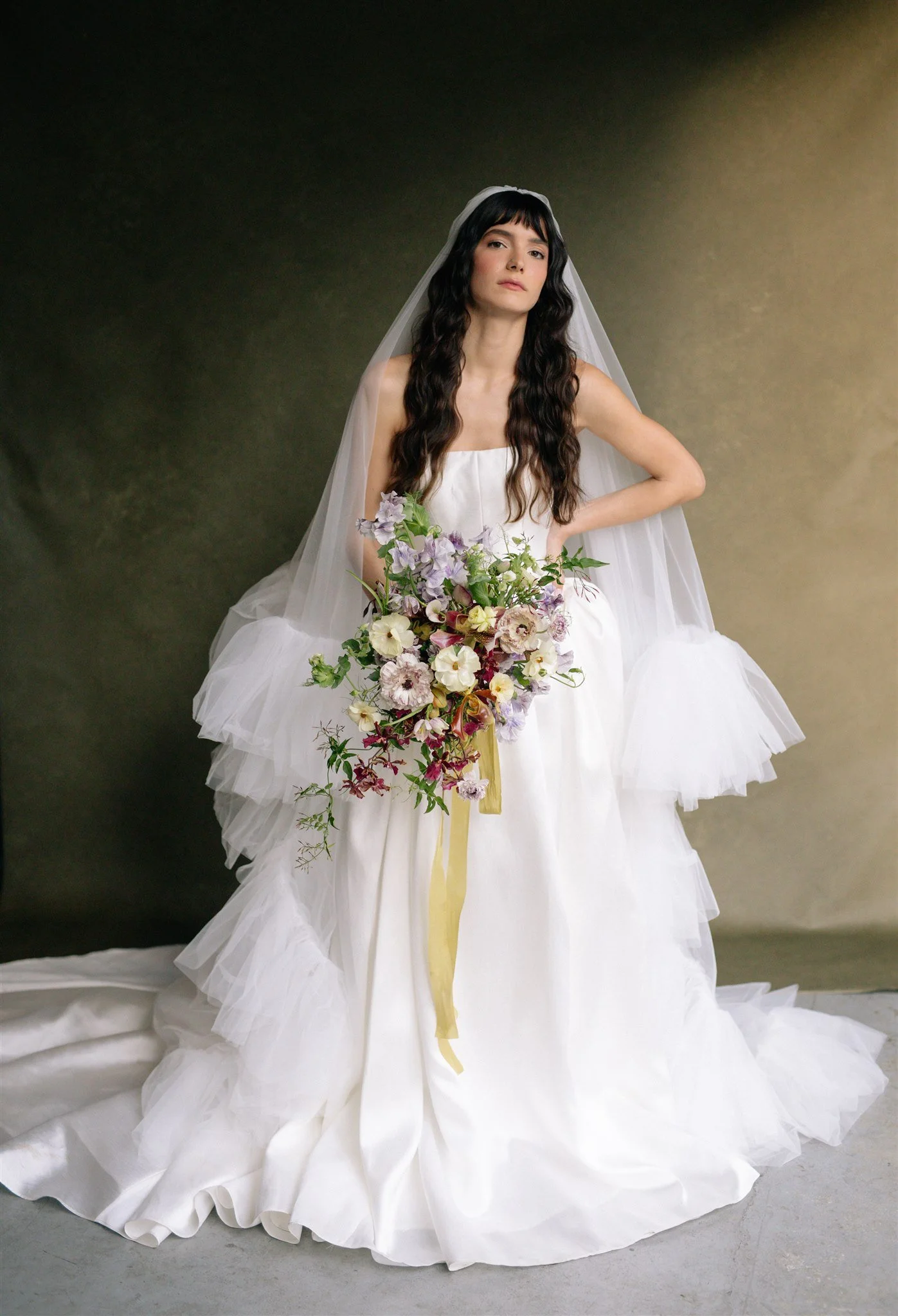
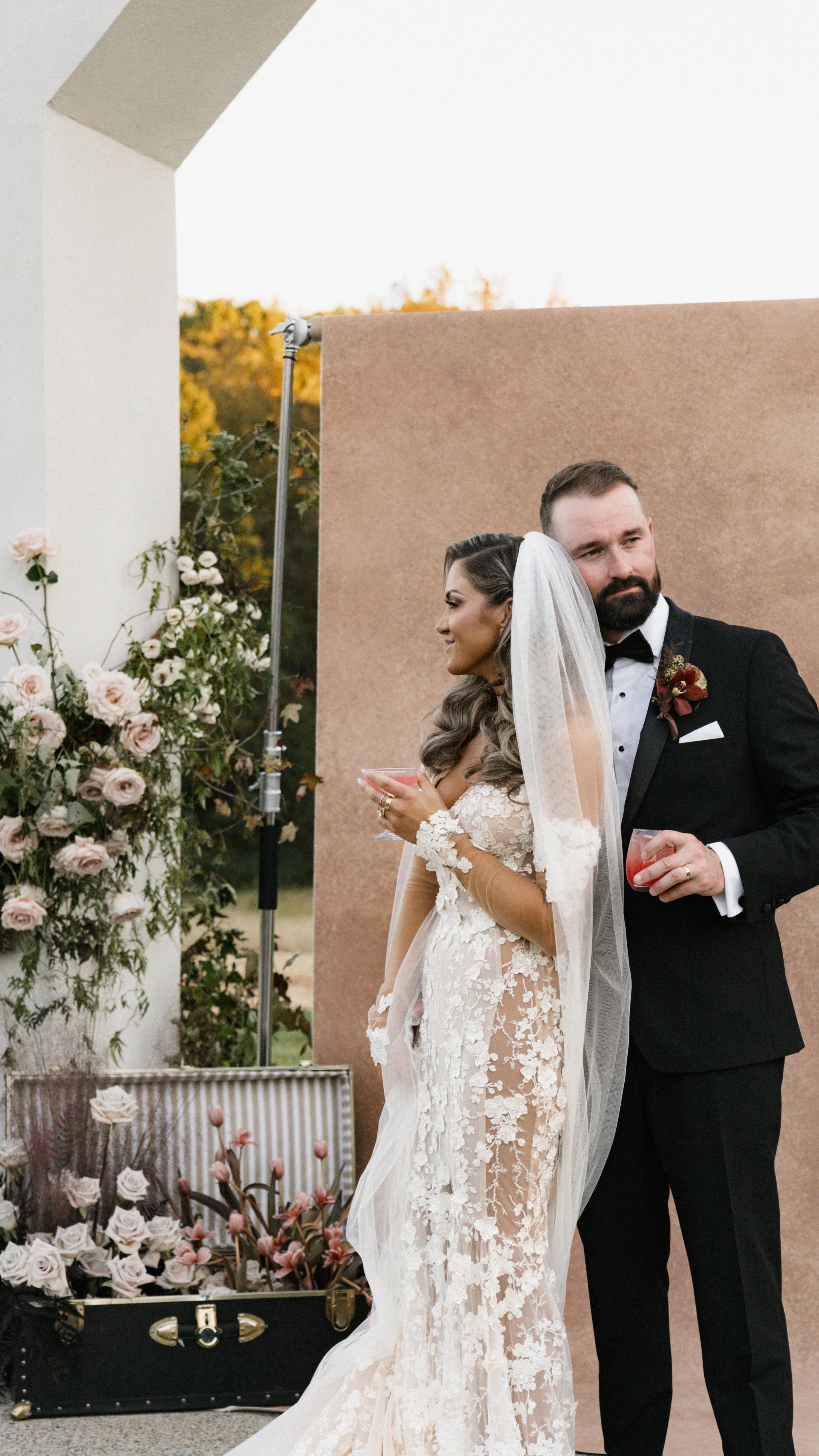
A vinyl backdrop in this scene would create hot spots, flatten the dimensionality, and force hours of post-processing to recover what the camera lost at capture. Hand-painted canvas absorbs light directionally, returning it to the lens with the depth that defines editorial bridal work.
The ROI expands when you factor in the booking flexibility that multiple backdrops create. A photographer offering clients two or three aesthetically distinct backdrops within a session, or rotating backdrops across seasonal mini-session offerings, generates more booking variety and attracts a broader range of clientele. The investment of approximately $1,400 in three hand-painted canvases pays for itself through a combination of the pricing premium, increased booking diversity, and the visual portfolio expansion that comes from shooting against multiple high-quality surfaces. For most working studios, the three-backdrop investment recovers within the first year. For a complete overview of all available colorways and their visual character, our ultimate photography backdrop guide offers a comprehensive look at every surface in the collection.
When the Surface Becomes the Signature
The deepest return on investment from premium hand-painted backdrops lives in the realm of creative identity and professional positioning. Over years of consistent use, a hand-painted canvas ceases to function merely as background. It becomes a collaborator in the image. It becomes an element of the photographer's visual voice that clients begin to request by name, that editorial teams recognize in submission portfolios, and that defines the aesthetic world the photographer has built.
This is how creative brands are built at the highest level. Consistency, material quality, and the confidence that comes from investing in tools that reflect your creative standard creates a visual signature that transcends individual images. When you commit to hand-painted canvas backdrops as the foundation of your studio environment, you are signaling to clients, editors, and peers that you have chosen to work exclusively with surfaces that meet a specific standard of craft. This positioning generates its own momentum: clients who value quality seek photographers who demonstrate it in every detail.
The answer to whether premium photography backdrops are worth it is yes, with mathematical certainty for photographers booking twenty or more sessions per year. The cost per session drops below meaningful threshold within the first year. The durability advantage compounds over a decade. The client perception premium translates into pricing power and booking selectivity. The visual distinctiveness creates brand differentiation in a market where differentiation is the scarcest resource. And the craft of working against a surface that Jennifer has spent two to three days painting by hand, a surface that responds to light with the depth and dimensionality of a gallery painting, elevates the creative experience of making photographs in ways that no spreadsheet can fully capture.
Explore the complete range of hand-painted photography backdrops at Chasing Stone to find the colorways and sizes that align with your creative vision.
Frequently Asked Questions About Premium Photography Backdrops
How much does a hand-painted photography backdrop cost?
Chasing Stone hand-painted canvas backdrops range from $497 for a 5x8 foot surface to $797 for an 8x10 foot canvas and $1,197 for an 8x14 foot backdrop. These are one-time purchases for a surface that remains usable for ten to fifteen years with proper storage and care. Bundle pricing is available through the Studio Pack Three, which reduces the per-unit cost by approximately seven percent when purchasing three canvases simultaneously.
How long does a hand-painted canvas backdrop last?
A properly stored and cared-for hand-painted cotton canvas backdrop remains visually vibrant and functionally sound for ten to fifteen years of active studio use. Many photographers report canvases still in regular rotation after twenty years. The durability depends on storage conditions and handling, but the layered pigment integrated into the canvas fiber resists the fading and deterioration that affects printed and woven backdrop materials. By comparison, muslin requires replacement every twelve to eighteen months, and vinyl deteriorates within six to twelve months of regular use.
What is the difference between hand-painted canvas and muslin backdrops?
Hand-painted canvas absorbs and diffuses studio light, creating tonal depth and dimensional character through layered pigment and visible brushwork that casts micro-shadows under directional lighting. Muslin is untreated woven cotton that reflects light more uniformly, producing a flatter, more one-dimensional appearance in the captured image. Hand-painted canvas photographs with the visual authenticity and presence of a painted surface, while muslin photographs as an industrial textile. Each Chasing Stone canvas requires two to three days of hand-painting by a single artist, a production process that cannot be replicated at industrial scale.
Can I use the same hand-painted backdrop for different types of photography?
A single hand-painted canvas backdrop is versatile enough to serve multiple photography disciplines, from editorial portraiture to product photography to fine art work to commercial headshots. The tonal complexity of layered paint on canvas responds differently depending on the lighting approach, angle, and distance, giving the same surface distinctly different visual personalities across session types. Many photographers develop a recognizable visual signature by using the same backdrop consistently, allowing the surface to become a defining element of their creative brand.
What sizes of hand-painted backdrops does Chasing Stone offer?
Chasing Stone offers three primary canvas sizes: 5x8 foot ($497), 8x10 foot ($797), and 8x14 foot ($1,197). The 5x8 foot size is the most popular entry point and accommodates portrait sessions, small product photography setups, and editorial styling. The 8x10 foot canvas works for multiple subjects and wider environmental compositions. The 8x14 foot surface is designed for full-length fashion photography, large-scale installations, and scenarios requiring maximum background coverage. All twenty colorways are available in every size.
How do I store and care for a hand-painted canvas backdrop?
Store your hand-painted backdrop rolled loosely on the cardboard core it ships with, in a cool dry environment away from direct sunlight and humidity fluctuations. Never fold a canvas backdrop, as folding can create permanent creases. Chasing Stone ships every canvas inside a rigid cardboard tube with entirely biodegradable packaging. If minor wrinkles develop from repeated rolling, gentle pressing with a warm iron on low heat restores the surface. With basic care, the canvas maintains its visual quality for a decade or longer.
Are Chasing Stone backdrops made to order?
Yes, every Chasing Stone hand-painted canvas backdrop is made to order. Jennifer hand-paints each canvas individually, which takes five to seven business days for production plus approximately two business days for shipping. This timeline reflects the reality of an artist-driven process: each surface receives two to three days of focused painting to build the layered pigment, tonal variation, and surface character that define the finished product. No two canvases are identical, even within the same colorway, because each one is painted by hand.
Invest in the Surface That Invests in Your Work
Premium hand-painted backdrops are an investment in the visual language of your photography. The return is measurable in cost-per-session arithmetic, in the durability that compounds over a decade, in the client perception that justifies premium pricing, and in the creative distinction that transforms a photographer from a commodity provider into a visual artist whose work carries a recognizable signature. When you commit to surfaces painted by hand with the care and intentionality that Jennifer brings to every Chasing Stone canvas, you are choosing to elevate every element of your studio practice. If you are weighing the cost difference and wondering whether the premium is justified over time, the full ROI case for hand-painted canvas includes a cost-per-session calculator that shows exactly when the investment pays for itself.
Explore the full range of hand-painted canvas backdropsto find the colorways and sizes that align with your vision. For guidance on selecting the right backdrop for your specific studio workflow, or to discuss bundle options and colorway recommendations, contact the Chasing Stone team at info@chasingstone.com.