
Essential Photography Gear for Wedding Flat Lays in 2026
Updated December 8, 2025
Detail shots are where you get to slow down and create something beautiful before the chaos of the wedding day kicks in. Those rings on the invitation, that perfume bottle catching the light, the way your bride's jewelry tells a story without anyone wearing it yet. These are the images that end up in albums, on vendor blogs, and all over Instagram.
But here's the thing: flat lays that look effortless actually require the right tools. You can have perfect composition and gorgeous light, but if your surface is wrong or your styling feels off, the shot falls flat. No pun intended.
I've spent years testing what actually works for wedding flat lay photography, and I can tell you the difference between snapshots and portfolio pieces comes down to having the right gear in your bag. Whether you're shooting at a five-star hotel or someone's living room, you need surfaces and tools that make your work look intentional and professional every single time.
Let's talk about what actually belongs in your flat lay kit and how to use it to create detail shots that make couples (and vendors) stop scrolling.
Camera Bodies and Lenses That Work
The good news: you probably already own a camera that can create stunning flat lay images. The difference between decent and exceptional flat lay photography has less to do with your camera body and more to do with understanding how to use it properly.
Camera Bodies
Any DSLR or mirrorless camera from the past five years handles flat lay photography beautifully. You need good resolution (20+ megapixels gives you cropping flexibility), reliable autofocus, and the ability to shoot in RAW format. Full-frame cameras like the Canon R6 II or Sony A7 IV deliver exceptional image quality, but crop sensor cameras like the Fujifilm X-T5 or Canon R7 produce equally gorgeous flat lays at a lower price point.
Your smartphone can absolutely work for flat lays, especially newer models with advanced computational photography. The iPhone 15 Pro and Samsung Galaxy S24 Ultra create sharp, well-exposed images perfect for social media. The limitation isn't image quality anymore, it's control over depth of field and the ability to shoot in challenging lighting conditions.
Lenses for Flat Lay Photography
Lens choice matters more than your camera body. For overhead flat lay work, you need sharpness across the entire frame and minimal distortion. A 50mm f/1.8 lens is the budget-friendly workhorse that belongs in every wedding photographer's bag. It's sharp enough for detail work and inexpensive enough that the investment pays for itself after a few weddings.
Macro lenses change the game for detail photography. The 100mm macro (or 105mm depending on your system) lets you capture ring engravings, invitation letterpress texture, and jewelry details that standard lenses simply can't resolve. This focal length also gives you working distance, which matters when you're lighting small subjects.
For full suite layouts and larger flat lays, a 35mm lens provides the wider field of view you need without introducing obvious distortion. This becomes your go-to for photographing entire invitation suites, full table settings, or grouped details.
Budget Considerations
You don't need to own every focal length. Start with what you have, identify which focal lengths you reach for most often, and invest strategically. A solid 50mm lens costs $200-400. A quality macro lens runs $600-900. These lenses last decades and hold their value, making them genuine investments rather than expenses.
Styling Surfaces: Your Foundation for Every Shot
The surface you shoot on matters more than most photographers realize. It sets the entire mood before you even arrange a single ring or envelope. And here's the truth: cheap backdrops show up in your images. Every time.
Professional hand-painted styling surfaces have become non-negotiable for wedding photographers who want their detail work to look polished and intentional. The difference between a $20 printed backdrop and a quality hand-painted surface is immediately visible in your final images. For a comprehensive breakdown of surface materials, textures, and how to choose between hand-painted versus fabric options, see our complete guide on choosing the best styling surfaces for flat lay photography.
What makes a surface actually worth buying? It needs to photograph beautifully in any light, roll up without creasing so you can travel with it easily, and hold up to real wedding day situations. Hand-painted surfaces give you textures and color variations that printed versions can't touch, which means your flat lays start to have a signature look that's recognizably yours.
Building Your Surface Collection
Build a small collection that covers the weddings you actually shoot. The Sakura styling surface works perfectly for romantic, garden weddings with its soft, dreamy tones. The Santorini surface brings those sun-soaked, Mediterranean vibes for coastal celebrations. Each surface should feel purposeful, not random.
Durability matters because this gear takes a beating. It gets rolled and unrolled, tossed in your car, set up on hotel beds and getting ready room floors. Sometimes there's a makeup spill or a water ring. Surfaces made with professional-grade materials survive all of that and still look fresh seasons later. That makes them an actual investment, not just another thing you'll replace next year.
Surfaces for Different Wedding Aesthetics
Romantic, garden-inspired weddings shine on surfaces with soft, organic textures. The Pampas styling surface captures that effortless, natural elegance that defines modern romantic celebrations. Its neutral tones complement virtually any color palette while adding just enough visual interest to enhance your compositions.
Bohemian and earthy weddings benefit from surfaces with rich, warm undertones. Consider the Yarrow surface for these celebrations. Its organic texture photographs beautifully alongside dried florals, handmade paper, and natural fiber elements. These surfaces give you a foundation that feels authentic to the boho aesthetic without overwhelming delicate details.
Classic, timeless weddings call for surfaces that feel refined and elegant. The Oak styling surface delivers sophistication that pairs beautifully with traditional invitation suites, vintage jewelry, and formal attire details. Its subtle variations in tone add depth without competing for attention, letting your couple's carefully curated details take center stage.
Fabric surfaces offer a completely different aesthetic with soft, organic folds and draping possibilities. Understanding color harmony between your surface and subject is crucial. Creating a cohesive color story ensures your flat lays feel intentional rather than accidental.
Each surface you add to your collection should fill a specific need in your client base. Pay attention to the booking trends in your market. Are you seeing more modern minimalist celebrations? Romantic garden parties? Luxe ballroom affairs? Build your surface collection strategically, and you'll have the perfect foundation for every wedding you photograph.
Tripods and Overhead Camera Support: When You Actually Need Them
Let's be honest about wedding day reality: most wedding photographers shoot detail shots handheld. You're grabbing 2-3 quick flat lays of the rings, invitation, and perfume bottle before the day kicks into gear. Setting up a tripod for that doesn't make sense.
Where tripods become essential is content creation sessions. If you're shooting a styled shoot with a stationer where you'll photograph 10-15 invitation suites in a row, or doing brand work that requires multiple flat lay setups, that's when overhead tripod systems save your back and speed up your workflow dramatically.
When to Shoot Handheld (Most Wedding Days)
Quick detail shots on wedding mornings work perfectly handheld. You have limited time, limited space, and you need to move fast. Shoot at 1/125 or faster, use good light, and you'll get sharp, professional results without any setup time. This is standard practice for working wedding photographers.
When You Need a Tripod (Content & Brand Work)
Extended flat lay sessions require different equipment. If you're photographing multiple invitation suites for a stationer's portfolio, shooting brand content for a florist, or doing editorial work where you'll spend 2+ hours on flat lays, a tripod setup becomes non-negotiable.
For these situations, you need a tripod where the center column can rotate 90 degrees, allowing you to position your camera directly overhead. The Manfrotto 190 series and Benro TMA series both offer this functionality at reasonable price points ($150-300). These tripods extend tall enough for standing overhead shots and collapse small enough for travel.
Carbon fiber tripods cost more ($400-700) but weigh significantly less. For studio content days where you're not carrying wedding day gear, the standard aluminum versions work fine. Save the carbon fiber investment for gear you're actually hauling around venues.
Overhead Arms for Serious Content Work
For dedicated flat lay content creation, overhead arms eliminate the awkward angles that standard tripods require. An overhead boom arm attaches to your tripod and extends straight out, giving you a true overhead position without the tripod legs appearing in your frame. These cost $100-200 and make sense once you're regularly shooting content sessions.
C-stands with overhead arms represent the professional studio solution. They're stable, infinitely adjustable, and allow you to position your camera exactly where you need it. The downside: they're heavy and expensive ($300-500 for a complete setup). This is for photographers running regular content days or offering dedicated product photography services to wedding vendors.
Ball Heads Matter
If you do invest in a tripod for content work, don't cheap out on the head. A quality ball head that locks securely and adjusts smoothly makes the difference between efficient shooting and constant frustration. Arca-Swiss compatible systems give you flexibility for quickly switching between cameras or adding accessories. Budget $80-150 for a ball head that won't slip or drift during extended sessions.
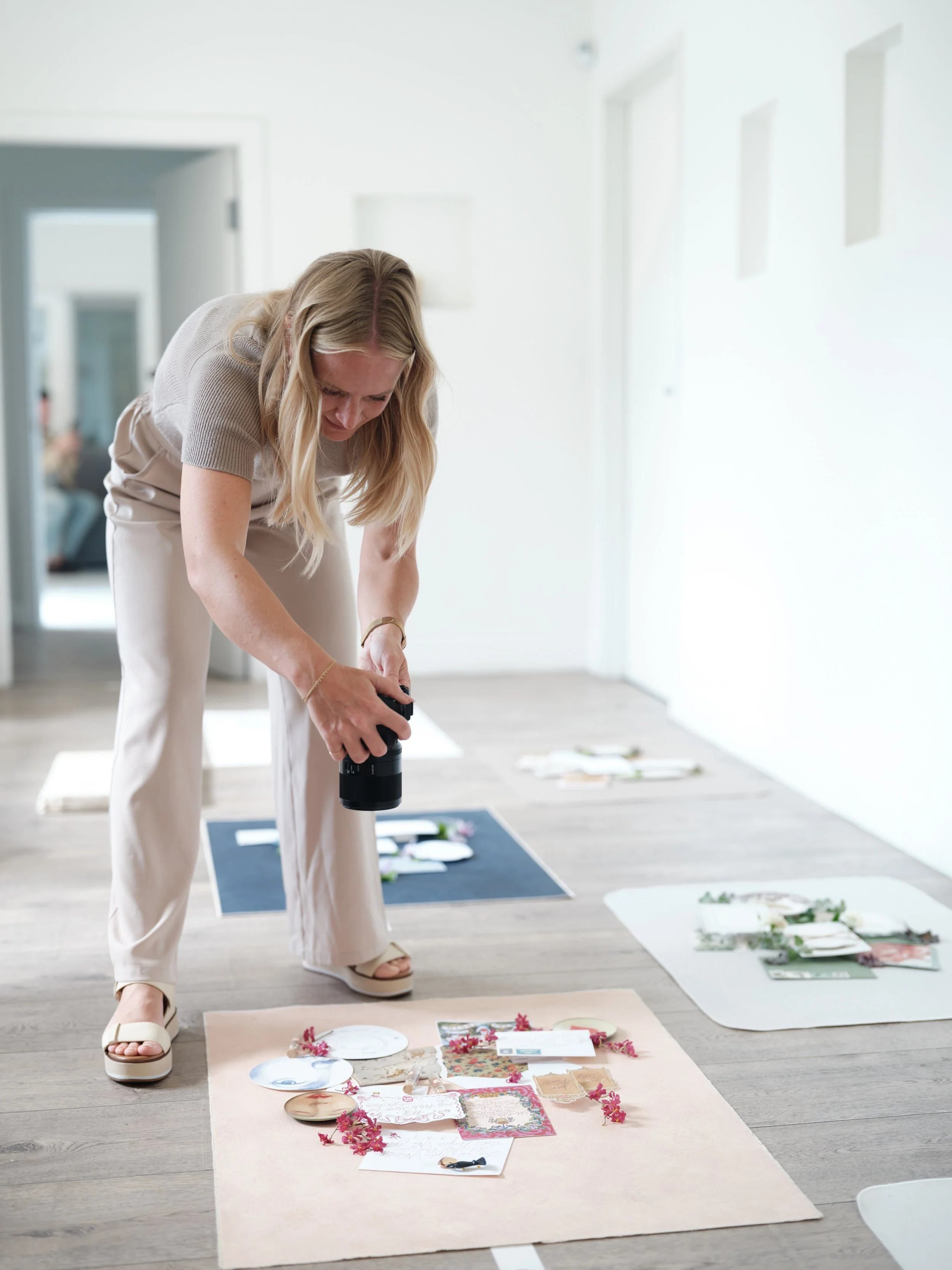
Pictured Styling Surface: JOSHUA TREE | Real talk: wedding photographers rarely use tripods for flat lays on wedding days. But for brand content sessions or stationer portfolio shoots? Overhead setup is the only way to survive multiple hours of flat lay work.
Lighting Equipment for Consistent Results
Natural light is still the best option for most wedding detail shots because it's soft, romantic, and flattering on everything from paper to diamonds. Get to your venue early and find the good light spots. North-facing windows give you consistent, even light all day. Big doors that open to covered patios work great. Even a bright bridal suite can become your flat lay setup if you position things right.
But you can't always count on perfect windows. Sometimes venues have terrible natural light, or your detail time lands right in harsh midday sun. That's when you need artificial lighting. For a complete workflow from identifying good light to final shot composition, our ultimate flat lay photography guide walks through the entire process step by step.
LED Panels
A solid LED panel with adjustable color temperature gives you control no matter what. The Aputure MC RGBWW is compact, battery-powered, and produces beautiful light for detail work ($100). For more power, the Lume Cube Panel Pro provides adjustable brightness and color temperature in a portable package ($200).
Many photographers avoid artificial light for flat lays because they're worried about that obvious "lit" look. The trick is using it to support the ambient light, not replace it. Position your LED panel like it's a window, bouncing it off a white wall or ceiling for soft, directional light. This works especially well with textured surfaces like the Château styling surface, where you want to capture every detail of the hand-painted finish.
Reflectors and Diffusers
Reflectors belong in your flat lay kit. A basic 5-in-1 reflector gives you white, silver, gold, black, and diffusion options for under $40. The white side bounces light into shadows so even the darkest parts of an invitation suite stay visible. Silver reflectors add extra punch when you're shooting jewelry that needs some sparkle.
Positioning is one of the most common mistakes in wedding flat lay photography that even experienced photographers make. Place reflectors opposite your main light source and use small clips or stands to position them without needing an extra hand.
Diffusion panels soften harsh window light when you're stuck with direct sun. A simple translucent white panel positioned between your subject and a bright window transforms harsh light into the soft glow you want. These fold flat and cost $20-50 depending on size.
Props and Styling Elements
The best props support your couple's story instead of stealing the show. Start with basics that work for almost anything: vintage stamps and wax seals, good quality paper goods, natural elements like greenery or dried flowers, and fabric in different textures and weights.
Let your prop collection grow based on what you're actually booking. If you shoot modern, minimalist weddings, invest in geometric shapes and monochromatic pieces. If your calendar is full of romantic garden celebrations, stock up on vintage books, antique scissors, handwritten notes, and botanical elements.
Building a Versatile Collection
Quality shows up here too. Real dried flowers have texture and dimension that fake ones don't. When you're adding to your prop kit, choose items that photograph well from any angle and in different lighting situations. Visit antique shops, estate sales, and specialty paper stores to build a collection that feels authentic.
Fabric plays a crucial role in flat lay styling. Silk ribbons, raw linen, velvet scraps, and sheer organza all add texture and movement to your compositions. Choose neutral colors that complement rather than compete with your couple's details, and include a few bolder options for when the aesthetic calls for it.
Storage and Organization
As your collection grows, storage becomes critical. Get a real organizational system with clear containers, labels, and padding for fragile pieces. Nothing kills your confidence faster than digging through a messy bag on a tight timeline trying to find the right ribbon or that specific vintage stamp. When you're organized, you work faster and look more professional. Couples notice that.
Stackable, clear plastic containers from office supply stores work perfectly. Label everything clearly: "Vintage Stamps," "Silk Ribbons - Neutrals," "Dried Florals - Spring." This system seems excessive until you're racing against the clock on wedding day and can grab exactly what you need in seconds.
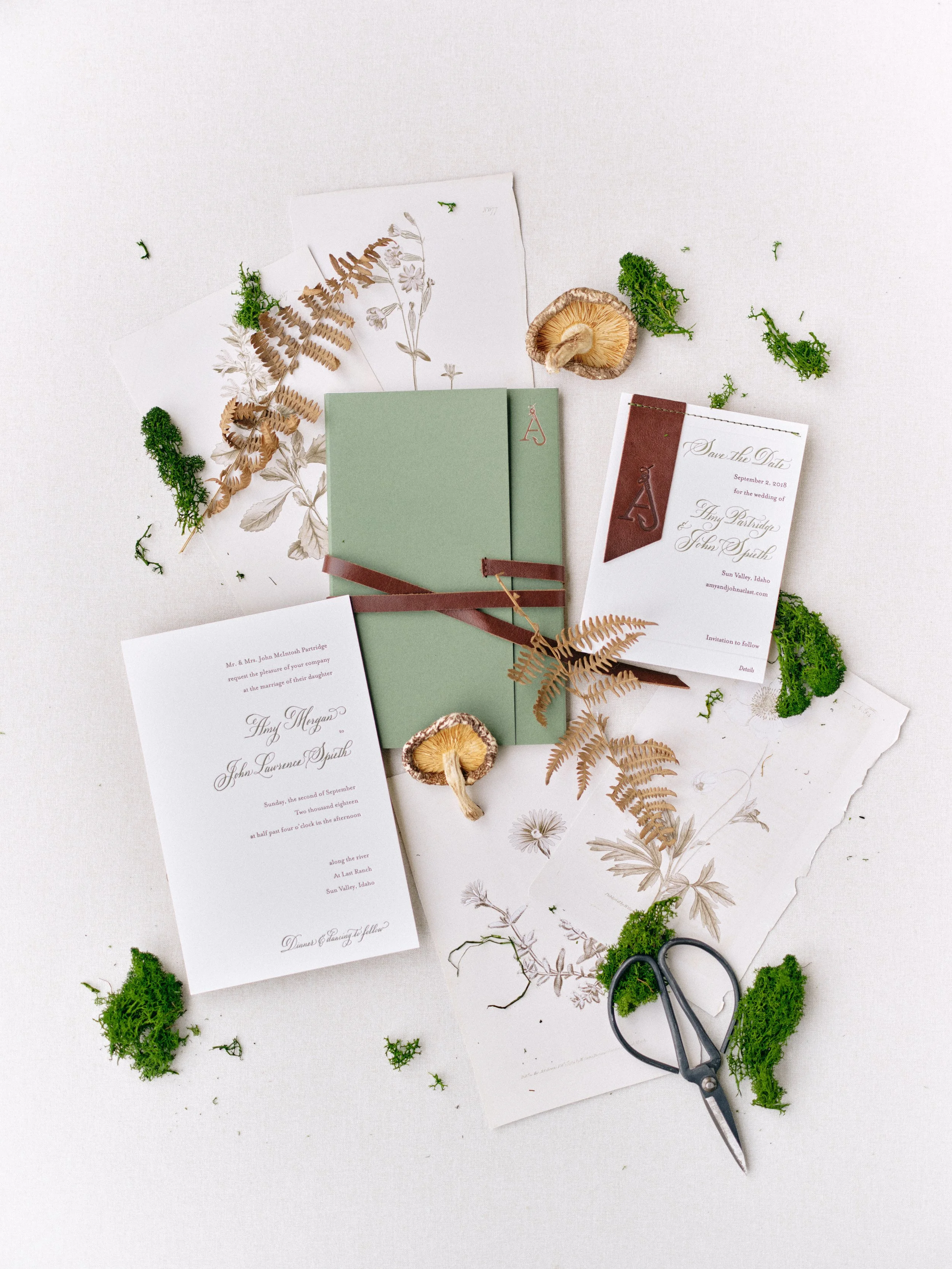
Pictured Styling Surface: BUCKWHEAT | Natural styling props like dried ferns, preserved moss, and vintage scissors enhance without overwhelming on Limestone neutral surface - choose real botanicals over fake for authentic texture.
Essential Accessories
Beyond cameras and surfaces, several small accessories make the difference between struggling through flat lay sessions and moving through them with confidence.
Cleaning and Maintenance Tools
A quality lint roller might seem mundane, but it's one of those unglamorous essentials that saves shots. Wedding venues accumulate dust, and invitation suites seem to attract every piece of lint within a five-mile radius. A quick roll over your styling surface before you start shooting ensures clean, professional results. Keep a soft-bristled brush in your kit too for delicate surfaces that need a gentler touch.
White art gum erasers work wonders for quick cleanup on hand-painted surfaces. Small marks or smudges that occur during setup wipe away easily, keeping your surfaces looking fresh throughout wedding season. Terry cloth rags (the texture really does matter) help with deeper cleaning when needed, though proper storage prevents most issues.
Clips, Clamps, and Weights
Clips and clamps keep fabrics positioned exactly how you want them, even when you're shooting outdoors with a slight breeze. Small binder clips work in a pinch, but invest in proper backdrop clamps ($10-20 for a set) that won't appear in your frame or damage delicate materials.
Small weights prevent lightweight items like vellum invitations from shifting. Decorative stones work beautifully and double as styling elements when visible in the frame. Keep several different sizes in your kit so you can secure everything from single invitation cards to draped fabric.
Portable Work Surfaces
Consider a portable table or rigid board for outdoor flat lay sessions. Not every venue offers perfectly level surfaces, and trying to style details on uneven ground leads to frustration and mediocre results. A lightweight folding table or even a sturdy piece of plywood gives you a stable, professional workspace anywhere.
Black foam core boards (available at any craft store for $5-10) create instant negative space around your subject and prevent light from bouncing up from light-colored surfaces below. Keep several sizes in your car and you'll have a portable studio wherever you shoot.

Pictured Stlying Surface: SANTORINI | A well-organized prop collection includes versatile neutrals: vintage scissors, linen thread, dried botanicals, and natural elements that work across different wedding aesthetics on any styling surface.
Camera Settings for Sharp Flat Lays
Camera settings for flat lays are different from what you use during the rest of the wedding day. Shooting straight down means you need sharpness across your entire frame.
Aperture
Start with a narrow aperture, somewhere between f/8 and f/11, so everything from the invitation texture to the furthest ring stays crisp. You'll lose some of that soft bokeh, but flat lays need clarity and detail more than blur. For detail shots where you want to isolate a single element, open up to f/2.8 or f/4, but understand that shooting overhead with a shallow depth of field requires precise focusing.
ISO and Shutter Speed
ISO matters, especially when you're working with natural light that might be softer than you'd like. Modern cameras handle higher ISOs well, but start at your camera's base ISO (usually 100 or 200) for the cleanest files. If you need to bump it up to keep your shutter speed fast enough, do it. A little grain beats motion blur every time.
For shutter speed, aim for at least 1/125 of a second if you're shooting handheld. Better yet, use a tripod and cable release for perfectly sharp results. When you're shooting overhead, even tiny movements show up. A tripod eliminates camera shake and frees up your hands to move props and fix your composition.
White Balance
White balance needs attention with flat lays. Auto white balance is fine, but custom white balance keeps your colors accurate. This matters when you're photographing a couple's invitation suite or custom stationery. Take a few seconds to set custom white balance with a gray card and your editing gets way easier. If you're mixing natural and artificial light, custom white balance becomes essential for color consistency.
Caring for and Transporting Your Equipment
Your investment in quality flat lay equipment deserves proper care. Styling surfaces should always be stored rolled on their inner core, secured with the retaining band to prevent creasing. Never fold or crease hand-painted surfaces. Those creases show up in your images and can become permanent damage.
A dedicated storage bag designed specifically for styling surfaces protects your investment during transport and between shoots. Linen storage bags are ideal because the natural fabric allows air circulation while preventing dust accumulation. These bags typically hold up to three surfaces comfortably, making it easy to bring your full collection to larger weddings or content sessions.
The beauty of proper storage bags is how they streamline your workflow. Instead of juggling loose rolled surfaces that can unroll in your car or get damaged in transit, everything stays secure and protected. The shoulder strap design means you can carry your surfaces separately from your camera gear, distributing weight better and keeping delicate equipment organized.
Store your bags flat or standing upright in your studio or closet, never crushed under heavier equipment. When you arrive at a venue, you can bring in just the surfaces you need for that specific wedding aesthetic, leaving the rest secure in your vehicle.
Storage Solutions
A dedicated linen bag sized for your surfaces protects them during transport while allowing air circulation. These bags typically hold up to three surfaces, making it easy to bring your full collection to larger weddings. Store your bags flat or standing upright, never crushed under heavier equipment.
Props need organized storage that prevents damage. Invest in stackable clear containers where you can see contents at a glance. Wrap delicate items like vintage jewelry or glass bottles in soft cloth. This level of organization might feel excessive at first, but when you're in a time crunch on wedding day, knowing exactly where everything lives becomes invaluable.
Cleaning and Maintenance
Clean your surfaces regularly using the appropriate methods for their material. Mild marks often lift with a white art gum eraser. More stubborn issues might require a barely damp terry cloth rag (emphasis on barely, moisture should be minimal). Always test any cleaning method on an inconspicuous area first. Proper care extends the life of your surfaces dramatically, protecting your investment and ensuring consistent quality in your images.
Your lighting equipment needs protection too. LED panels should be stored in padded cases, and batteries need regular charging and occasional replacement. Check all your gear the night before each wedding. Dead batteries or damaged equipment on wedding day creates stress nobody needs.
Budget-Friendly Gear Packages
Not everyone can invest thousands in flat lay equipment immediately. Here's how to build your kit strategically at different price points.
Starter Kit ($500-700)
Your current camera and 50mm lens (already owned)
One neutral hand-painted styling surface: $400-500
Basic 5-in-1 reflector: $40
Manfrotto PIXI mini tripod for overhead work: $30
Small lint roller and white eraser: $10
Clear storage containers: $20
This bare-bones kit creates professional results and pays for itself within 2-3 weddings.
Mid-Range Professional Setup ($1,500-2,000)
Three hand-painted styling surfaces in different tones: $1,200-1,500
Manfrotto 190 tripod with overhead capability: $250
Aputure MC LED light: $100
Quality ball head: $100
Prop collection basics: $100-150
Professional storage and organization: $50
This setup handles 90% of wedding flat lay situations beautifully.
Premium Investment Package ($3,000-4,000)
Five styling surfaces (both hand-painted and fabric): $2,000-2,500
Carbon fiber tripod with overhead arm: $600
Macro lens (100mm or 105mm): $700-900
Lume Cube Panel Pro LED: $200
Extensive prop collection: $300
C-stand with arm (optional): $400
Premium storage system: $100
This is the professional wedding photographer's complete flat lay kit that handles anything.
Beyond Wedding Days: Expanding Your Business
Mastering flat lay photography opens up multiple revenue streams beyond wedding day coverage. Your styling skills and equipment collection position you perfectly for styled shoots that build your portfolio, attract ideal clients, and establish you as an expert in your market. Consider collaborating with wedding planners, stationers, florists, and other vendors on editorial features that showcase everyone's work beautifully.
Many photographers also offer standalone detail photography services for wedding planners who want professional images of their designs, or for boutique businesses that need product photography with a romantic, editorial feel. Your wedding photography gear and flat lay equipment translate perfectly to these additional services, maximizing your investment while diversifying your income.
Building Your Signature Style
Your styling surface collection becomes part of your signature style over time. Clients begin recognizing your work not just by your composition skills but by the quality and uniqueness of your foundations. Hand-painted surfaces offer something that mass-produced alternatives simply cannot match: each one is an original piece of art that adds depth and character to your images.
Sharing your process and results on Instagram and Pinterest attracts couples who value beautiful detail photography. These platforms favor strong flat lay images, and consistently posting high-quality work positions you in front of your ideal clients. Don't just share the final image. Show behind-the-scenes glimpses of your setup, discuss the styling surfaces you chose and why, and educate your audience about what goes into creating those frame-worthy detail shots.
As you continue developing your flat lay photography, remember that the goal is always serving your couple's story. The surfaces you choose, the props you select, the lighting you craft - all these elements should enhance and showcase their carefully curated details. When you nail this balance, you create images that couples treasure for generations.
The wedding photography industry continues to evolve, but beautiful flat lay photography remains consistently in demand. Couples invest significant time and money in their wedding details, from custom invitations to heirloom jewelry to carefully chosen perfumes. They want those details documented beautifully, and photographers who can deliver consistently stunning flat lay images have a competitive advantage.
Ready to transform your wedding detail photography? Shop hand-painted styling surfaces and fabric flat lay mats designed specifically for photographers who refuse to compromise on quality. Each surface is handmade in California with professional-grade materials built to withstand real wedding day conditions while creating the magazine-worthy images your couples deserve.
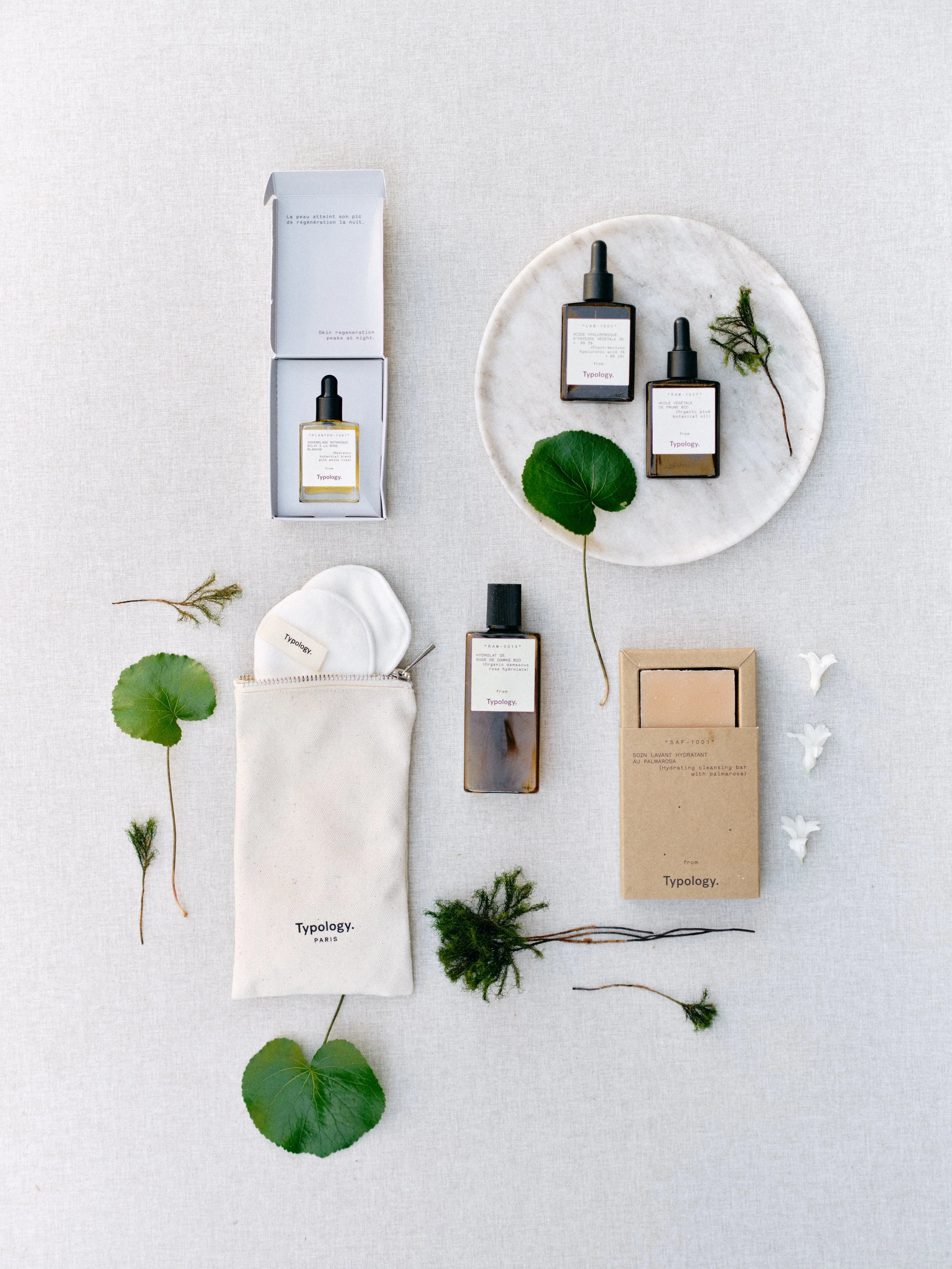

Pictured: LINEN CARRYING BAG in Sand | Dedicated storage bags protect your styling surfaces during transport while allowing air circulation - the shoulder strap design keeps surfaces separate from camera gear.
Creators of premium photography backdrops and styling surfaces
Trusted by thousands of discerning creatives worldwide
Every piece is handcrafted with intention in Orange County, California