
How Backdrop Choice Affects Your Photography Pricing: Client Perception and the Visual Language of Premium Service in 2026
Posted on May 26, 2026
There is a conversation that happens before a single frame is captured, before the first consultation call, before the inquiry even lands in your inbox. It is the conversation your portfolio has with a prospective client, and the backdrop behind every image in that portfolio is speaking louder than you might realize. The surface you photograph against does not just fill the frame. It shapes how a client perceives the value of your work, and that perception directly determines what they are willing to pay. In 2026, as the photography market continues to stratify between volume-driven operators and premium creative studios, the relationship between backdrop quality, client perception, and pricing authority has become one of the most consequential, and least examined, business decisions a photographer makes.
We see this constantly in the work that passes across our studio tables. A photographer switches from a mass-produced muslin to a hand-painted canvas backdrop, and within a quarter, their average booking value climbs. Not because they raised their prices overnight, but because the images themselves began communicating something different. The surface told a story of intention, of curation, of a creative who invests in every element of the visual experience. Clients responded to that story with their wallets.
Jennifer paints every Chasing Stone backdrop by hand over the course of two to three days, layering pigment on premium cotton canvas until the surface develops a tonal depth that no printed alternative can replicate. That depth is not decorative. It is functional: it changes how light moves through the frame, how color renders against skin, and ultimately, how a viewer perceives the quality of the photograph itself. When a bride scrolling through portfolios pauses on your image instead of the next photographer's, the backdrop is doing invisible, essential work.

Editorial florals deserve an editorial backdrop. Shop Chasing Stone hand-painted canvas surfaces, made by hand in California.
The Core Insight
Photography backdrop quality operates as a visual pricing signal: clients unconsciously associate the depth, texture, and intentionality of a hand-painted canvas surface with premium service, making them more willing to invest in higher session fees. A $497 hand-painted canvas backdrop can support a $500 to $2,000 increase in average session pricing over the first year of use, representing a return that compounds with every booking.
The Halo Effect: Why Backdrop Quality Shapes Every Perception of Your Work
Psychologist Edward Thorndike first documented the halo effect in 1920, identifying a cognitive bias in which a single positive attribute colors the perception of everything else. In branding, this principle has been studied extensively. Research published in the Journal of Consumer Research found that participants who viewed a well-designed product rated its functionality and overall quality significantly higher than those who saw a poorly designed counterpart, even when the underlying specifications were identical. The implication for photographers is direct: the visual quality of your backdrop does not exist in isolation. It elevates, or diminishes, how a client perceives your lighting, your posing, your color work, and your creative authority.
Consider what a prospective bride sees when she opens two portfolios side by side. In one, portraits are captured against a Limestone hand-painted canvas, its layered pigment catching the light with a warmth that shifts from pale cream to golden undertone as the eye travels across the surface. In the other, the same pose, the same approximate lighting, but against a wrinkled muslin that reads flat and industrial in the image. The halo effect ensures that the client does not simply prefer one backdrop over the other. She perceives the entire creative offering as more refined, more intentional, more worthy of a premium investment. The backdrop is the first domino in a chain of perception that ends at your price list.
A 2023 Bain and Company survey found that nearly 80 percent of luxury consumers are motivated by emotional factors rather than product specifications alone. For photographers operating in the luxury wedding and fine art portrait market, where packages commonly range from $7,000 to well above $10,000, this statistic is not abstract. It is the operating reality. Your clients are not comparing your f-stop to a competitor's f-stop. They are comparing how your work makes them feel, and the surface behind their portrait is one of the most powerful emotional triggers in the frame.
A hand-painted canvas backdrop absorbs and shapes light directionally, creating tonal depth in the frame that clients perceive as artistic quality, while mass-produced vinyl reflects light uniformly, producing the flat, commercial look that signals budget-tier service.
The Visual Language of Pricing: What Your Backdrop Communicates Before You Quote a Number
Every element of a client's experience with your brand contributes to their price tolerance, the maximum amount they are willing to pay before they feel the value equation tips out of balance. Your website, your communication style, your studio environment, and your portfolio all shape this tolerance. But the backdrop is uniquely powerful because it appears in nearly every image a client evaluates. It is the most repeated visual element in your body of work.
There is a reason the world's most published wedding photographers, the names that appear in Vogue, Over the Moon, and WedVibes, do not shoot against mass-produced surfaces. Jose Villa does not photograph a couture bridal session against a $30 vinyl roll from an online marketplace. The visual language of his work demands a surface with dimension, with the kind of tonal variation that only layered pigment on cotton canvas provides. That visual language is inseparable from the pricing structure his brand supports. The surface is the stage, and clients read the stage before they read the performance.

Luxury portraits begin with intentional surfaces. Hand-painted canvas backdrops designed to elevate every frame.
This is what we mean when we talk about the visual language of premium service. A hand-painted canvas backdrop communicates several things simultaneously. It signals that the photographer has invested in their tools with the same care they bring to their craft. It signals an awareness of materiality, of how surfaces interact with light and color. It signals taste, the kind of curatorial eye that a client expects from someone they are paying $5,000 or $8,000 or $12,000 to document the most important day of their life. And because no two hand-painted canvases are identical, each one carrying the specific marks of Jennifer's brush and the particular way pigment settled into the cotton weave on that particular day, it signals something that no mass-produced alternative can: uniqueness. A surface as one-of-a-kind as the moments it frames.
The inverse is equally true. A backdrop that shows wrinkles, that reads flat under directional light, that looks like it was purchased from the same supplier as every other photographer in the market, communicates something about your pricing before a client ever asks. It suggests volume. It suggests interchangeability. It suggests that the creative offering is built around efficiency rather than intention. For photographers who want to command premium rates, this visual signal is working against them on every page of their portfolio.
Pricing Impact by Backdrop Category: A Framework for Photographers
The relationship between backdrop investment and pricing power is not theoretical. It follows observable patterns across the photography market. The table below maps three common backdrop categories against the pricing signals they communicate, the client segment they attract, and the session fee range they typically support in 2026.
2026 Photography Backdrop Pricing Impact by Material Category
| Backdrop Category | Typical Cost | Light Behavior | Client Perception Signal | Supported Session Fee Range |
|---|---|---|---|---|
| Mass-produced vinyl or paper | $25 to $75 | Reflects light, creates hot spots, no tonal depth | Budget or mid-market service; volume-driven studio | $150 to $500 per session |
| Muslin (machine-dyed or printed) | $50 to $150 | Absorbs light but lacks dimensional texture; wrinkles visible | Professional but undifferentiated; mid-market pricing | $350 to $1,500 per session |
| Hand-painted canvas (e.g., Chasing Stone) | $497 to $1,197 | Absorbs and diffuses light directionally; layered pigment creates tonal depth and micro-shadows | Premium, curated, fine art; editorial-caliber studio | $1,000 to $10,000+ per session |
The gap in the "Supported Session Fee Range" column is where the business case lives. A photographer working with a $497 Clay hand-painted canvas at the 5x8 ft size is not simply purchasing a backdrop. They are purchasing access to a pricing tier. The surface quality in their portfolio signals editorial intent, and that signal attracts the segment of clients whose budget begins where the mass-market segment's budget ends.
This is not to suggest that a backdrop alone determines your rates. Pricing is a function of portfolio quality, client experience, market positioning, geographic demand, and professional reputation. But the backdrop is the most cost-efficient lever in that equation. Consider: a studio rebrand might cost $5,000 to $15,000. A portfolio overhaul requires months of new bookings. A Studio Pack of three hand-painted canvases at $1,371 delivers an immediate visual upgrade across every session and every portfolio image from the moment it arrives.
For photographers charging $500 per portrait session, a single Chasing Stone hand-painted canvas backdrop at $497 pays for itself in one booking and supports a price increase of $200 to $500 per session based on the elevated portfolio quality it produces, yielding a first-year return of 200 to 500 percent at just one session per week.
The Quiet Luxury Principle: How Premium Clients Read Visual Cues
There is a well-documented distinction in luxury consumer behavior between what researchers call "loud luxury" and "quiet luxury." Consumers newer to the luxury market tend to prefer products with prominent brand identifiers, overt signals of status. But experienced luxury consumers, the ones with the highest budgets and the most refined taste, prefer subtlety. They look for quality they can sense without being told. They recognize craftsmanship in the details, in the way a surface catches light, in the absence of the shortcuts that mass production requires.
This distinction maps precisely onto the photography market. The client booking a $2,000 wedding package may not notice the difference between a printed backdrop and a hand-painted one. But the client booking a $10,000 package absolutely does. She may not articulate it as "that's a hand-painted canvas backdrop." She articulates it as "this photographer's work feels different. It feels like art." The quiet luxury of a hand-painted surface, its tonal variation, its textural depth, its refusal to look like anything mass-produced, speaks directly to the client segment that sustains premium pricing.
We hear this from photographers who work with our canvases constantly. The shift is rarely dramatic or sudden. It is a gradual recalibration. A photographer introduces a Sandstone or Slate canvas into their studio rotation. The new images appear on their website and social feed. Inquiries begin arriving from a different tier of client. The consultation calls feel different. The clients are less price-sensitive, more interested in creative direction, more aligned with the photographer's artistic vision. And the photographer realizes that the backdrop did not just change the background of their images. It changed the audience.

Designed with the language of modern luxury: layered florals, soft candlelight, and an editorial backdrop that brings the entire table to life.
The ROI Calculation: Backdrop Investment as a Pricing Lever
For photographers who think in terms of return on investment, the mathematics of backdrop quality are unusually favorable. Unlike most studio investments, which depreciate rapidly or require ongoing costs, a hand-painted canvas backdrop is a durable asset. Cotton canvas maintained properly lasts a decade or more, and the hand-painted surface does not fade, peel, or degrade the way printed alternatives do. The investment is effectively one-time, and the return compounds over years of use.
Let us model a conservative scenario. A portrait photographer currently charges $500 per session and books two sessions per week, generating $52,000 annually. She invests in a single Chasing Stone 5x8 hand-painted canvas at $497. Over the following six months, the upgraded portfolio quality and in-session visual experience support a modest price increase of $150 per session. Her new annual revenue, assuming the same volume, rises to $67,600. The $497 investment generated $15,600 in additional revenue in year one alone, a return exceeding 3,000 percent.
Scale the model to a wedding photographer. She currently books thirty weddings per year at an average package of $4,000, generating $120,000 annually. She invests in a Studio Pack of three 5x8 hand-painted canvases at $1,371. The upgraded bridal portrait quality in her portfolio, combined with the in-person client experience of shooting against a hand-painted surface during getting-ready and detail sessions, supports an average package increase of $500. Her new annual revenue rises to $135,000. The $1,371 investment generated $15,000 in additional revenue, a return exceeding 1,000 percent. And the backdrops will serve her for a decade.
These are not aspirational projections. They are conservative models based on the pricing dynamics we observe across the professional photography market. The full ROI analysis for premium photography backdrops explores this math in greater detail, but the principle is consistent: backdrop quality is one of the highest-ROI investments a photographer can make because it simultaneously improves the product (the images), the experience (the session), and the brand (the portfolio).
What Your Clients See That You Have Stopped Noticing
There is a phenomenon that affects every working professional: habituation. You stop seeing your own environment because you are in it every day. The backdrop that hangs in your studio has become invisible to you, the way the paint color on your bedroom walls becomes invisible after the first month. But your clients see it for the first time every time. And they are reading it.
A client walking into a studio where a hand-painted canvas is mounted on a floating frame does not see "a backdrop." She sees evidence. Evidence that this photographer cares about aesthetics beyond the camera. Evidence that the studio environment has been curated with the same taste the photographer brings to their images. Evidence that she is in the right place, that her investment is justified, that this is not a volume operation but a studio where her session will receive the attention it deserves.
The physical presence of a hand-painted canvas in the studio space functions as what luxury marketers call a "touchpoint of quality," a tangible element that reinforces the premium positioning communicated by the website, the portfolio, and the consultation. Jennifer's brushstrokes are visible on the surface. The cotton canvas has a physical warmth that vinyl and muslin do not. The colors shift subtly as the client moves through the space, revealing the layered pigment beneath. These are the details that luxury clients notice, the details that confirm their decision to book at your price point rather than the photographer two pages back in their search results.
The effect extends beyond the in-person session. When the images are delivered, the backdrop quality persists. The client shares an image on social media, and the depth of the canvas surface elevates the image beyond the typical flat-background portrait. Her friends and colleagues, many of whom are the exact demographic you want to reach, see not just a beautiful portrait but a visually distinct one. The backdrop becomes a referral engine, quietly communicating your brand's visual standard to every viewer.
Building a Pricing Strategy Around Visual Authority
If backdrop choice affects client perception, and client perception affects pricing power, then the logical conclusion is that backdrop selection should be treated as a strategic business decision, not a supply purchase. The photographers who command the highest rates in the industry, the ones whose work appears in luxury publications and whose calendars fill a year in advance, approach their studio tools with the same intentionality they bring to every creative choice.
This means thinking about your backdrop collection as a color palette for your brand. A photographer who specializes in luxury bridal work might build a core rotation around warm neutral tones: Limestone for its pale warmth that flatters every skin tone, Clay for its rich terracotta depth in editorial portraits, and Sandstone for its versatile golden warmth that photographs beautifully in both natural and studio light. A photographer building a fine art portrait brand might lean toward the architectural neutrals: Slate, whose concrete-like gray provides the kind of quiet, gallery-wall backdrop that lets the subject command the frame, paired with Graphite for dramatic, low-key work.
The color strategy becomes part of the brand itself. Clients begin to associate your work with a specific visual palette, a signature that distinguishes your portfolio from every other photographer in the market. This is where building a portfolio with intentional backdrop selection becomes not just a creative exercise but a business strategy. The consistency of your visual language tells potential clients that you have a point of view, that you are not simply reacting to trends but creating within a deliberate aesthetic framework. That confidence, expressed through every image, supports premium pricing because it communicates mastery.
The most effective pricing strategy for portrait and wedding photographers in 2026 treats backdrop selection as a brand-building investment rather than a supply cost, building a cohesive visual palette of two to four hand-painted canvases that reinforces a signature aesthetic across every session and portfolio image.
The Cost of Not Investing: What Budget Backdrops Signal to Premium Clients
The halo effect works in both directions. Just as a hand-painted canvas creates a positive cascade of perception, a budget backdrop creates what psychologists call the "horn effect," a negative first impression that colors every subsequent judgment. A vinyl backdrop with visible hot spots, a muslin with wrinkles that even careful steaming cannot fully eliminate, a paper roll with a visible seam: each of these tells a prospective client something about the photographer's relationship to quality.
This is not snobbery. It is the visual equivalent of a luxury retailer's storefront. A client who is prepared to invest $5,000 or more in photography expects visual evidence that her investment is being matched by the photographer's own investment in their craft. When the backdrop reads as budget, the client's internal pricing calculus shifts. She may still book, but her price tolerance drops. She expects a lower number because the visual cues she has received suggest a lower tier of service. The photographer who then presents a $5,000 package faces resistance that has nothing to do with the quality of their actual photography and everything to do with the perception created by the surface behind it.
The cost of a budget backdrop is not the $30 or $75 paid at checkout. It is the thousands of dollars in premium bookings that never materialize because the portfolio failed to signal the visual authority that premium clients require. When you calculate the true cost of your backdrop choice, calculate it in bookings lost, not dollars saved. For a deeper analysis of the investment equation, our guide to hand-painted backdrop costs breaks down the actual pricing across sizes and bundles.
Material Science and Client Perception: Why Canvas Behaves Differently Under Light
The perception differences between backdrop materials are not merely aesthetic preferences. They are rooted in how different materials interact with light at a physical level, and those interactions produce measurably different results in the final image.
Vinyl is a non-porous, glossy surface. When studio light strikes vinyl, it reflects uniformly, creating specular highlights and a flat, dimensionless background. The resulting image reads as commercial, sterile, efficient. These are useful qualities for product photography on a white sweep, but they are the opposite of what portrait and bridal clients associate with fine art quality.
Muslin is an improvement over vinyl in that it absorbs light rather than reflecting it, but its woven texture is uniform and repetitive. Under close examination or at wider apertures, muslin reads as fabric, not as a painterly surface. Its color is applied in a single pass, either dyed or printed, which means it lacks the tonal variation that gives a painted surface its depth.
Hand-painted cotton canvas operates on an entirely different principle. Jennifer applies multiple layers of pigment to premium cotton canvas, building up color the way a fine artist builds up a painting. The result is a surface with genuine tonal depth: cooler undertones visible beneath warmer surface layers, brushstroke texture that creates micro-shadows under directional light, and a matte finish that absorbs and diffuses light in a way that wraps naturally around the subject. When a photographer shoots at f/2.8 or f/4 with an 85mm lens, the canvas texture renders as a soft, painterly field that no digital background replacement can convincingly replicate. The Ultimate Photography Backdrop Guidecovers these material distinctions comprehensively.
This material behavior directly feeds the perception equation. Clients do not analyze light physics, but they respond to the visual result. A portrait against hand-painted canvas looks like it belongs in a gallery or an editorial spread. A portrait against vinyl looks like it belongs on a corporate ID badge. The material science is invisible to the client, but its effect on their perception of value is immediate and decisive.
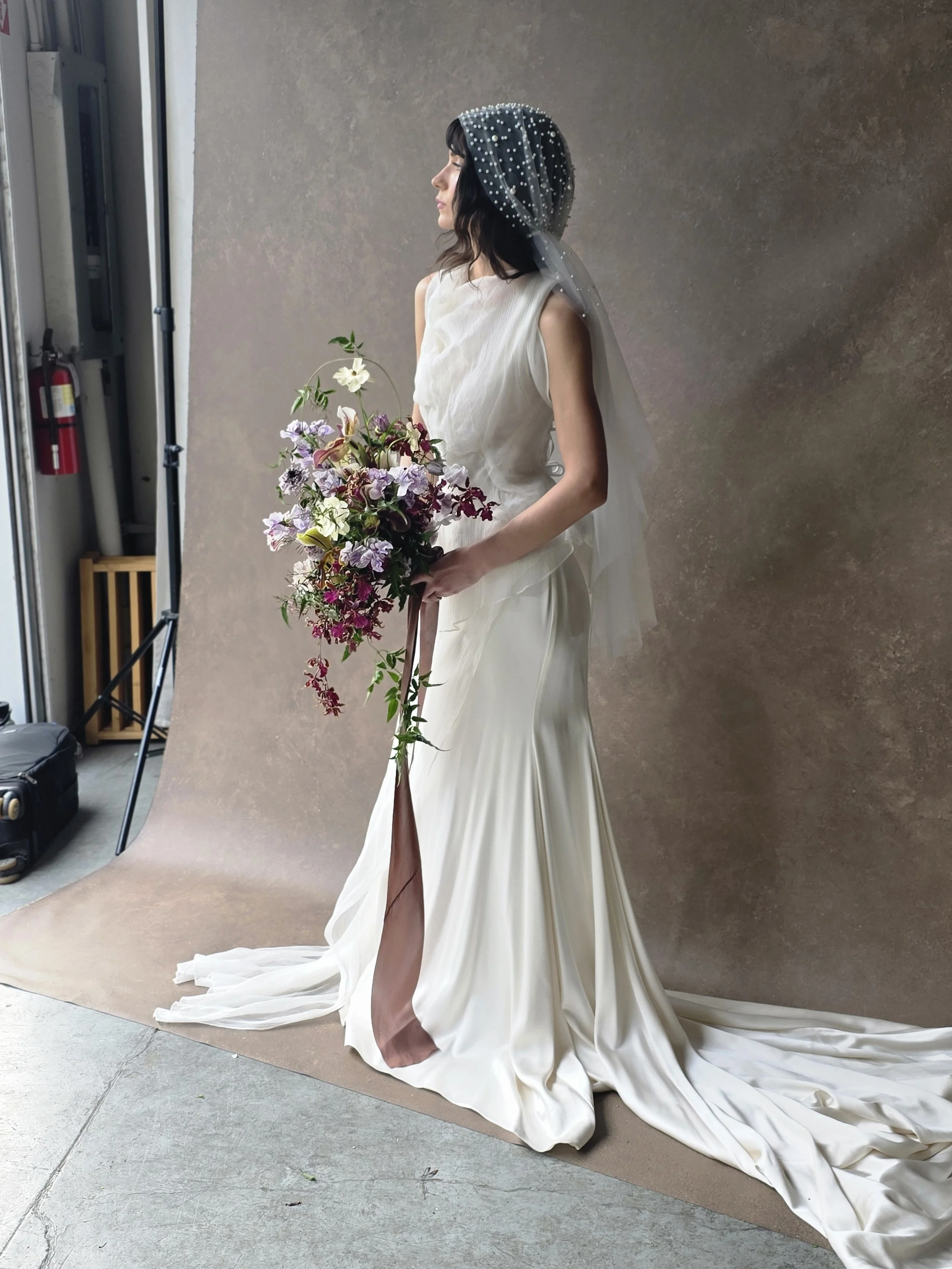
Hand-painted canvas backdrops bring depth and quiet elegance to bridal portraits, creating the refined visual language luxury clients remember.
Sustainability as a Pricing Signal: The Ethics of Material Choice
There is one additional dimension of backdrop choice that increasingly affects client perception, particularly among the affluent, design-conscious demographic that sustains luxury photography pricing: sustainability. The environmental impact of studio materials is no longer a peripheral concern for premium clients. It is part of the value equation.
Chasing Stone was the first styling surface maker to offer entirely biodegradable packaging. Our production process generates near-zero waste. No plastic is used in packaging. Every backdrop is handcrafted in California by a single artist, eliminating the carbon footprint of overseas mass manufacturing and the ethical concerns that accompany it. For clients who choose their vendors based on values alignment, and a growing number of luxury clients do, this production philosophy is not incidental. It is a reason to book.
When a photographer can tell a client that every surface in their studio is hand-painted by a California artist using sustainable practices, that narrative becomes part of the premium experience. It adds another layer to the story of intentionality that premium pricing requires. The backdrop is not just a visual tool. It is evidence of the photographer's entire approach to their craft: thoughtful, deliberate, rooted in quality over convenience.
Frequently Asked Questions
How does backdrop choice directly affect what photographers can charge for sessions?
Backdrop quality creates a halo effect that shapes client perception of the entire photography experience. A hand-painted canvas backdrop signals premium, curated service, which raises a client's price tolerance, the maximum amount they are willing to pay before they perceive the value equation as unbalanced. Photographers who upgrade from mass-produced backdrops to hand-painted canvas surfaces typically see their average session fee increase by $200 to $500 within the first six months as their portfolio attracts a higher-budget client segment.
What is the ROI of investing in a hand-painted photography backdrop versus a budget alternative?
A Chasing Stone hand-painted canvas backdrop starts at $497 for a 5x8 ft surface and lasts a decade or more with proper care. For a portrait photographer booking two sessions per week, even a modest $150 per-session price increase supported by improved portfolio quality yields $15,600 in additional annual revenue, a return exceeding 3,000 percent on the initial investment. Budget vinyl or muslin backdrops priced at $25 to $150 degrade faster, require more frequent replacement, and do not support the same pricing authority.
Do clients actually notice the difference between a hand-painted backdrop and a printed one?
Premium clients may not identify the specific material, but they consistently perceive the visual difference. Research on the halo effect demonstrates that visual quality in one element of a product or experience elevates the perceived quality of every other element. In portfolio comparisons, images shot against hand-painted canvas surfaces receive higher engagement and inquiry rates because the tonal depth and textural dimension of the surface communicate artistry that flat, printed backgrounds cannot replicate.
Which hand-painted backdrop colors are best for building a premium photography brand?
For luxury bridal and portrait work, warm neutrals like Limestone, Clay, and Sandstone provide the most versatile foundation because they flatter a wide range of skin tones and convey editorial warmth. For fine art and contemporary portrait brands, architectural neutrals like Slate (a concrete-like gray) and Graphite (deep charcoal) create a gallery-wall aesthetic that signals artistic seriousness. Building a collection of two to four complementary colorways creates a cohesive visual palette that becomes a signature element of the photographer's brand identity.
How long does it take for a backdrop upgrade to affect photography pricing?
Most photographers report noticing a shift in client quality within three to six months of introducing hand-painted canvas backdrops into their studio rotation. The timeline depends on how quickly new images enter the portfolio and are reflected on the website and social media. Photographers who prioritize shooting styled portfolio sessions on their new backdrops see faster results, as the updated visual language reaches prospective clients sooner and begins attracting the higher-budget demographic that canvas surfaces naturally appeal to.
Can backdrop quality really justify a $500 or more increase in session pricing?
Backdrop quality is one factor in a comprehensive pricing strategy, but it is among the most cost-efficient levers available. A single $497 hand-painted canvas improves every image captured against it, upgrading the portfolio, the in-session client experience, and the social media content simultaneously. For context, a studio rebrand costs $5,000 to $15,000, and new lighting equipment depreciates immediately. A hand-painted canvas delivers comparable brand impact at a fraction of the cost and maintains its value for over a decade.
What is the difference between how vinyl and canvas backdrops appear in photographs?
Vinyl is a non-porous, glossy material that reflects studio light uniformly, creating specular hot spots and a flat, dimensionless background that reads as commercial or corporate. Hand-painted cotton canvas absorbs and diffuses light directionally, with layered pigment creating tonal depth, micro-shadows in the brushstroke texture, and a matte finish that wraps light naturally around the subject. At apertures like f/2.8 to f/4 with a portrait lens, canvas texture renders as a soft, painterly field that no digital background can convincingly replicate.
Is it worth investing in multiple hand-painted backdrops, or is one enough to start?
One hand-painted canvas backdrop is enough to begin shifting your portfolio's visual language and attracting higher-budget clients. However, building a collection of two to four complementary colorways allows a photographer to offer variety within a cohesive aesthetic, which strengthens brand identity and supports higher pricing. Chasing Stone's Studio Pack bundles offer three 5x8 ft hand-painted canvases at $1,371, providing immediate collection depth at a meaningful savings over individual purchases.
The Surface That Speaks for Your Brand
Every element of your photography business tells a story about your relationship to quality. Your camera body, your lighting, your editing style, your client communication: each one contributes to the perception that determines your pricing power. But none of these elements appears in as many client-facing touchpoints as your backdrop. It is in every portrait. It is in every social media post. It is behind every detail shot, every bridal image, every editorial frame. It is, in the most literal sense, the surface on which your reputation is built.
The question is not whether your backdrop affects client perception and pricing. The research, the market data, and the lived experience of thousands of professional photographers confirm that it does. The question is whether the surface currently in your studio is telling the story you want told, whether it is signaling the premium, intentional, artistically grounded creative practice that justifies the rates you want to charge.
If the answer requires any hesitation at all, the investment case is already clear. Explore the full collection of hand-painted canvas backdrops and begin building the visual language your pricing strategy deserves.
For questions about colorway selection, sizing, or building a backdrop collection tailored to your studio's brand, reach out to us at info@chasingstone.com. We are here to help you find the surfaces that speak the way your work deserves to be seen.
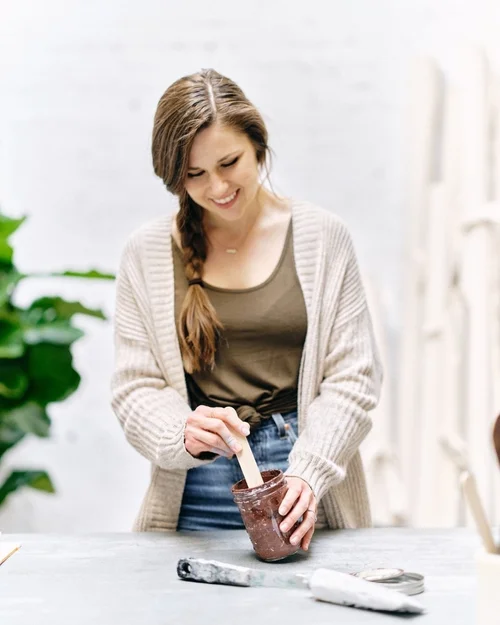
Creators of premium photography backdrops and styling surfaces
Trusted by thousands of discerning creatives worldwide
Every piece is handcrafted with intention in Orange County, California