
Photographing Flowing Fabric on Canvas Backdrops: Movement and Veil Techniques (2026)
Posted on June 2, 2026
There is a fraction of a second, somewhere between the toss and the settle, when a cathedral veil becomes architecture. The tulle catches the air, holds its shape against gravity, and for one frame the fabric is not falling but floating, suspended in a composition that no amount of posing could construct. That moment is the reason photographers who work with flowing fabric choose their backdrop surface as carefully as they choose their lens.
Photographing flowing fabric on canvas backdrops is a discipline that lives at the intersection of technical precision and controlled unpredictability, where shutter speed, wind direction, fabric weight, and surface texture must converge in a single exposure. This guide is a technical and creative framework for capturing movement against hand-painted canvas, the one surface material whose tonal depth and light-absorbing texture elevate fabric photography from documentation to editorial art.
We have watched thousands of images come back from photographers working with our hand-painted canvases, and the ones that stop us are almost always the ones involving movement. A veil draped against our Limestone backdrop reads differently than the same veil draped against muslin or vinyl, because the layered pigment in the canvas creates a secondary depth behind the translucent fabric. Jennifer paints each surface over two to three days, building up layers of pigment that produce tonal variation visible even through sheer material. That depth is not decorative. It is structural, and it changes the way fabric photographs.
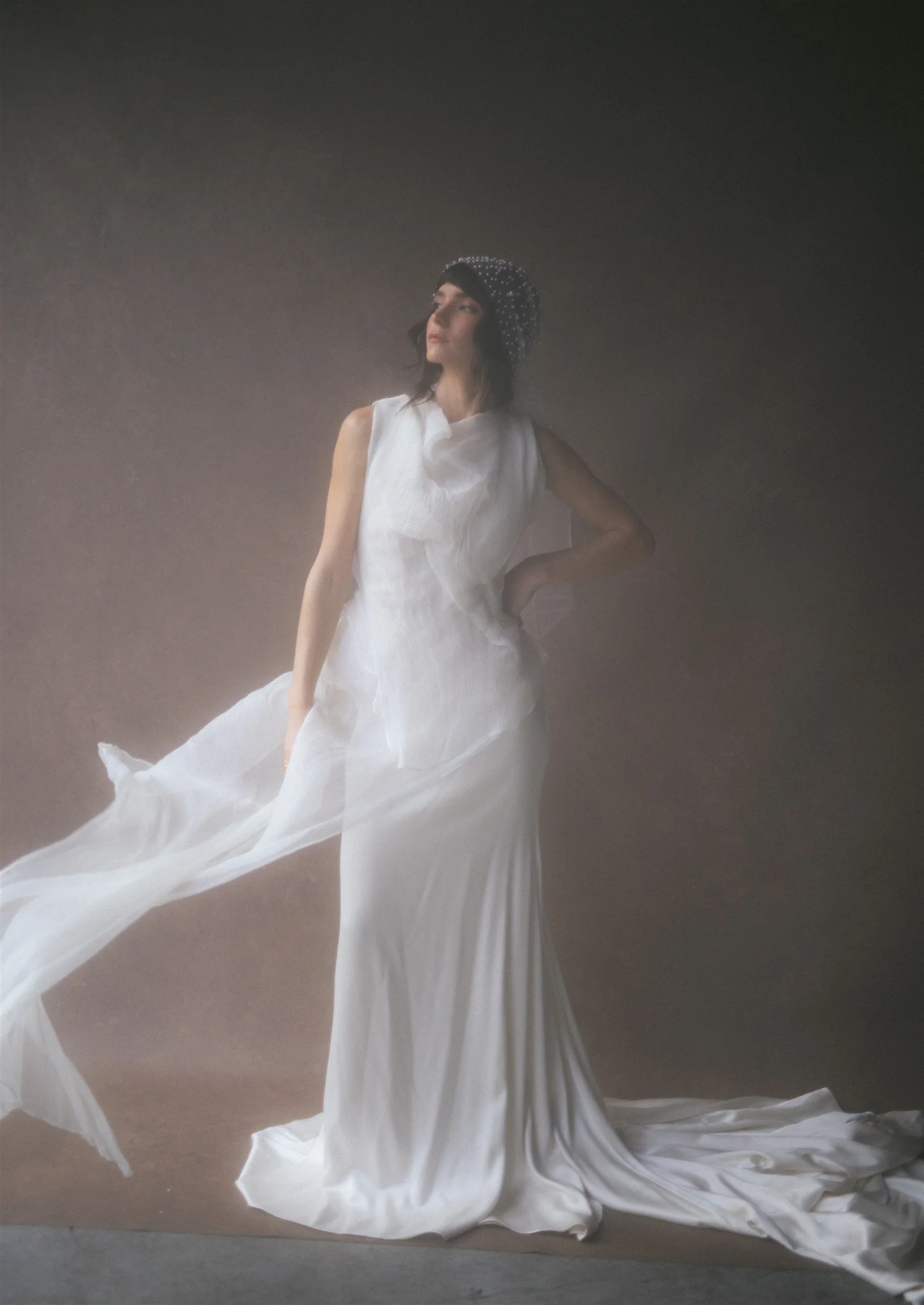
Editorial bridal sessions book a season ahead, and so do our most popular warm-toned canvases. If flowing fabric work is on your shoot list, start your backdrop search at chasingstone.com.
Quick Answer
Photographing flowing fabric on canvas backdrops requires a shutter speed of 1/500s to 1/1000s to freeze crisp motion (or 1/60s to 1/125s for intentional ethereal blur), continuous autofocus in AI Servo or AF-C mode, burst shooting at 8 to 12 frames per second, and a controlled wind source positioned below or to the side of the subject. Hand-painted cotton canvas is the ideal backdrop surface for fabric photography because it absorbs and diffuses light rather than reflecting it, preventing the hot spots that vinyl creates behind translucent veils and flowing gowns.
Why Canvas Changes Everything About Fabric Photography
The physics of fabric photography begin at the backdrop surface. When a sheer veil or a silk train falls between the lens and the background, the backdrop is no longer behind the subject. It is visible through the subject. Every imperfection, every reflection, every tonal inconsistency in the surface becomes part of the image.
Vinyl backdrops reflect studio light. That reflection travels through translucent fabric and registers in the image as a hot spot, a bright, flat area that flattens the tonal range and competes with the fabric's own texture. Muslin absorbs light more evenly than vinyl but offers no tonal depth. A muslin backdrop seen through a veil is a wash of uniform color, serviceable but unremarkable.
Hand-painted cotton canvas occupies a different category entirely. The surface absorbs light the way a gallery painting absorbs light: directionally, with depth that shifts as the viewing angle changes. When Jennifer layers pigment across our canvases over multiple sessions, the resulting surface has what painters call "tooth," a micro-texture that catches and scatters light at different wavelengths depending on the angle of incidence. Seen through a cathedral veil or a silk charmeuse train, that tooth becomes a luminous, dimensional presence behind the fabric rather than a flat plane.
Hand-painted cotton canvas absorbs and diffuses studio light, while vinyl reflects it, creating hot spots that show through translucent fabric and flatten the tonal range of the image. This is the fundamental reason editorial photographers choose hand-painted canvas for fabric-intensive sessions.
This is the fundamental reason editorial photographers choose hand-painted canvas for fabric-intensive sessions. The backdrop collaborates with the fabric instead of competing with it. The tonal variation in a surface like our Rose-Quartz hand-painted backdrop or our Limestone canvas gives the eye somewhere to travel when the fabric falls, creating depth that a single-tone surface cannot produce.
For photographers building a collection of hand-painted photography backdropsfor bridal or editorial work, prioritizing surfaces with warm, muted tonal variation will produce the most versatile results for fabric photography. Surfaces with too much contrast or saturation can overwhelm translucent fabric, while surfaces that are too uniform offer nothing for the fabric to reveal.
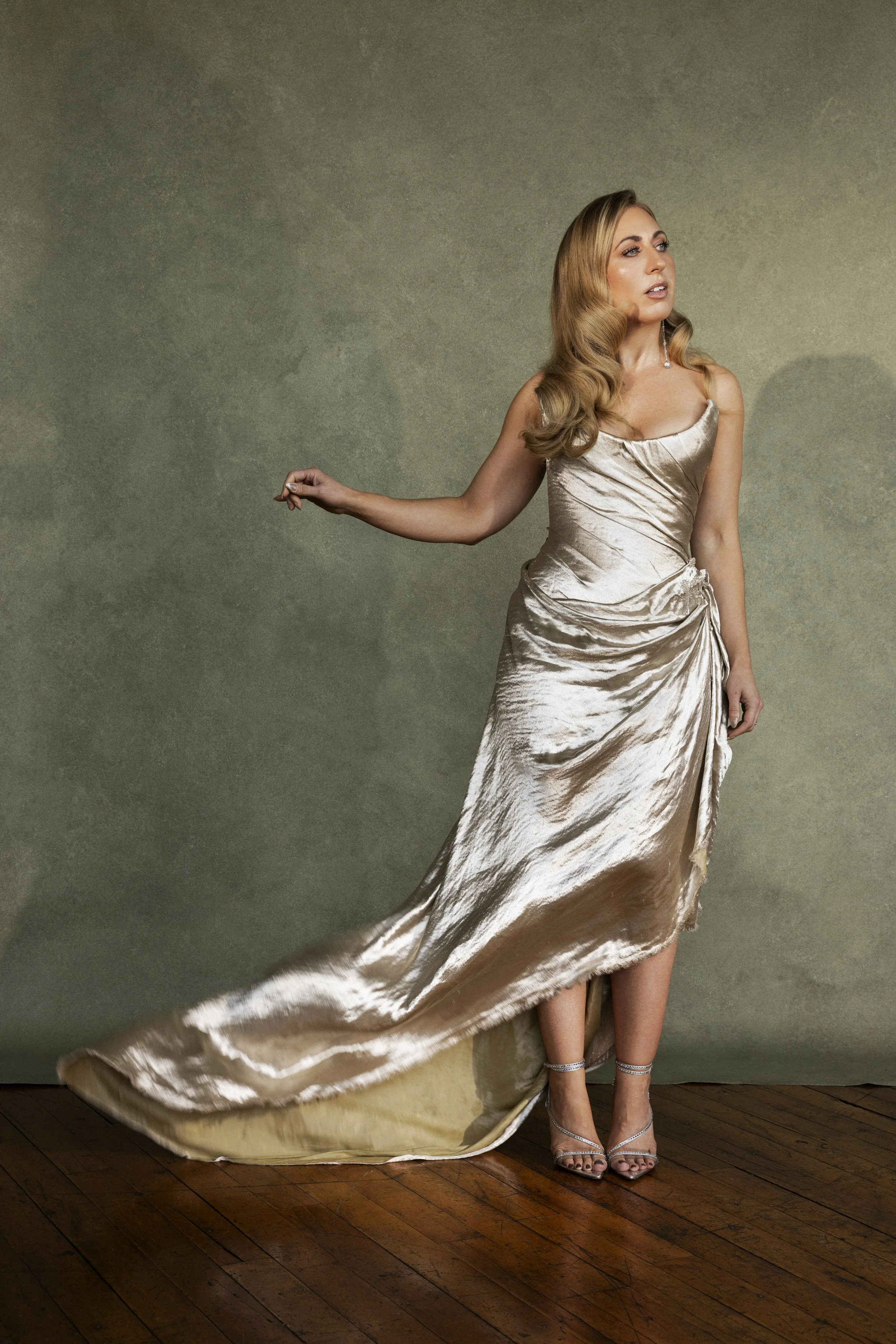
Champagne silk against a our Olivine hand-painted canvas is one of the most studied color pairings in editorial bridal photography. The warm metallic fabric and the cool layered pigment create the kind of chromatic contrast that single-tone backdrops simply cannot produce.
Camera Settings for Flowing Fabric on Canvas Backdrops
The technical challenge of fabric photography is that you are photographing two subjects with different requirements simultaneously: a person who needs to be sharp and a fabric element that may need to be sharp, blurred, or somewhere between. Your camera settings must serve both.
Shutter Speed: The Variable That Defines the Image
Shutter speed is the single most consequential setting in flowing fabric photography, and there is no single correct answer. The choice depends entirely on the creative intent.
For frozen motion, where every fold and ripple in the veil or train is captured with crystalline sharpness, a shutter speed of 1/500s is the starting point, with 1/1000s providing a more reliable freeze for fast-moving fabric like lightweight tulle or chiffon. At 1/1000s, a cathedral veil tossed by an assistant will hold its shape in the frame with visible texture in every fold.
For controlled blur, where the fabric has a sense of motion while the subject's face and body remain sharp, the range narrows to 1/60s to 1/125s. This is the range where the human body can remain still enough to register as sharp while fabric in motion creates a directional blur that reads as movement rather than camera shake. The key is that the subject must be stationary. If the model is walking or turning, even 1/125s will introduce softness in the body.
For the fully ethereal effect, where the fabric becomes a translucent wash of color and light, shutter speeds of 1/15s to 1/2s with the camera on a tripod produce results that recall long-exposure water photography applied to textile. This technique requires a tripod, a patient model, and an understanding that the subject's face must remain absolutely still while the fabric moves around her.
Aperture and Depth of Field
For a single subject with flowing fabric, f/2.8 on an 85mm or 105mm lens provides enough depth of field to keep the subject's face sharp while allowing fabric at the edges of the frame to soften naturally. The shallow depth of field at f/2.8 also enhances the canvas backdrop's textural depth, rendering the hand-painted surface as a painterly wash rather than a sharp, identifiable background.
For couples or when the fabric extends significantly toward or away from the camera, f/4 to f/5.6 provides a deeper zone of acceptable focus without sacrificing the backdrop's softness. The trade-off is light: at f/5.6 with a shutter speed of 1/1000s, you will need either powerful strobes or an ISO above 800 to maintain proper exposure.
ISO and Exposure Compensation
Set ISO as low as your shutter speed and aperture combination allow. For natural-light fabric photography near a large window, ISO 400 to 800 at f/2.8 and 1/500s is a typical starting point. For studio strobe work, ISO 100 to 200 is achievable.
Exposure compensation deserves attention when shooting against hand-painted canvas. Darker colorways like our Carbon or Graphite canvases will cause the camera's meter to overexpose the subject by +0.5 to +1 stop, while lighter surfaces like Silt or Limestone may cause slight underexposure. When white fabric enters the frame, the metering challenge compounds. Spot metering on the subject's face, rather than evaluative metering, solves most of these issues.
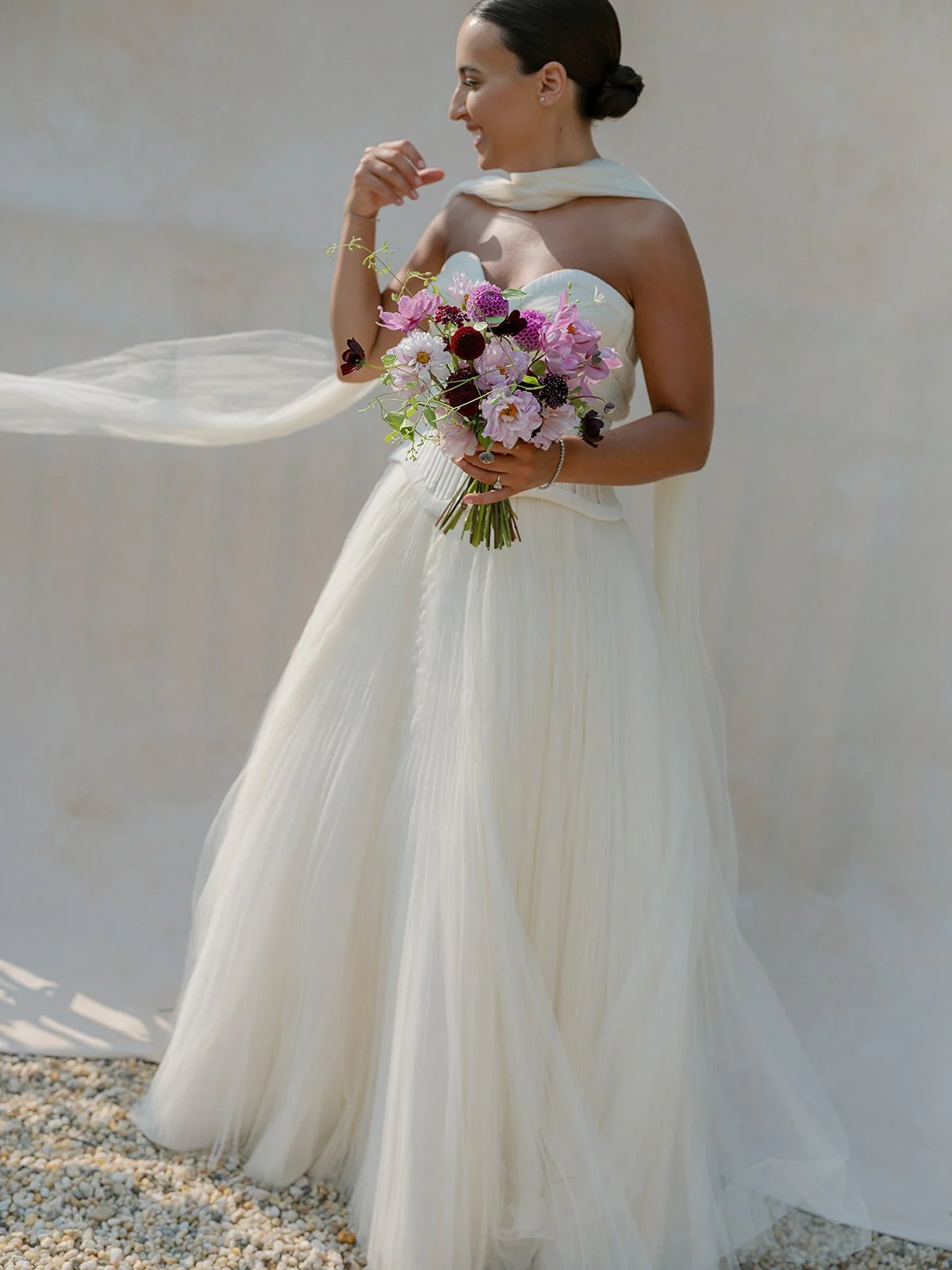
Every bridal photographer knows the feeling: the wind cooperates for one frame and ruins the next ten. Hand-painted canvas in a controlled studio is the answer to that frustration. It’s not a replacement for location work, but a complement to it.
Autofocus Mode and Drive
Continuous autofocus (AI Servo on Canon, AF-C on Nikon and Sony) is non-negotiable for fabric photography involving movement. Single-shot autofocus locks focus at the moment of the half-press, but a model whose veil is being tossed or whose train is being lifted is rarely in the same focal plane between the lock and the shutter release.
For a deeper dive into the technical relationship between aperture, distance, and background blur on canvas, our guide to camera settings for backdrop photography covers the full range of variables. Pair continuous AF with burst mode at the highest frame rate your camera allows. At 10 to 12 frames per second, a two-second burst during a veil toss produces 20 to 24 frames, giving you the best chance of capturing the one frame where the fabric, the expression, and the light converge. The timing of a fabric toss follows a rhythm that experienced photographers describe as "one, two, toss, click," but the truth is that burst mode replaces the need for perfect timing with probability. Shoot more frames. Edit ruthlessly.
At 1/1000s, a cathedral veil tossed by an assistant will hold its shape in the frame with visible texture in every fold. At 1/60s, the same veil becomes a translucent wash of directional blur while the subject's face remains sharp. The creative intent determines the shutter speed, and the intent should be decided before the session begins.
Controlling Wind and Movement in the Studio
Fabric does not move on its own in a studio. The photographer must create the movement, and the method of creation determines the character of the movement in the final image.
The Assistant Toss
The most organic-looking fabric movement comes from a human hand. An assistant standing just outside the frame gathers the veil or train, lifts it, and releases it in a sweeping arc timed to the photographer's count. The advantage is that a skilled assistant can vary the height, direction, and force of the toss to produce different compositions. The disadvantage is that it requires coordination, patience, and the understanding that you will shoot many frames to get one.
The technique works best with lightweight, single-layer fabrics: tulle, organza, chiffon, and lightweight silk. Cathedral veils in these materials can achieve a full arc of two to three feet above the subject's head. Heavier embellished veils with beading or lace appliqué resist movement and produce a stiffer, less fluid line. When a bride's veil is heavily embellished, the toss technique still works, but the expectation should be gentle lift rather than dramatic arc.
The Floor Fan
A floor fan positioned below the frame line and angled upward at approximately 30 degrees produces consistent, repeatable movement that is easier to photograph than a toss. The upward angle is critical: wind from below lifts fabric naturally, the way a breeze catches a skirt on a staircase, whereas horizontal wind flattens fabric against the body and produces an unflattering, windblown look.
Variable-speed fans offer the most control. A low setting produces gentle ripple through sheer fabric, suitable for that barely-there sense of life in a bridal portrait. A medium setting lifts cathedral veils and lightweight trains. A high setting is rarely useful for portraiture because it disturbs the subject's hair and expression. The fan should be close enough to move the fabric but far enough to avoid visible wind effects on the subject's face and hair. Three to five feet from the subject is a typical working distance, adjusted based on the fan's power and the fabric's weight.
The Reflector Technique
For subtle, controlled movement without the noise and consistency of a fan, a large reflector or foam board held by an assistant can create a single burst of air. The assistant holds the reflector at arm's length and brings it forward in a quick sweeping motion, pushing air toward the fabric. This produces a single, natural-looking lift that lasts approximately one second, enough time for two to three frames in burst mode.
This technique is particularly effective for under-the-veil portraits, where a delicate lift of the veil above the couple's heads creates the romantic canopy effect without the sustained wind that a fan would produce. The movement looks more spontaneous, more like a gust on a hillside than a studio setup.
Fabric Types and How They Behave Against Canvas
Not all fabrics photograph the same way against a hand-painted canvas backdrop, and understanding the interaction between fabric weight, opacity, and the canvas surface is essential for planning the session.
Tulle and illusion netting are the most responsive to movement and the most revealing of the backdrop behind them. Against a surface like our Sandstone canvas backdrop, tulle becomes a gauzy filter that softens the backdrop's texture without obscuring it. The warm tones of Sandstone glow through the tulle, creating a luminous, painterly effect that is impossible to replicate with a solid-color vinyl surface.
Silk charmeuse and crepe de chine are heavier than tulle and produce slower, more fluid movement. These fabrics do not billow; they flow. Against canvas, their smooth surface contrasts with the backdrop's painted texture in a way that creates visual tension, the kind of tension that makes an editorial image compelling. Silk catches light differently than canvas, and the interplay between the fabric's sheen and the canvas's matte absorption produces a tonal complexity in the image that post-processing cannot fabricate.
Chiffon occupies the middle ground. Lightweight enough to catch air and billow, opaque enough to register its own color in the frame. Chiffon layers against our Clay hand-painted backdrop create a warm, terracotta-tinted environment that reads as Mediterranean, as golden-hour editorial, as the visual language of a luxury destination wedding.
Organza is stiffer than chiffon and holds its shape during movement, producing angular, architectural lines rather than soft curves. Organza against a darker canvas like Slate, a concrete-like architectural gray, creates a modern, editorial aesthetic that suits fashion and fine art portraiture more than romantic bridal work.
Lace does not billow but drapes, and its movement is about fall rather than flight. Against a hand-painted canvas, lace creates a conversation between two textures: the organic, irregular pattern of the lace and the layered, painterly texture of the canvas. The effect is richest when the lace and the canvas occupy different tonal families. A cream lace against a cool-toned Celestite canvas, for instance, creates contrast that neither element could produce alone.
The Under-the-Veil Portrait: A Technical Breakdown
The under-the-veil portrait is one of the most requested images in bridal photography and one of the most technically demanding to execute well against a hand-painted canvas backdrop. The technique requires the photographer to shoot through the veil, using the fabric as a foreground element that partially obscures and softens the image of the couple beneath.
Lens Selection
A 35mm lens is the standard for under-the-veil portraits. Wider lenses (24mm, 28mm) can work but introduce distortion at the edges of the veil. An 85mm lens produces a tighter crop that limits how much veil is visible in the frame. The 35mm focal length strikes the balance: wide enough to include the veil's full drape on both sides of the frame while close enough to maintain intimacy in the couple's expression.
Positioning and Backdrop Coverage
The veil must be held above and behind the couple by an assistant, creating a tent-like structure. The photographer stands inside this tent, shooting outward toward the subjects. The hand-painted canvas backdrop should be visible through the veil behind the couple, which means the backdrop must be large enough to fill the frame behind the subjects plus the veil's perimeter.
For under-the-veil portraits, an 8x10 ft canvas provides adequate coverage for a couple standing together. An 8x14 ft canvas allows more creative freedom with the assistant's positioning and gives the veil a wider canvas (both literally and figuratively) to frame against. The larger size also prevents the edges of the backdrop from appearing in wider compositions, which breaks the illusion.
Exposure Through the Veil
The veil between the lens and the subjects reduces the light reaching the sensor by approximately 1/3 to 2/3 of a stop, depending on the fabric's density. Manual exposure set before the veil goes up, with a +1/3 to +2/3 stop compensation, will prevent the slight underexposure that automatic metering produces when reading through translucent fabric.
The veil also acts as a natural diffuser, softening the light falling on the subjects. This is generally flattering, but it can reduce contrast to the point where the image feels flat. A touch of fill light, either from a reflector below the camera or a subtle strobe, restores dimension without overpowering the veil's softening effect.
Color Theory for Flowing Fabric Against Painted Canvas
The relationship between fabric color, backdrop color, and the light passing through translucent fabric creates a color interaction that is unique to this type of photography. Understanding this interaction is part of what separates a competent fabric photograph from an editorial one.
White tulle or silk against a warm-toned canvas like Clay or Sandstone picks up the warm reflected light from the canvas surface, tinting the fabric with a golden undertone. This is generally desirable for bridal work, where warmth reads as romance and light.
White fabric against a cool surface like Celestite or Silt takes on a blue or silver cast. This reads as modern, editorial, and slightly cooler in emotional temperature. For fashion editorials or fine art portraits, this coolness adds sophistication.
A blush-toned fabric against a sage or muted green backdrop, or a burgundy fabric against a warm neutral, creates chromatic contrast that gives both elements more visual presence. The hand-painted surface's tonal variation intensifies this effect because the canvas is never a single flat color but a range of values within its color family.
When translucent fabric falls between the lens and a hand-painted canvas, the final color the camera records is a blend of the fabric color and the backdrop color, weighted by the fabric's opacity. Jennifer's multi-layered painting technique creates canvases where the underlying layers are a slightly different hue than the surface layer, producing color complexity through translucent fabric that a single-tone backdrop cannot achieve.
When the fabric is translucent and the backdrop is visible through it, the final color the camera records is neither the fabric color nor the backdrop color but a blend of the two, weighted by the fabric's opacity. Jennifer's multi-layered painting technique creates canvases where the underlying layers are a slightly different hue than the surface layer, meaning that the color blend through translucent fabric has more complexity than a single-tone backdrop would produce. This is a detail that matters in fine art printing and in editorial work destined for publication.
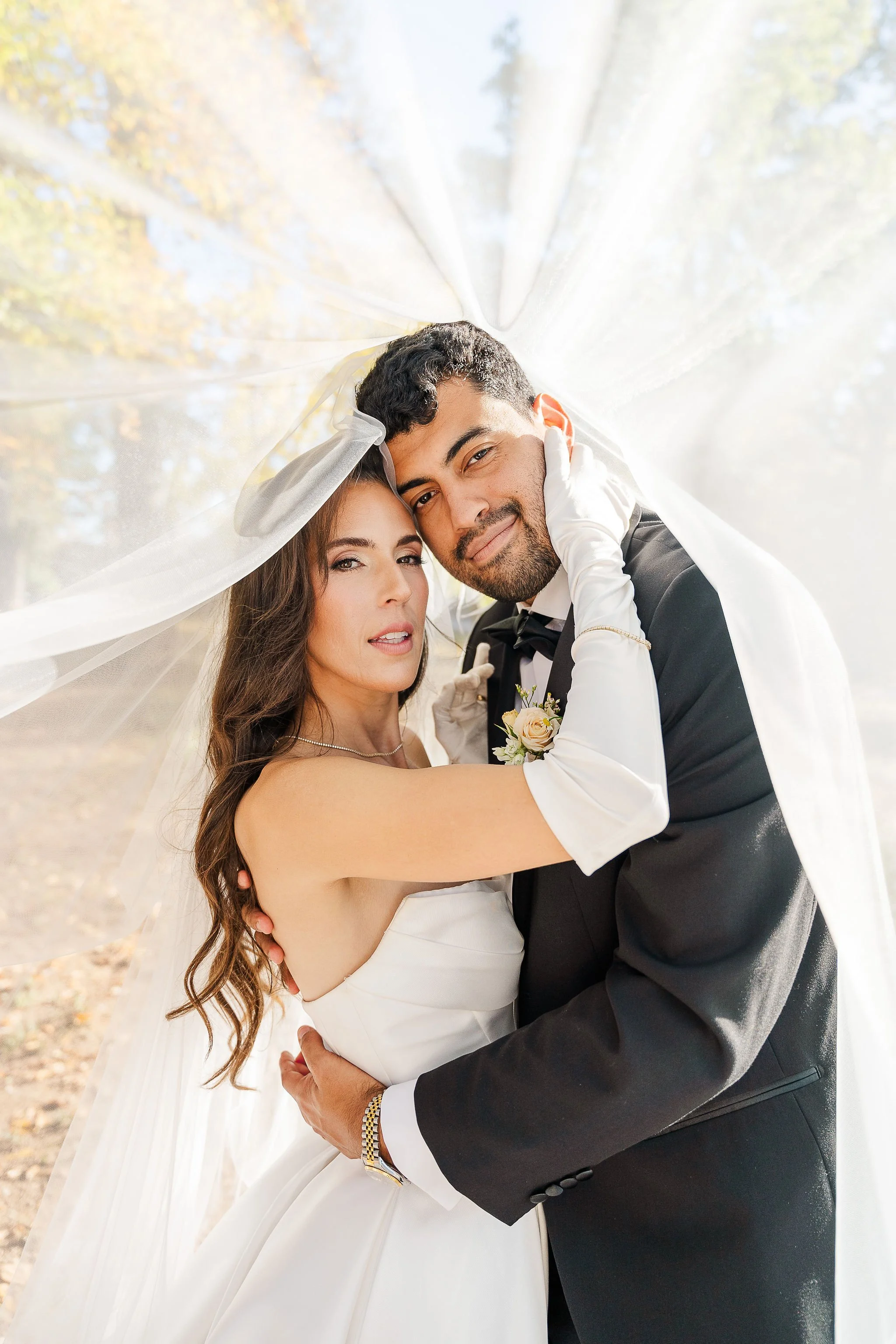
The under-the-veil portrait works outdoors with golden-hour backlight, and it works in the studio with hand-painted canvas behind the couple. The technique is the same, a 35mm lens, exposure compensated for the veil, the fabric held above as a tent. The studio version simply gives you more control over the variables.
Compositing Fabric Movement in Post-Production
Not every flowing fabric image is a single exposure. Many of the most striking editorial fabric photographs are composites, combining the best pose of the subject with the best moment of fabric movement from a separate frame. This is a standard practice in editorial and fashion photography, not a shortcut.
The technique requires that both frames be shot from the same position, with the same focal length, aperture, and lighting. The only variable between the two exposures is the fabric's position. In post-production, the photographer masks the fabric from the movement frame onto the pose frame, blending at the natural transition point where the fabric meets the body.
Hand-painted canvas backdrops simplify compositing significantly compared to outdoor or location shoots. The backdrop is a fixed, consistent surface that does not change between frames. There is no wind shifting leaves, no cloud movement altering the light, no ambient color shifts. The backdrop's consistency means that the composite's blend point is virtually invisible, because the canvas texture on either side of the mask is identical.
This is one of the practical advantages of studio fabric photography that is rarely discussed: the controlled environment of a hand-painted canvas backdrop makes compositing more efficient and more convincing. A photographer working with our canvases can shoot the pose series and the fabric toss series as separate passes, knowing that the two will merge seamlessly because the backdrop is constant.
For photographers who also work on location, the compositing skill learned in the studio translates directly to on-site work. But the studio environment, with its hand-painted canvas serving as a perfectly consistent background, is where the technique is easiest to master and where the results are most polished. Many editorial photographers develop their compositing workflow against canvas specifically because the controlled conditions let them isolate variables and refine their masking technique before applying it to more complex environments.
Maternity, Editorial, and Fine Art Applications
Flowing fabric is not exclusive to bridal photography. The techniques described here apply with equal force to maternity, editorial fashion, and fine art portraiture, each genre bringing its own relationship between fabric, movement, and canvas.
In maternity photography, flowing fabric serves a specific purpose: it creates visual narrative around the body's silhouette. A silk wrap or a sheer fabric drape against a warm canvas like Sandstone or Rose-Quartzproduces images that feel timeless rather than trend-dependent. Photographers who specialize in maternity sessions with backdrops have found that the hand-painted canvas provides the elevated, fine-art quality that clients booking luxury maternity sessions expect. The fabric movement in maternity work tends to be slower and more controlled than bridal veil tosses, with the emphasis on drape and flow rather than dramatic arc, making shutter speeds of 1/250s to 1/500s sufficient for most compositions.
Photographers who also work with multiple backdrops in a single editorial session will find that the techniques here pair naturally with layering photography backdrops for editorial fashion, where draped canvases and flowing fabric create compositions of extraordinary depth.
In editorial fashion, fabric movement is a tool for creating energy and dynamism in the frame. The toss becomes more dramatic, the fan speed increases, and the shutter speed climbs to 1/1000s or higher. The canvas backdrop's role shifts from romantic support to architectural counterpoint: a deep, textured surface like Graphite or Slate (a concrete-like architectural gray) provides the visual weight that grounds a high-energy fabric composition. Without that weight, the image becomes all movement and no anchor.
Fine art portraiture with flowing fabric often embraces the slower shutter speeds that produce intentional blur. A silk scarf at 1/15s becomes a painted stroke across the frame. A veil at 1/4s dissolves into a cloud of translucent color. Against a hand-painted canvas, these intentional blurs create images where it becomes difficult to distinguish where the painted backdrop ends and the moving fabric begins, which is precisely the point. The photograph becomes a unified field of texture, color, and light rather than a document of a person standing in front of a surface.
Styling the Session: Practical Considerations for Fabric-Intensive Shoots
Fabric photography requires preparation that begins before the camera comes out.
Every fabric that will appear in the frame must be steamed immediately before the session. Wrinkles in a veil or a train that would be invisible in a static portrait become amplified in movement, catching light at harsh angles and creating distracting lines. A handheld garment steamer on-set is not optional for this type of work.
The subject should stand four to six feet in front of the canvas backdrop, not directly against it. This distance allows two things: the fabric has room to move without hitting the backdrop, and the backdrop falls slightly out of focus at apertures of f/2.8 to f/4, rendering its hand-painted texture as a soft, painterly field rather than a sharp surface. If the subject is too close, the backdrop competes with the fabric for visual attention. If too far, the backdrop becomes an indistinct blur that could be anything.
Flowing trains and long veils touch the floor. If the studio floor is rough or dirty, the fabric will pick up dust, scuffs, and debris that are invisible to the eye but visible in the image. A clean white sheet or muslin cloth on the floor in the movement zone solves this without appearing in the frame.
The flowing fabric should be chosen with the backdrop colorway in mind. Translucent fabrics pick up reflected color from the canvas surface. A white veil against a heavily saturated backdrop will take on that color, which may or may not serve the creative vision. When in doubt, warm neutrals like our Limestoneand Sandstone canvases produce the most universally flattering color interaction with white and ivory fabrics.
The quality of fabric movement depends heavily on the person creating it. Brief your assistant before the session on the specific movements you need: the height of the toss, the direction of the sweep, the timing relative to your count. Experienced assistants develop a sense of how different fabrics respond to different gestures, and that skill is worth cultivating. If you work with the same assistant across multiple sessions, the coordination becomes intuitive, and the ratio of usable frames to total frames increases significantly. A reliable assistant who understands fabric movement is as valuable a studio tool as any piece of equipment.
Fabric photography is physically demanding for everyone involved. The model holds poses while waiting for fabric tosses. The assistant performs repetitive overhead movements. The photographer shoots in high-intensity bursts. Build rest intervals into the session plan, and front-load the most physically demanding fabric sequences (full veil tosses, dramatic train sweeps) to the first half of the session when energy is highest. The quiet, controlled drape work and under-the-veil portraits can follow, requiring less physical effort from the team.
Lighting Flowing Fabric Against Hand-Painted Canvas
The lighting for fabric photography against canvas must solve two problems simultaneously: illuminating the subject and the fabric movement while preserving the backdrop's tonal depth and painted texture.
Natural light from a large north-facing window or a wall of windows is the simplest and often the most beautiful solution. The broad, even light source illuminates the fabric evenly as it moves through the frame, and the gradual falloff from window-side to shadow-side preserves the three-dimensional quality of both the fabric and the canvas. For the most editorial results with our hand-painted surfaces, position the subject so that the light skims the canvas at an angle rather than hitting it flat on. This side-angle reveals the brushstroke texture and the layered pigment, giving the backdrop its full dimensional presence. Photographers working with our canvases have found that learning to light hand-painted backdrops is one of the most impactful investments they can make in their image quality.
Studio strobes require more care. A single large softbox or octabox at 45 degrees to the subject, positioned slightly above head height, provides the broad, diffused light that fabric needs. The key light should be large enough that the fabric passes through the illuminated zone throughout its range of motion. A small modifier, such as a beauty dish or a bare strobe, creates harsh shadows that change position as the fabric moves, producing an inconsistent look across the burst sequence.
A second strobe at very low power, positioned behind the subject and aimed at the canvas backdrop, can add luminosity to the painted surface without washing it out. This technique makes the backdrop glow subtly behind translucent fabric, creating a halo effect that is particularly effective with warm-toned canvases. Keep this backlight at approximately 1 to 1.5 stops below the key light to avoid overpowering the canvas's natural tonal variation.
Avoid overhead lighting that hits the canvas flat. Overhead light flattens the painted texture and eliminates the micro-shadows in the brushstrokes that give hand-painted canvas its dimensional quality. Every effort in lighting should preserve the surface's depth, because that depth is what makes the fabric-against-canvas image different from the same image against any other surface.
Building a Canvas Collection for Fabric Photography
For photographers who work regularly with flowing fabric, whether for bridal, maternity, editorial, or fine art portraiture, a curated selection of hand-painted canvas backdrops creates a versatile studio palette.
A three-canvas foundation for fabric photography would include one warm neutral (Limestone or Sandstone for universal bridal flattery), one cool neutral (Silt or Celestite for editorial and modern work), and one rich tone (Clay or Umber for dramatic, painterly compositions). This trio covers the full range of fabric-and-canvas color interactions and provides variety across a season of sessions.
Chasing Stone's Studio Pack Three bundlesoffer three canvases at bundle pricing, starting at $1,371 for three 5x8 ft surfaces, making the investment in a versatile collection more accessible than purchasing individually. For full-length bridal and maternity work where the fabric extends beyond the subject, the 8x10 ft size provides the coverage that fabric photography demands. The 8x10 Studio Pack at $2,197 is the investment that working bridal photographers find pays for itself within the first season.
What distinguishes these surfaces from any printed or mass-produced alternative is the element that matters most in fabric photography: the tonal variation that only layered, hand-applied pigment can produce. Jennifer's painting process builds depth into every canvas that interacts with translucent fabric in ways a flat, uniform surface never will. That interaction, that conversation between painted canvas and moving fabric, is the difference between a portrait and a fine art image destined for the pages of publications like Over the Moon and Martha Stewart Weddings.
Frequently Asked Questions
What shutter speed should I use for photographing flowing veils on a canvas backdrop?
For frozen, sharp fabric detail, use 1/500s to 1/1000s with your camera in burst mode. For intentional motion blur where the veil creates an ethereal, ghostly effect while the subject remains sharp, use 1/60s to 1/125s with a tripod or very steady hands. The creative intent determines the speed: faster freezes every fold and ripple, while slower transforms the veil into a translucent wash of movement.
Why do hand-painted canvas backdrops work better than vinyl for veil photography?
Hand-painted cotton canvas absorbs and diffuses light, producing a dimensional, tonal surface behind translucent fabric. Vinyl reflects light, creating hot spots that show through sheer veils and compete with the fabric's own texture. When a veil falls between the lens and the backdrop, the viewer sees the backdrop through the fabric, and a hand-painted canvas's layered pigment creates depth that a flat, reflective vinyl surface cannot replicate.
What size backdrop do I need for flowing fabric bridal portraits?
An 8x10 ft hand-painted canvas backdrop is the minimum recommended size for flowing fabric bridal work, as veils and trains extend beyond the subject's body and require additional canvas coverage. For full-length compositions with cathedral veils or dramatic fabric tosses, an 8x14 ft canvas provides the most creative freedom and prevents backdrop edges from appearing in wider compositions.
How do I prevent wind from a fan from affecting my subject's hair during a veil toss?
Position the fan below the frame line, angled upward at approximately 30 degrees. This lifts the fabric without directing wind at the subject's face. Use a variable-speed fan on its lowest effective setting, and place it three to five feet from the subject. For more controlled single-burst movement without sustained wind, use a large reflector or foam board swept quickly toward the fabric by an assistant.
Can I composite fabric movement shots when using a hand-painted canvas backdrop?
Yes, and canvas backdrops are ideal for compositing because the surface remains perfectly consistent between frames. Shoot the pose series and the fabric toss series as separate passes at the same camera position, focal length, aperture, and lighting. In post-production, mask the fabric from the movement frame onto the pose frame. The canvas backdrop's fixed texture ensures the blend is virtually invisible.
What color canvas backdrop works best with a white wedding veil?
Warm neutral canvases like Limestone and Sandstone produce the most universally flattering results with white and ivory veils, tinting the fabric with a subtle golden warmth that reads as romantic and luminous. Cool-toned canvases like Celestite or Silt give white fabric a silver or blue cast that works well for modern editorial and fashion-forward bridal portraits. The choice depends on the emotional tone of the session.
How far should the subject stand from the canvas backdrop during fabric photography?
Position the subject four to six feet in front of the hand-painted canvas backdrop. This distance gives fabric room to move without hitting the surface, allows the backdrop to fall slightly out of focus at f/2.8 to f/4 (rendering the hand-painted texture as a soft, painterly field), and prevents the subject from casting shadows onto the canvas from front-facing light sources.
The Canvas Behind the Movement
Every flowing fabric image begins with two decisions: the fabric the subject wears and the surface behind her. One of those decisions is made by the bride or the stylist. The other is made by the photographer. The canvas you choose for fabric-intensive sessions is not a background. It is the tonal foundation that gives the movement its context, its color, its depth.
Explore our full collection of hand-painted canvas photography backdropsand discover the surfaces that working editorial and bridal photographers rely on for their most demanding sessions. Every canvas is hand-painted by Jennifer in California, made to order, and built to become a permanent tool in your visual language.
For questions about colorway selection for fabric photography, or to discuss which canvas sizes suit your studio and session types, reach us at info@chasingstone.com.
Creators of premium photography backdrops and styling surfaces
Trusted by thousands of discerning creatives worldwide
Every piece is handcrafted with intention in Orange County, California