
How to Travel with Photography Backdrops: Professional Transport and Storage Solutions for 2026
Posted on Jul. 2, 2026
Hand-painted canvas photography backdrops travel with a resilience that no other backdrop material can match. A Chasing Stone hand-painted canvas backdrop, which begins at $497 for a 5x8 ft surface, arrives from our California studio rolled onto a cardboard core and nestled inside a rigid cardboard tube, and that same method is precisely how the world's most traveled photographers transport their backdrops between sessions, across state lines, and on assignment to unfamiliar venues. The canvas rolls without creasing, the tube protects against the kind of incidental damage that destroys muslin and cracks vinyl, and upon arrival at a shoot location, the backdrop unfurls and hangs smooth within thirty to sixty minutes. No steaming, no emergency pressing, no compromise to the image.
For a photographer whose work demands visual consistency across a dozen different locations each month, the ability to travel with photography backdrops confidently is not a luxury. It is the foundation of a scalable studio practice. This is how we ship every canvas that leaves Jennifer's studio, and this is the method we recommend for every photographer who moves between locations.
Jennifer hand-paints every Chasing Stone backdrop herself, layering pigment over two to three days to build the tonal depth that separates a hand-painted surface from a printed one. When the canvas is complete, she rolls it onto a cardboard core, slides it into a rigid tube, and ships it in entirely biodegradable packaging. No plastic, no unnecessary materials. That same method of rolling and protecting is what keeps these surfaces pristine across hundreds of sessions and dozens of transports.
Quick Answer
Hand-painted canvas backdrops roll onto a cardboard core and travel in a rigid tube, the same protective method Chasing Stone uses for every shipment. The canvas wrinkles minimally during transport and relaxes flat within 30 to 60 minutes of hanging. A single 5x8 ft backdrop fits in a vehicle trunk or checks as luggage on commercial flights. This transport method is why canvas has become the standard surface for destination photographers and studio professionals who move between locations.
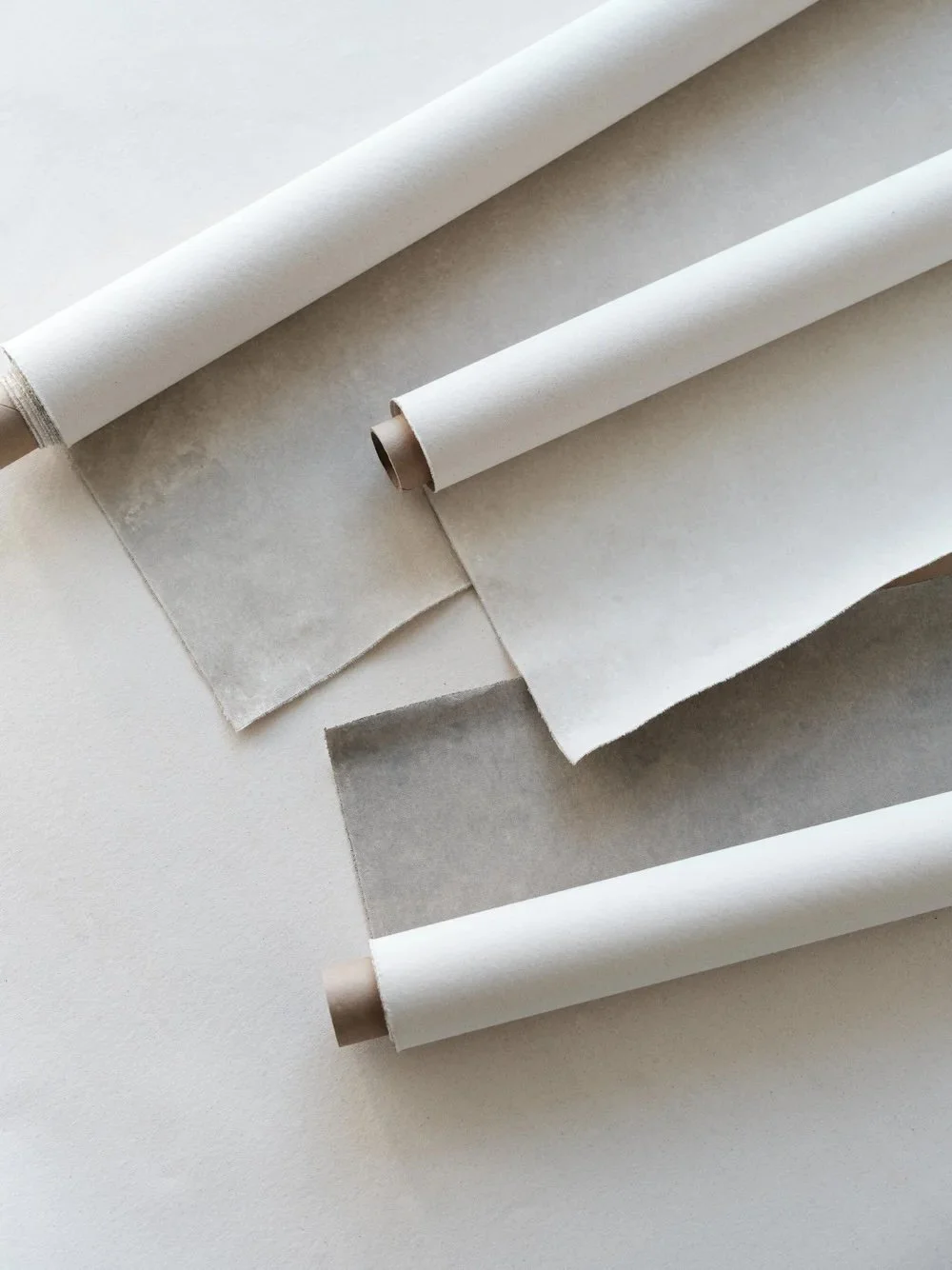
Every Chasing Stone backdrop ships rolled onto a cardboard core and inside a rigid tube, never folded. The same method that protects Jennifer's two to three days of hand-painting during shipping is the exact method that protects your canvas across hundreds of transports.
Why Canvas Backdrops Are the Most Travel-Friendly Backdrop Material
The physics of backdrop materials reveal themselves only after you have transported them. Muslin stuffs into duffel bags and emerges wrinkled at a level that requires fifteen to twenty minutes of steaming before a single frame can be shot. That is time you do not have when you arrive five minutes before the bride at a remote venue. Seamless paper rolls on an unwieldy core, tears on location if a stand bumps it, and after a single shoot it is gone, destined for the trash. Vinyl, which sounds durable until you try to bend it tightly for transport, develops permanent crease lines where it has been folded, and under studio light those creases cast shadows that ripple across skin tones and flatten product definition.
Canvas behaves differently. Cotton canvas, when hand-painted with pigment that has been layered over days, does not crease permanently. Roll it, transport it, unroll it, and the fabric remembers its flat form. The wrinkles that do appear from rolling are surface-level creases that relax under their own weight within the first hour of hanging. There is no stress on the material itself. The pigment, layered rather than printed, does not flake or crack. The weave of the cotton absorbs and diffuses light rather than reflecting it, which means the backdrop becomes a partner in your lighting rather than an obstacle that fights your vision.
Consider the weight and dimensional reality. An 8x10 ft hand-painted canvas backdrop weighs between twenty and twenty-five pounds and, when rolled onto its core and inside its shipping tube, measures approximately four feet in length and five inches in diameter. This fits inside a vehicle trunk. It fits within checked airline luggage. Compare this to the alternatives. Seamless paper, which appears lightweight, is deceptive: the roll itself is heavy, unwieldy, and impossible to stand upright in a vehicle without risking creasing along the full length. Muslin, while light, requires so much support material (stands, sandbags, steam equipment) that the total transport weight becomes comparable to canvas, except without the durability. For a deeper look at these material differences, our photography backdrop materials comparison covers texture, light interaction, and color fidelity in greater detail.
The comparison table below captures the material reality that every traveling photographer eventually discovers:
Photography Backdrop Material Comparison for Travel and Transport (2026)
| Material | Roll/Fold Behavior | Approx. Weight (8x10) | Wrinkle Recovery | Travel Durability | On-Location Setup |
|---|---|---|---|---|---|
| Hand-painted canvas | Rolls on core, never fold | 20 to 25 lbs | Minor marks relax in 30 to 60 min | Excellent, lasts years | 2 to 5 minutes |
| Muslin | Stuffs into bag, wrinkles severely | 2 to 3 lbs | Requires 15 to 20 min steaming | Good, but wrinkle-prone | 15 to 25 minutes (incl. steaming) |
| Vinyl | Rolls, but can crack at tight bends | 15 to 20 lbs | Crease lines may be permanent | Moderate, surface scratches | 5 to 10 minutes |
| Seamless paper | Ships on heavy roll, tears easily | 8 to 12 lbs | Cannot recover from creases | Single-use, fragile | 5 to 10 minutes |
For the photographer booking back-to-back sessions across multiple locations, canvas becomes not merely preferable but economically rational. A single hand-painted canvas backdrop costs more upfront than a roll of seamless paper, but it survives dozens of transports and hundreds of sessions. The per-shoot cost approaches zero after the first season. Muslin requires constant maintenance. Vinyl requires replacement after crease damage. Canvas rolls into its tube, travels unharmed, and waits in your studio for the next assignment.
How Chasing Stone Ships Every Backdrop (and Why You Should Travel the Same Way)
When Jennifer completes a hand-painted canvas backdrop, she has spent two to three days layering pigment, allowing each layer to set, building the tonal depth that allows the surface to respond dimensionally to studio light. This is not a printing process. This is painting. The pigment is permanent, the surface is unique, and the canvas is ready to create images the moment it arrives at your studio.
What happens next is where maker authority becomes material. Rather than shrink-wrap the canvas or compress it into a box, we roll it onto a cardboard core and slide that core into a rigid cardboard tube. No plastic. No unnecessary paper goods. No hang tags. Chasing Stone was the first styling surface maker to offer entirely biodegradable packaging, and every element of our shipping (the tube, the core, the wrapping, the labeling) is designed to be composted or recycled. This is not marketing language. This is how we actually ship every backdrop that leaves our California studio.
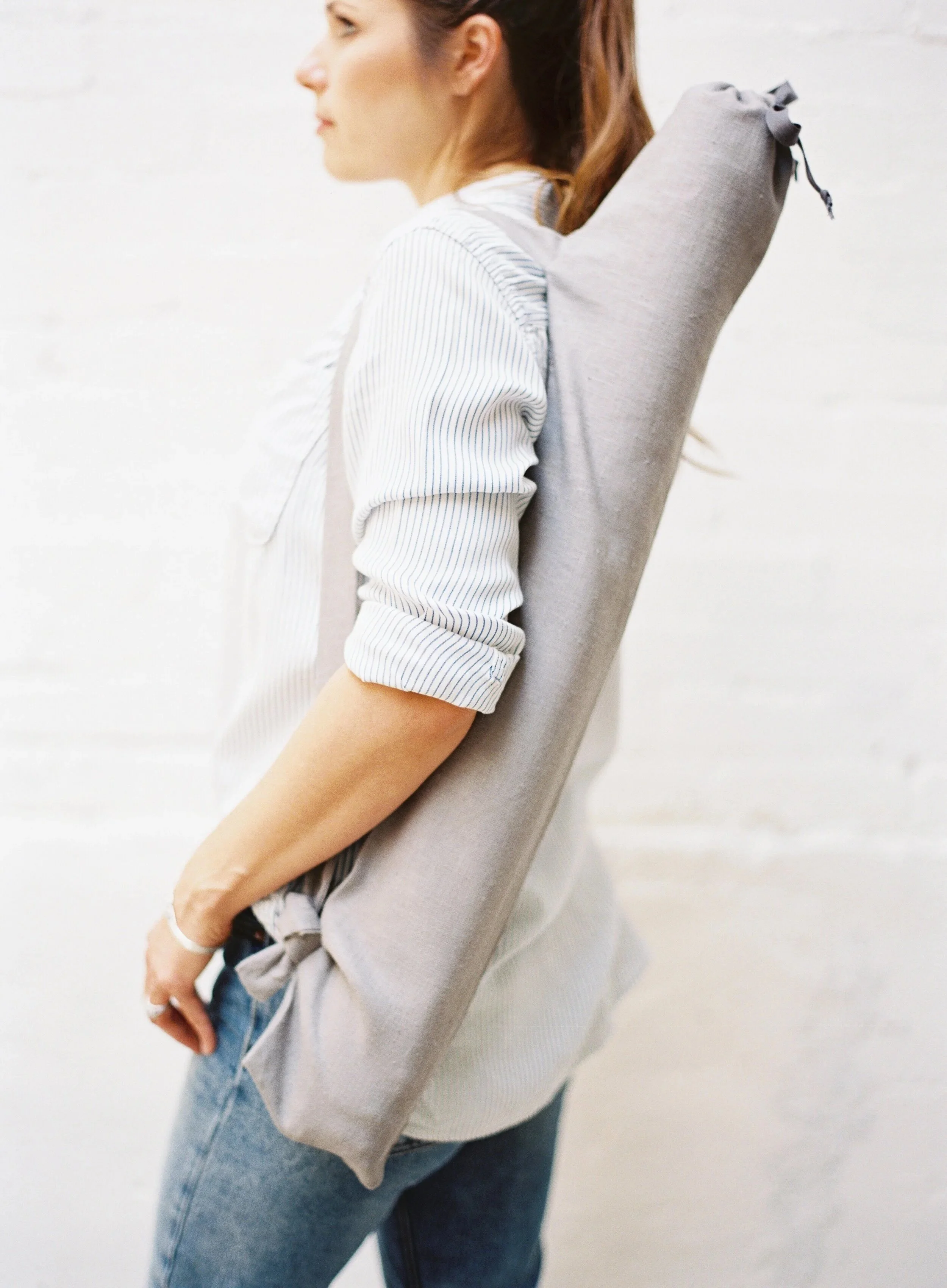
Your next session is three hours away and setup starts in two. This is how you get there with everything you need and nothing you don't. Shop the travel-ready canvas collection before your next booking fills in.
The reason this matters for your travel practice is simple: the method we use to protect a hand-painted canvas during shipping is the most effective method to protect it during your own transport. The tube becomes your transport case. The core becomes the ideal rolling surface. The rigid structure prevents crushing when luggage stacks onto your backdrop at the airport. The cardboard is replaceable if it sustains damage, but it rarely does.
The same rigid tube that protects a hand-painted canvas during shipping is the best transport solution a photographer will ever own. Save it. Reuse it. It is purpose-built for the job.
This is the specific advantage of buying from a maker rather than from a distributor. We know exactly how to transport our own products because we are the ones who made them. We are not guessing. We are not applying a generic shipping solution. We are applying the method that protects two to three days of Jennifer's hand-painting work. That level of care translates directly to the resilience of your own practice.
Packing a Canvas Backdrop for Car Transport
For the photographer working within a single region, shooting in three different studios across one city or driving to venues within a two-hour radius, vehicle transport is the dominant method. The logistics are straightforward and forgiving.
If your hand-painted canvas backdrop is stored hanging (on a rod or mounted on a wall system), removing it is the first step. Gently unclip the canvas from whatever support you use and lay it flat on a clean surface. Re-roll it onto its original cardboard core, moving slowly enough to avoid introducing new creases. If you saved your Chasing Stone shipping tube (and you should), slide the rolled core into the tube. If you did not, any rigid tube of similar diameter will serve the same purpose. The tube protects the canvas from pressure during the drive, from other equipment shifting in the trunk, and from the kind of incidental contact that scuffs vinyl and tears paper.
For a single backdrop, the tube slides horizontally across your vehicle trunk. For multiple backdrops, stack the tubes and secure them with soft straps so they do not roll during acceleration or braking. If you transport backdrops regularly, a large duffel bag or canvas roll carrier (available from art supply retailers) becomes your dedicated go-bag for the backdrop, the core, and any padding you prefer to add.
Bring your C-stand (a heavy-duty grip stand with a turtle base) and the Chasing Stone Floating Photography Backdrop Adapter Mount at $107. This adapter is the connection point between the stand and the top edge of your canvas. It is not optional equipment. A quality stand and mount system eliminates guesswork on location, and our venue backdrop setup guide covers the specifics of working in tight, unpredictable spaces.
For destination weddings or multi-day assignments, plan your transport around the backdrop tube, the stand gear, and your other equipment. A minivan or SUV accommodates three rolled backdrops, a C-stand, sandbags for stability, and your lighting package with room to spare. The footprint is smaller than one would expect. A sedan, if you are traveling light, carries one backdrop and stand without difficulty.
Flying with Photography Backdrops: Airline Rules and Packing Strategy
The Transportation Security Administration classifies photography equipment as permitted checked luggage. Standard carry-on dimensions are 22 inches by 14 inches by 9 inches, measured at the widest points. A rolled 5x8 ft canvas backdrop in its shipping tube measures approximately 48 inches in length (slightly over four feet), which exceeds carry-on limits. You will check it.
Standard checked baggage allowance on domestic U.S. flights is 50 pounds per bag, though some regional carriers enforce 40 pounds. A single Chasing Stone 5x8 ft hand-painted canvas backdrop in its tube weighs approximately 20 to 22 pounds, well within checked limits. Even a pair of 8x10 ft canvases, each at roughly 24 pounds, totals 48 pounds and fits within a single checked bag. International carriers typically enforce 23 kilograms (approximately 50 pounds) per checked bag, with a few budget carriers at 15 kilograms. For Europe, Australia, or Asia, verify your specific airline's limits in advance, but canvas backdrops are rarely a weight concern.
Packing the tube for air travel requires the same care you would apply to any expensive lens or lighting modifier. Use your original Chasing Stone shipping tube if possible. If you did not retain it, invest in a hard-sided tube case (available from professional photography retailers). Wrap the tube in bubble wrap or foam padding, then place it inside the case. Label clearly: "Fragile: Photography Equipment." Arrive at the airport early. Inform the desk agent that you are checking photography equipment and request a fragile tag. This small step ensures that baggage handlers know to minimize rough treatment.
If you are interested in how other photographers have approached the materials question for travel work, our guide to setting up a hand-painted canvas backdrop in under two minutes demonstrates the speed advantage that canvas offers once you arrive at your destination.
For multiple international shoots, consider shipping a backup canvas to yourself in advance. Ship to your hotel or to a local business address that can receive packages. This eliminates the stress of checked baggage and ensures you have a backup if your primary backdrop is delayed in transit. Chasing Stone ships internationally, and the same rigid tube method that protects canvases domestically protects them across continents.
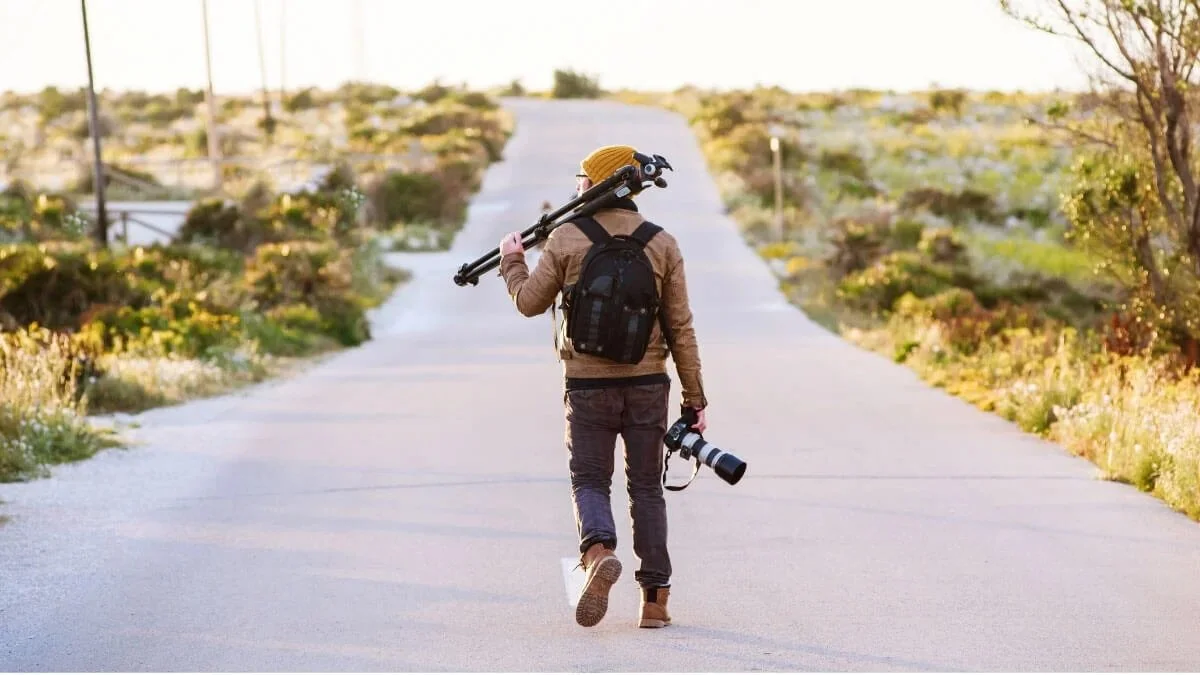
The next assignment is already on the calendar. The question is whether your kit is ready to travel with you. Three canvas backdrops, a C-stand, and an adapter mount. That is the complete travel system for photographers who work across multiple locations every month.
On-Location Setup: From Tube to Shoot-Ready in Minutes
The moment you arrive at your location, you unroll the canvas from its tube and mount it on your C-stand using the backdrop adapter. This entire process takes two to five minutes if your equipment is organized. No assembly. No adhesive. No setup complexity. For photographers who build their permanent multi-backdrop studio systems around C-stands and adapters, the on-location workflow is identical to the studio workflow.
Hang the backdrop and step back. You will see wrinkles: light creases from the rolling, most pronounced along the central horizontal axis where the core sat. This is entirely normal and entirely temporary. Do not panic. Do not pull out a steamer. Gravity is your tool.
Hand-painted canvas relaxes because cotton canvas, by its physical nature, wants to hang flat. The pigment adds weight and memory. Within thirty to sixty minutes of hanging under its own weight, the canvas presents a smooth surface. If you have time before the first frame, that time is your friend. Hang the backdrop when you arrive, set up lighting and subject positioning, and by the time you are ready to shoot, the wrinkles have vanished. This is the cumulative advantage of canvas: it does the work for you while you prepare the rest of the session.
If you are in a genuine emergency (the bride is already present, hair and makeup are complete, and you have five minutes before the ceremony), a handheld steamer can relax creases faster than time alone. Hold the steamer four to six inches behind the canvas (never direct, never touching the painted surface), move it slowly across the wrinkles, and apply gentle steam for four to six seconds per section. The moisture and heat relax the fibers without damaging the pigment. This method works on hand-painted canvas in a way it does not work on paper or vinyl. The cotton accepts steam. The pigment does not bleed or shift. This is another material advantage of canvas that traveling photographers discover and rely upon.
Hand-painted canvas is forgiving in a way no other backdrop material can match: unroll it, hang it, and within the hour the surface looks as though it never left the studio.
Long-Term Storage Between Sessions
The cardinal rule of canvas backdrop storage is deceptively simple: roll, never fold.
A fold creates a crease that can, with effort and time, be relaxed, but the relaxation is incomplete. The canvas remembers the fold. Months later, under directional studio light, that fold line can cast a subtle shadow visible in every frame. For a backdrop that has cost you $497 to $797 and that you expect to use for hundreds of sessions, a permanent fold is an unacceptable compromise.
Rolling is the method. Stand the canvas vertically on a clean floor, hold the top edge, and roll toward you slowly, keeping even pressure across the width. Once fully rolled, secure it onto the core. Store the rolled canvas vertically in a corner, or horizontally on a wall-mounted rack if you have multiple backdrops and want to save floor space. Some studios invest in horizontal roll storage systems: a horizontal rod mounted at shoulder height, with canvas rolls stacked along the rod. This is elegant and space-efficient for studios with five or more backdrops.
The cardinal rule of canvas backdrop storage: roll, never fold. A fold line in hand-painted canvas is nearly impossible to fully reverse, while a rolled canvas will hang smooth within the hour.
Climate matters. Store your backdrop away from direct sunlight. Prolonged UV exposure fades pigment over time. This is not an emergency (hand-painted pigment is far more lightfast than printed surfaces), but it is cumulative. If you keep a backdrop in a south-facing studio window for five years, the exposure will show. Store in indirect light. Avoid damp or humid storage. Cotton canvas absorbs moisture, and a damp backdrop stored in a humid closet can develop mildew over months. A dedicated storage tube or a simple cardboard box, placed on a shelf away from moisture sources, is sufficient protection. For a comprehensive care protocol, our guide on how to clean and care for hand-painted canvas backdrops covers spot cleaning, humidity management, and long-term preservation.
The cardboard core inside the rolled canvas is the silent hero of storage. The core prevents the canvas from collapsing on itself and prevents permanent center creasing. Do not remove the core to save space. The core is what keeps the canvas preserved for years of professional use.
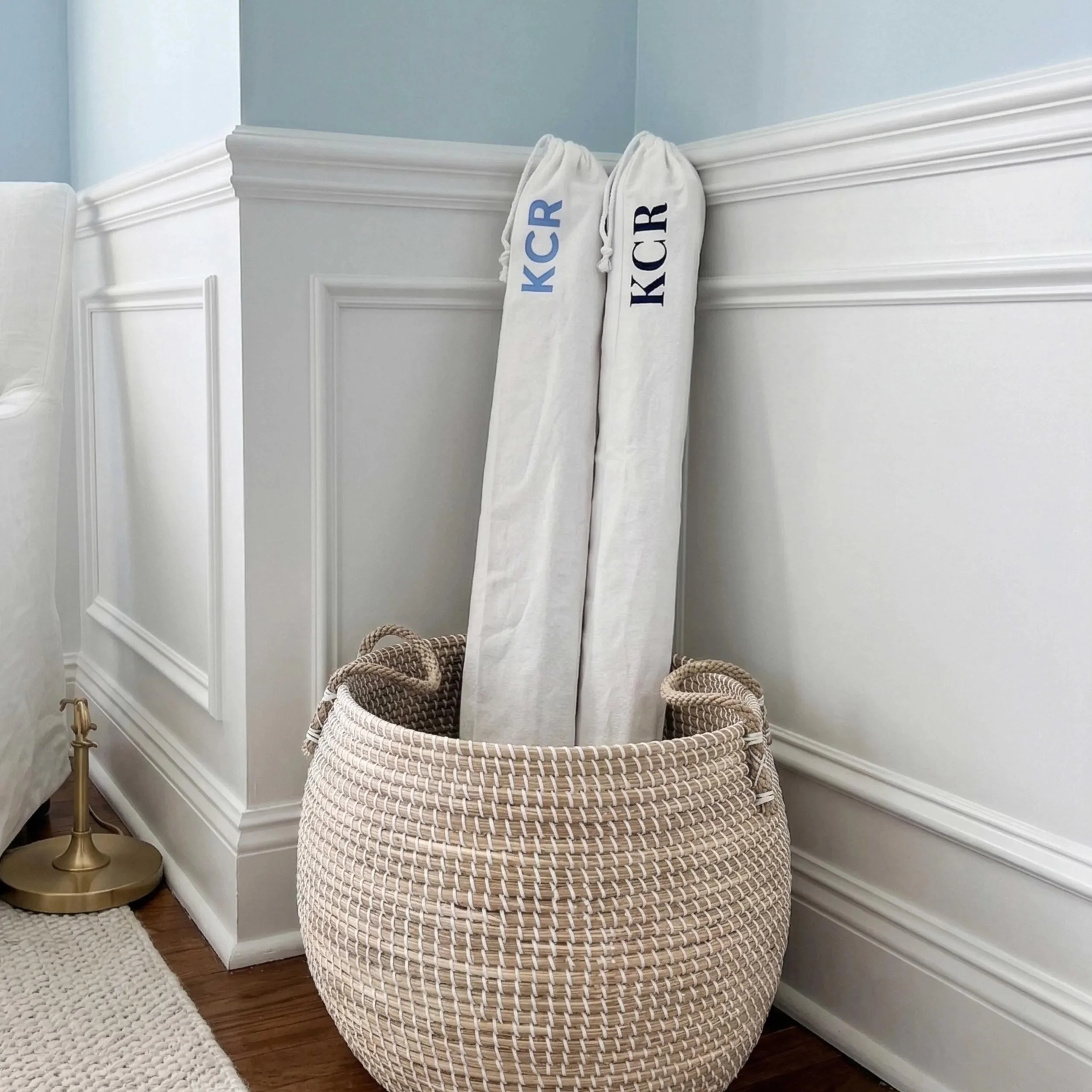
Rolled onto their cores and stored vertically, hand-painted canvas backdrops hold their shape indefinitely. No creasing, no pigment damage, no compromise to the painted surface. This is the storage method we recommend for every Chasing Stone canvas between sessions.
Building a Travel-Ready Backdrop Kit
The photographer who travels to shoots faces a strategic choice: select two or three hand-painted canvases that cover the widest range of session types, or compromise on creative options by traveling with only one.
We recommend the travel starter kit of three backdrops. Three carefully chosen colorways cover bridal, portrait, editorial, product, and commercial sessions with room to spare.
Start with one warm neutral, one cool neutral, and one deep tone. For the warm neutral position, our Limestone hand-painted canvas is a pale, creamy warm tone that reads as luminous on fair skin and brings out warmth on deeper skin tones. It is the definitive bridal backdrop and the safest choice for beauty and product work. Sandstone is a richer warm beige, slightly deeper, that works beautifully for editorial and commercial portraiture. For the cool neutral, Slate is the architectural gray, a concrete-like neutral that feels sophisticated and editorial without pulling warm or cool. Silt is a paler, softer gray that reads as contemporary and minimal. For the deep tone, Umber is the warm deep brown that creates intimacy in portraiture and adds gravitas to product photography, while Carbon is the near-black that creates maximum contrast and is the favorite of high-fashion and editorial teams.
If you are beginning a travel practice, select Limestone, Slate, and Umber. This trio covers approximately eighty percent of professional work across all genres. A bride can be photographed on Limestone or Umber depending on the tone she wants. An editorial team can work on Slate for fashion or Umber for narrative depth. A product photographer can use all three depending on the product's dominant color.
Chasing Stone offers the Studio Pack Three bundle for 5x8 ft backdrops at $1,371 (sale price), a savings of $120 off individual pricing. The 5x8 ft size is the workhorse for traveling photographers: light enough to pack and move frequently, large enough to handle full-body portraiture and product work, and compact enough to fit in any vehicle or as checked airline luggage. For stationary studios, the 8x10 ft bundle runs $2,197 (sale) and provides the additional coverage that larger setups demand.
Add the Floating Photography Backdrop Adapter Mount at $107 to your kit, along with a Manfrotto or Kupo C-stand with turtle base and two sandbags (approximately $200 to $300 from any professional equipment retailer). This is your complete travel system: three hand-painted canvases in their tubes, one adapter mount, one C-stand, and two sandbags. The total investment for the three-canvas starter kit plus accessories is approximately $1,500 to $1,600, and for a photographer running multiple shoots per month across different locations, this investment returns itself within one to two seasons.
Frequently Asked Questions About Traveling with Photography Backdrops
Can you fold a hand-painted canvas backdrop for travel?
Folding a hand-painted canvas introduces creases that are extremely difficult to fully reverse. Rolling is always the correct method. The cardboard core and rigid tube that Chasing Stone includes with every backdrop are designed specifically to prevent damage during transport. A fold line can cast a visible shadow under directional studio light long after the canvas is unfolded, making rolling the only recommended approach for preserving the painted surface.
How much does a canvas photography backdrop weigh?
A Chasing Stone 5x8 ft hand-painted canvas backdrop weighs approximately 18 to 22 pounds. An 8x10 ft canvas weighs 22 to 25 pounds. An 8x14 ft canvas weighs approximately 28 to 32 pounds. These weights are well within standard domestic airline checked baggage allowances of 50 pounds per bag, and the rolled dimensions fit comfortably in vehicle trunks and checked luggage.
Will my backdrop wrinkle during transport?
Light creases are normal and expected during transport, particularly along the central horizontal axis where the cardboard core contacts the canvas. These wrinkles are temporary surface creasing, not damage. Hand-painted canvas relaxes flat within 30 to 60 minutes of hanging under its own weight. Permanent creasing occurs only if the canvas is folded, not rolled.
Can I carry a photography backdrop on an airplane as a carry-on?
Standard carry-on dimensions are 22 by 14 by 9 inches, and a rolled 5x8 ft canvas backdrop tube measures approximately 48 inches in length, which exceeds carry-on limits. Plan to check the backdrop as luggage. Use the original Chasing Stone shipping tube or a hard-sided tube case with foam padding, and request a fragile tag at the airline counter for careful handling.
How should I store backdrops between sessions?
Always roll your backdrop onto its cardboard core and store the rolled canvas vertically in a corner or horizontally on a rack system. Never fold. Store away from direct sunlight, which fades pigment over time, and away from damp storage areas, since cotton canvas absorbs moisture. The cardboard core prevents the canvas from collapsing on itself and should never be removed.
What size backdrop is best for travel photographers?
The 5x8 ft size is the travel standard for professional photographers. It weighs 18 to 22 pounds, handles full-body portraiture and product photography, and fits in any vehicle trunk or as checked airline luggage. Chasing Stone's 5x8 ft hand-painted canvas backdrops begin at $497, and the Studio Pack Three bundle offers three canvases at $1,371 (sale price) for photographers building a travel-ready collection.
How long does it take to set up a canvas backdrop on location?
With a C-stand, adapter mount, and sandbags organized and ready, setup takes two to five minutes. Unroll the canvas from its tube, mount it on the stand using the adapter, and you are ready to position lighting and subjects. If minor creases require flattening, allow thirty to sixty minutes of hanging time for the canvas to relax naturally under its own weight. For emergencies, a handheld steamer can relax creases within five to ten minutes when applied from four to six inches behind the canvas.
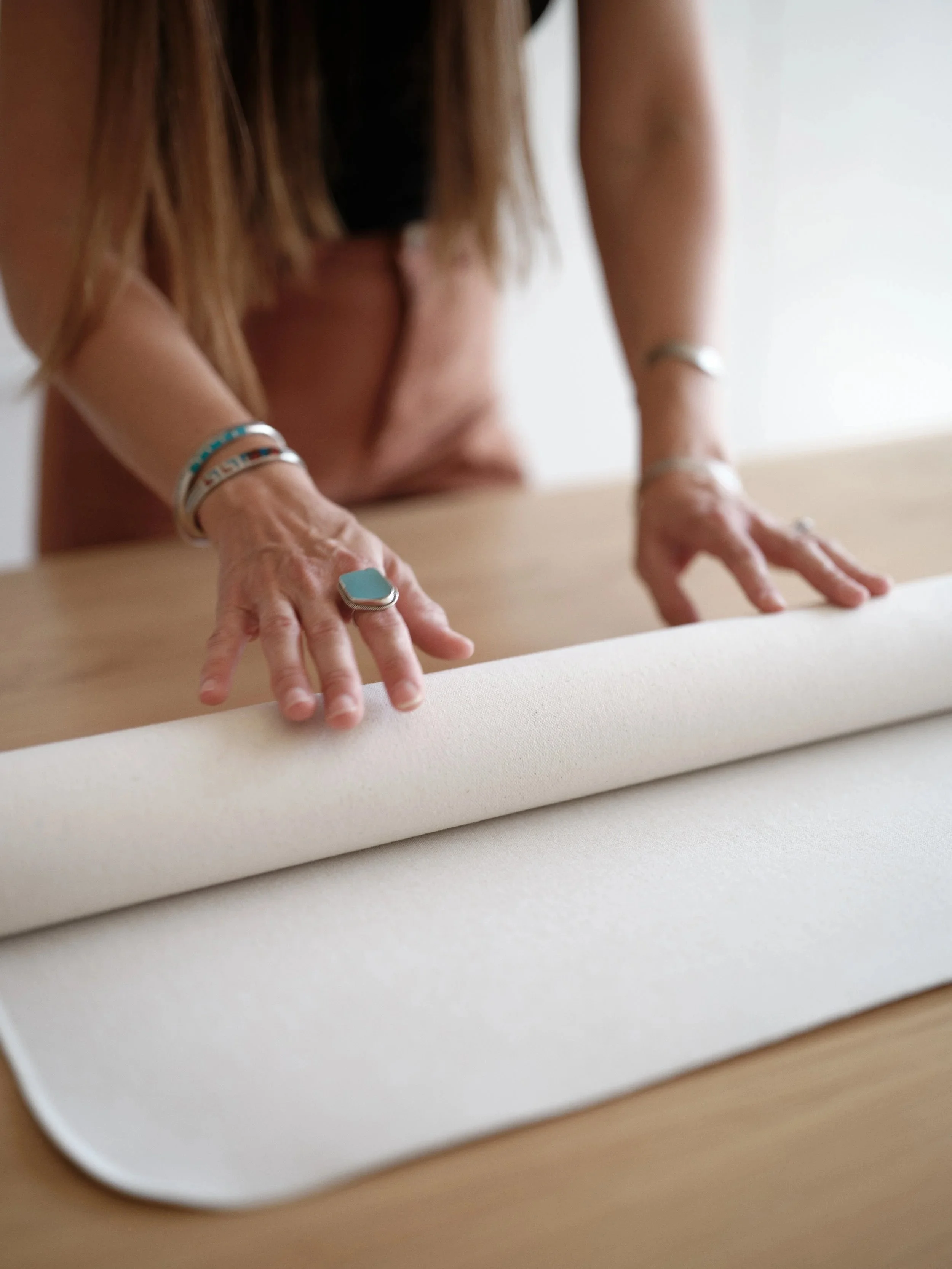
This is how every Chasing Stone backdrop leaves Jennifer's studio, and how it should be stored between every session. Slow, even pressure across the full width of the canvas. No forcing, no rushing. The roll is what keeps a hand-painted surface pristine across hundreds of uses.
Invest in Surfaces That Travel as Well as You Do
How to travel with photography backdrops is ultimately a question about resilience: building a studio practice that does not contract when location work begins. It is about choosing a surface that answers your needs at the technical level (light absorption, dimensional response, wrinkle recovery) and at the practical level (weight, portability, durability across hundreds of uses and dozens of transports).
Hand-painted canvas does this. This is why the world's most traveled photographers, from Jose Villa to emerging editorial creators working with publications like Over the Moon and WedVibes, have adopted canvas as their standard. The material is responsive to light in ways that vinyl and paper cannot match. The craftsmanship is visible in the depth of color that only layered pigment produces. The transport and storage method is simple, effective, and proven across thousands of Chasing Stone shipments to photographers worldwide.
Explore the full collection of hand-painted photography backdrops in sizes from 5x8 ft to 8x14 ft. For a curated introduction, the Studio Pack Three bundle is available at sale pricing. For questions about sizing, international shipping, or building your travel kit, reach us at info@chasingstone.com.
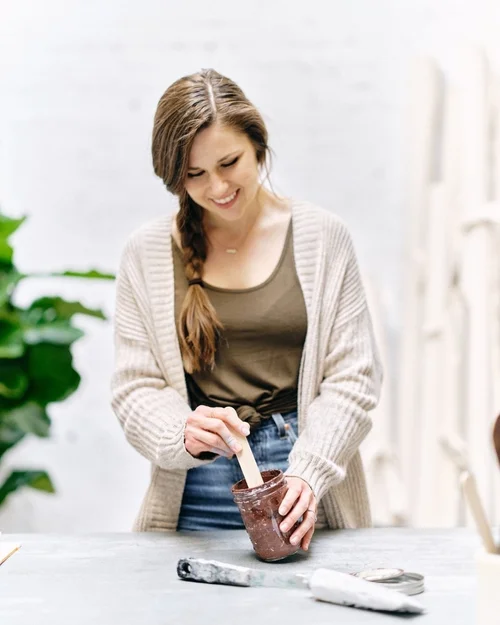
Creators of premium photography backdrops and styling surfaces
Trusted by thousands of discerning creatives worldwide
Every piece is handcrafted with intention in Orange County, California