Fashion Flat Lay Photography for Clothing Brands: Backdrop and Styling Guide (2026)

Posted on Jun. 25, 2026

There is a particular silence that falls over a styling table when the garment finally finds its surface. The silk catches the light one way, the canvas beneath it another, and the two materials begin a conversation that the camera will either capture or miss entirely. This is the discipline at the heart of fashion flat lay photography: understanding that the surface beneath the clothing is not a backdrop to be ignored but a collaborator in every frame. For clothing brands building a visual identity in 2026, the choice of styling surface, the quality of light, and the precision of the arrangement determine whether a flat lay reads as catalog filler or editorial conviction.

Sixty-one percent of high-end fashion ecommerce now relies on flat lay photography as a primary image format. The technique has moved well beyond its origins as a simple overhead product shot. At its best, a fashion flat lay is a still life in the tradition of fine art: every fold deliberate, every shadow intentional, every surface chosen for the way it speaks to the garment it holds. At its most common, it is a wrinkled shirt on a white bedsheet, and the distance between those two outcomes is not budget. It is craft.

This guide is for the clothing brand, the fashion photographer, and the creative director who already understands that distinction and wants to refine it further. We will move through surface selection, styling frameworks, camera technique, lighting strategy, color theory, and post-production, all filtered through the lens of editorial intent rather than basic product documentation.

Why the Surface Beneath the Garment Defines the Image

The default instinct in fashion flat lay photography is to reach for white: white seamless paper, white foam board, white fabric. The logic is understandable. White is neutral. White is clean. White disappears.

But white does not disappear. It reflects. A pure white surface bounces light back into the underside of the garment, flattening the very texture and drape that make clothing worth photographing. It creates a clinical environment that signals catalog, not editorial. For clothing brands whose visual identity aspires to something more considered, the surface choice is the first creative decision, and it shapes every decision that follows.

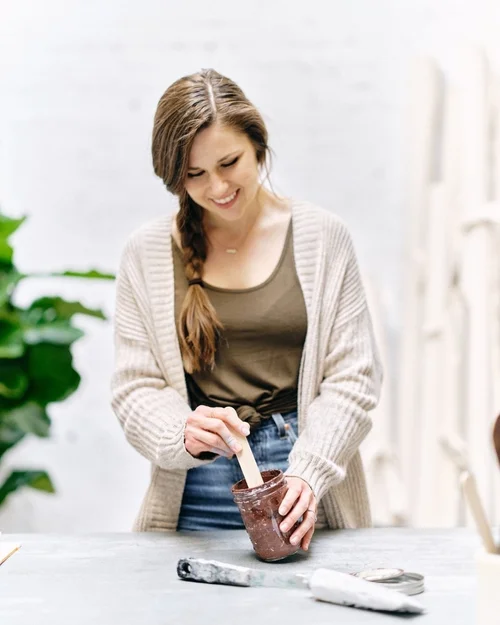
A hand-painted styling surface does something fundamentally different. The layered pigment absorbs and redirects light, creating micro-variations in tone that add depth to the frame without competing with the garment for attention. When Jennifer hand-paints each of our styling surfaces over the course of two to three days, she is building a topography of color: warm undertones layered beneath cooler surface tones, brushstrokes that catch directional light at slightly different angles, a depth of field that exists in the surface itself before the camera is even turned on. This is why editorial stylists reach for hand-painted canvas instead of seamless paper. The surface does not just hold the garment. It elevates it.

Browse the full range of hand-painted styling surfaces and photography backdrops to see how these surfaces translate on camera.

A fabric styling surface occupies a different register. Our GREENGUARD Gold certified vegan wool flat lays provide a consistent, subtly textured field that reads as luxurious without introducing the painterly variation of a hand-painted surface. For clothing brands that need to maintain strict color accuracy across a catalog while still conveying tactile warmth, fabric surfaces offer the precision of a controlled background with the visual richness that plain paper cannot achieve.

The strategic question for any fashion flat lay session is not simply "what color background?" It is "what kind of visual conversation do I want between the surface and the garment?"
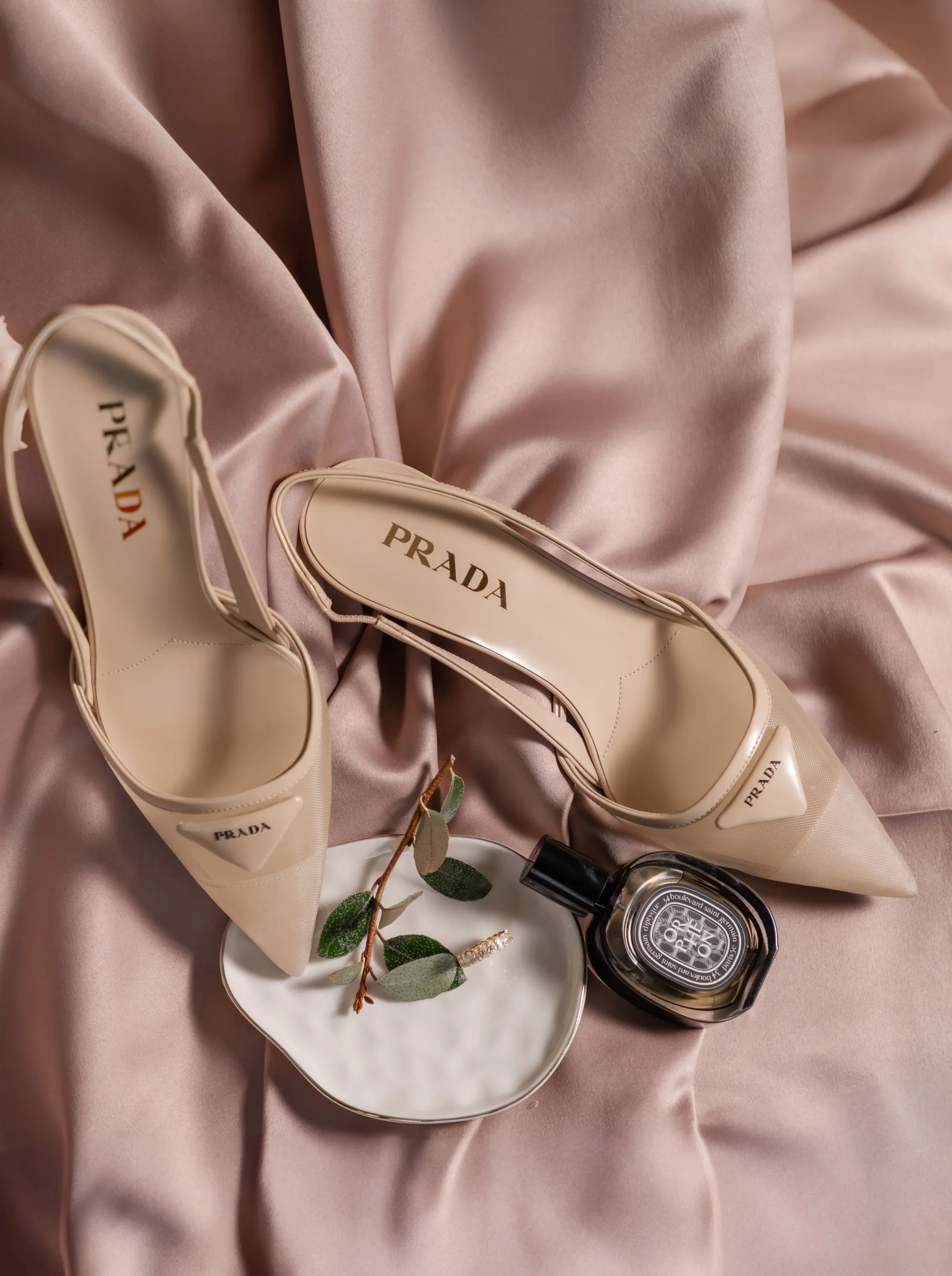
luxury bridal flat lay with nude Prada slingback heels, Diptyque perfume bottle, diamond ring dish, and eucalyptus sprig on a blush draped silk styling surface

The brands in this flat lay did not happen by accident. Neither did the surface. When the styling is this intentional, every element has to earn its place in the frame, including what everything is resting on.

Hand-Painted vs. Fabric Flat Lay Surfaces for Fashion Photography

The distinction between hand-painted and fabric flat lay surfaces is not a matter of quality. Both are premium tools. It is a matter of intent.

Hand-painted surfaces, like our San Migueland Joshua Tree hand-painted flat lays, are at their most powerful when the garment itself is minimal. A single cashmere sweater in a muted tone. A linen shirt with clean lines. A silk scarf unfolded to reveal its drape. In these compositions, the hand-painted surface becomes the visual interest that the garment alone does not provide. The brushstroke texture creates depth. The tonal variation adds warmth. The image reads as a deliberate artistic statement rather than a product documentation exercise.

Fabric surfaces, by contrast, are the choice when the garment is the visual event. An elaborately beaded evening gown. A printed silk dress with complex pattern work. A heavily embroidered jacket. In these scenarios, the surface must provide a stage, not a second performance. Our Pampas vegan wool surface, with its warm beige field and subtle fiber texture, holds the frame with quiet authority while allowing an ornate garment to command every ounce of the viewer's attention. The Buckwheat surface serves a similar role in warmer tonal palettes.

The experienced fashion stylist often brings both types to a shoot. The creative brief determines which surface each garment meets, and that decision is made before the first pin is placed.

Hand-painted styling surfaces add depth and visual interest to minimalist garments, while fabric flat lay surfaces provide a luxurious, controlled stage for complex or heavily detailed clothing.

The Fashion Flat Lay Styling Framework: From Catalog to Editorial

There is a spectrum in fashion flat lay photography that runs from pure product documentation to full editorial storytelling, and most clothing brands operate somewhere in the uncertain middle. The difference is not found in the camera or the lighting. It is found in the stylist's intention.

We think of fashion flat lays in three tiers, each building on the one before it.

The first tier is the Hero Shot: a single garment, centered or offset with generous negative space, styled to show the silhouette, fabric weight, and construction details. This is the product page image that every ecommerce brand needs, and on a considered surface, it becomes something more than documentation. When a cashmere pullover rests on a hand-painted canvas whose warm undertones echo the yarn's color family, the image tells the viewer something about the garment's world before they read a single word of copy. The hero shot is where the surface-to-garment conversation matters most, because there is nothing else in the frame to carry the composition.

The second tier is the Outfit Story: multiple pieces arranged to suggest a complete look, typically anchored by a primary garment with accessories, shoes, and complementary items placed in deliberate relationship. The composition follows the principles outlined in our guide to flat lay composition rules that create stunning images. Here, the styling surface functions as the unifying element. Without a considered surface, the outfit story risks looking like a jumble of products dropped on a table. With one, the arrangement reads as a curated editorial moment.

The third tier is the Editorial Vignette: a styled flat lay that tells a story beyond the clothing itself. This might include a garment draped alongside fresh-cut flowers, a handwritten note, a piece of architecture or material that evokes the brand's mood. The editorial vignette is where fashion flat lay photography crosses into the territory of still-life fine art, and it is where the surface investment pays its highest creative dividend. A hand-painted surface with visible brushwork becomes a participant in the narrative, not just a field behind the subject.

The mistake most clothing brands make is defaulting to the first tier for every image and never developing the visual language of tiers two and three. The brands whose flat lay photography stops viewers mid-scroll, the brands earning editorial features and building visual identity, are the ones working across all three tiers with intentional surface selection at each level.
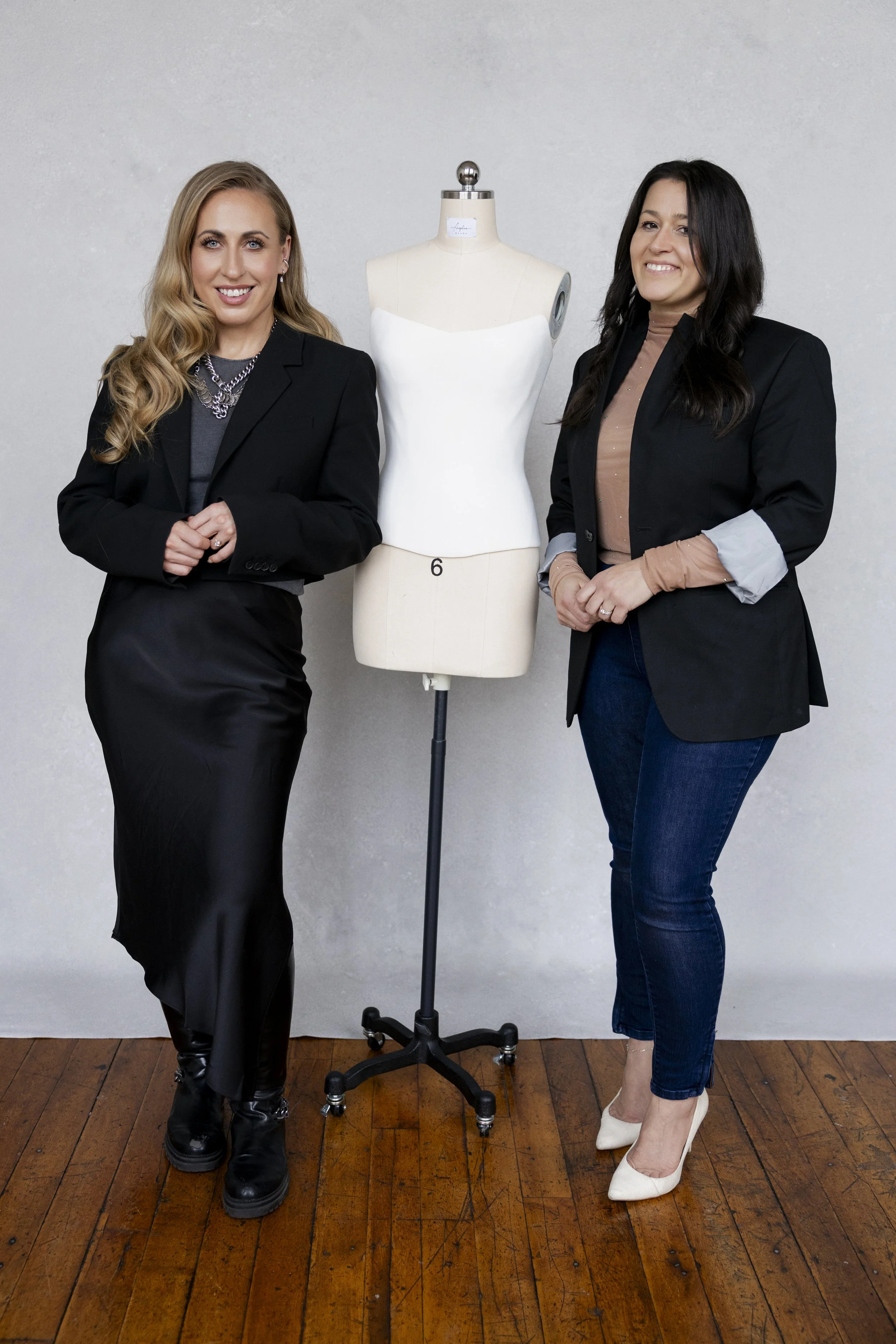
two fashion photographers standing with a dress form mannequin in a photography studio with hardwood floors and grey backdrop

The photographers who build lasting visual identities for clothing brands are the ones who treat every decision as intentional, from the dress form to the styling surface. If your flat lay practice is still catching up, Chasing Stone surfaces are a good place to start.

Camera Settings and Technical Setup for Overhead Fashion Flat Lays

Fashion flat lay photography is overhead photography, and overhead photography has its own technical requirements. The camera must be parallel to the surface. The lens must be sharp across the entire frame. The depth of field must hold every element in focus from the center of the composition to its edges.

For the camera body, a full-frame mirrorless system (Sony A7 series, Canon R5 or R6, Nikon Z series) provides the resolution and dynamic range that fashion work demands. A medium-format system (Fujifilm GFX, Hasselblad X2D) delivers even more tonal information but requires more light and more working distance.

The lens choice matters enormously for flat lay work. A 50mm prime on full frame, or a 35mm prime on a tighter setup, provides minimal distortion. Zoom lenses in the 24-70mm range work well but should be used at 50mm or longer to avoid barrel distortion at the edges that warps garment proportions. For medium format, an 80mm equivalent is the standard flat lay focal length.

The tripod must include an overhead arm or a dedicated copy stand. Handheld overhead shooting is impractical for consistent results. The camera should be tethered to a laptop or tablet running Capture One or Lightroom for real-time evaluation of the surface-to-garment relationship, a workflow we explore in depth in our guide to tethered shooting for portrait photography.

For fashion flat lay photography, set the aperture to f/8 or f/11 at ISO 100 to 200 on a sturdy overhead tripod, ensuring edge-to-edge sharpness across the entire styling surface.

Recommended Camera Settings by Fashion Flat Lay Scenario (2026)

A remote shutter release or a two-second timer eliminates camera shake. For brands shooting dozens or hundreds of flat lay images in a catalog batch, locking exposure, white balance, and focus manually (rather than relying on auto settings) ensures color and tonal consistency across every frame.

Lighting Fashion Flat Lays on Textured Surfaces

The light source transforms the surface. This is the principle that separates photographers who understand flat lay surfaces from those who treat every background as interchangeable.

On a plain white surface, lighting variations are invisible. The white reflects uniformly regardless of angle. But on a hand-painted surface, every change in light angle reveals a different character. Side light from the left emphasizes brushstroke texture running in one direction. Side light from the right catches a different set of ridges and valleys in the painted surface. Overhead diffused light softens the texture entirely, rendering the surface as a smooth tonal field with gentle color variation.

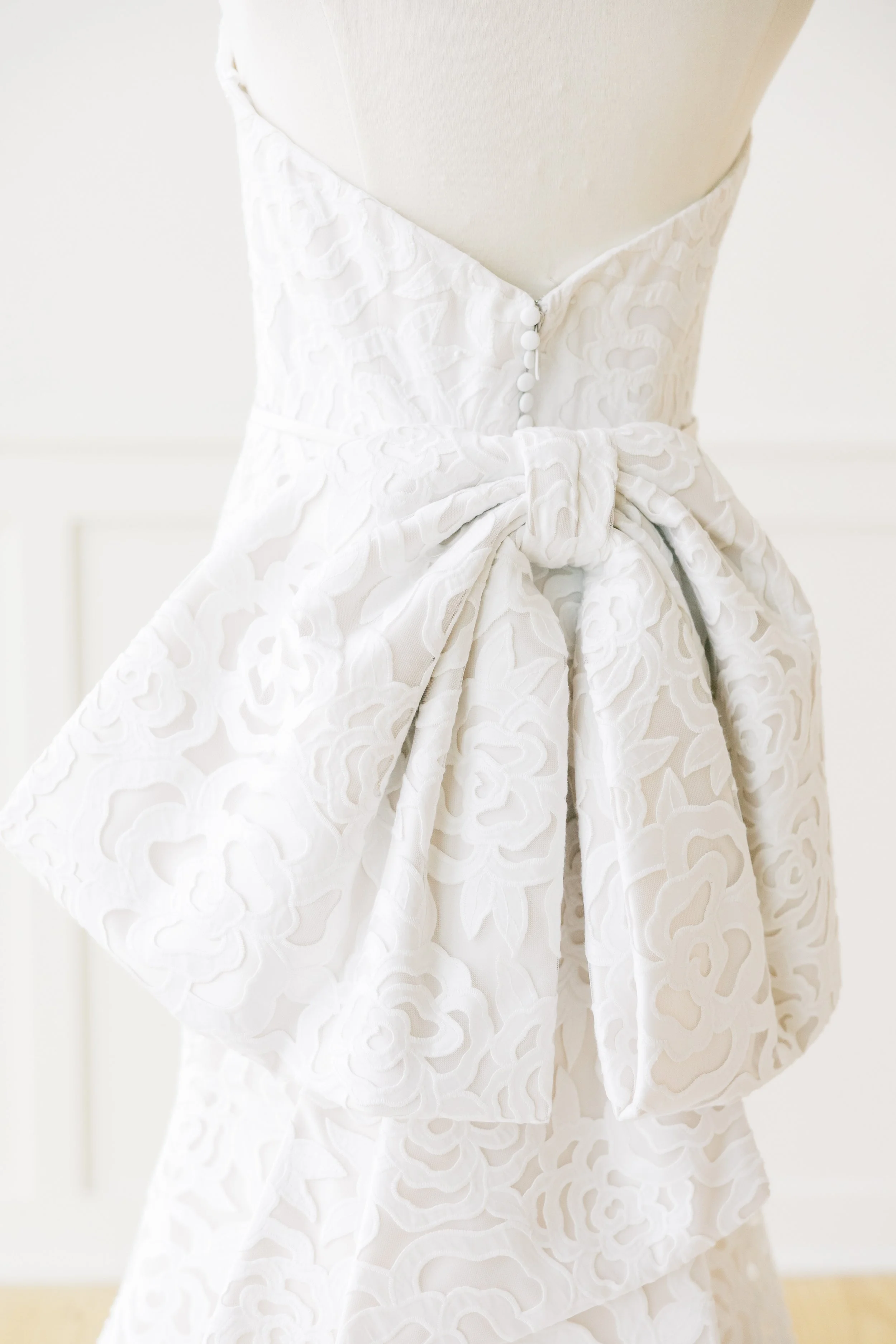
close-up back detail of a strapless bridal gown with oversized jacquard bow bustle and fabric-covered buttons on a dress form

The back of a gown tells you everything about how it was made. Capturing that detail, the jacquard pattern, the structure of the bow, the weight of the fabric, requires a photographer who understands that light and surface work together before the shutter ever fires.

For fashion flat lay photography, we generally recommend beginning with a large diffused overhead source: a 4x6-foot softbox, a large scrim with a strobe behind it, or north-facing window light on an overcast day. This provides even, shadow-free illumination that keeps the garment as the primary subject. From that baseline, introduce a secondary directional source at a low angle (30 to 45 degrees from the surface plane) to reveal just enough surface texture to distinguish the image from a plain-background shot.

Natural light is beautiful for fashion flat lays, but it is inconsistent. A cloud passes and the color temperature (measured in Kelvin) shifts. The sun moves and the shadow angle changes mid-session. For clothing brands shooting high-volume catalog work where color accuracy is contractual, continuous LED panels (Aputure, Godox, or Profoto) provide the consistency that natural light cannot. Set the LED to 5500K for daylight-balanced color, or shift to 3200K for a warmer editorial feel that pairs beautifully with warm-toned surfaces like our Yarrow vegan wool surface.

The fabric flat lay surfaces respond to light differently than hand-painted ones. The vegan wool fiber creates a uniform micro-texture that scatters light gently in all directions, producing a consistent, slightly luminous field that photographs with beautiful tonal evenness. This makes fabric surfaces particularly well suited to fashion work where the brand requires color-accurate product imagery. The surface contributes visual warmth without introducing the tonal variation that hand-painted canvas provides.

Hand-painted styling surfaces respond to directional light the way a painting in a gallery responds to it: dimensionally, revealing brushstroke texture and tonal depth that flat backgrounds cannot replicate.

Styling Techniques That Separate Editorial From Catalog

The garment must be prepared before it touches the surface. This is not optional. It is the single largest determinant of whether a fashion flat lay looks professional or amateur.

Steam every garment immediately before shooting. Wrinkles that are invisible to the eye are amplified by overhead lighting and a high-resolution sensor. Use a handheld fabric steamer, not an iron, to avoid pressing creases into knits and delicate fabrics.

Invisible styling is the discipline of shaping a garment on the surface without any visible manipulation. Double-sided fashion tape holds a collar in position. Small pins, placed where the camera cannot see them, tame a stubborn cuff or hem. Tissue paper rolled beneath a sleeve creates the illusion of an arm inside the garment, giving the piece dimension and life. The goal is to make the garment appear as though it was simply placed on the surface and fell into perfect form, when in reality every fold is engineered.

Negative space is the breath in the composition. Our guide to flat lay composition explores this principle in depth, and it applies doubly to fashion work. The temptation is to fill the frame with product, particularly when shooting for ecommerce where every pixel is commercial real estate. But the brands whose imagery resonates, the brands that build visual identity through their flat lay photography, are the ones that allow the surface to breathe. A garment surrounded by generous negative space on a hand-painted surface reads as luxury. The same garment crammed edge-to-edge on a white background reads as clearance.

Avoid the common flat lay mistakes that undermine professional work. Our detailed analysis of flat lay errors that make work look amateurish covers the full spectrum, but for fashion specifically: never photograph a garment with visible tags, never leave packaging creases unsteamed, and never shoot a wrinkled surface. The surface itself must be as immaculately prepared as the clothing on top of it.

Color Theory for Fashion Flat Lay Backdrop Styling

Color is the silent persuader in fashion flat lay photography. The surface color shifts the viewer's perception of the garment before conscious evaluation begins.

The principle is straightforward. Analogous color pairings (surface and garment in the same color family) create a sense of coherence and luxury. A cream linen shirt on a warm Pampas surface reads as tonal, considered, intentional. Complementary pairings (surface and garment on opposite sides of the color wheel) create visual energy and contrast. A deep navy blazer on a warm earth-toned hand-painted surface commands attention through the tension between cool and warm.

For fashion brands building a visual identity, surface color consistency is as important as garment color accuracy. If a brand's social media grid oscillates between warm-toned and cool-toned surfaces without logic, the visual identity fractures. We recommend selecting two to three surfaces that define the brand's tonal range and shooting every flat lay within that palette.

When Jennifer develops new colorways for our surfaces, she is thinking about the same color relationships that fashion designers consider when building a collection. The warm undertones in the Buckwheat vegan wool surface were not chosen arbitrarily. They were calibrated to complement the natural tones of leather, gold hardware, and warm-season fabrics. The cooler, more neutral tone of our Rye textured velvet surface provides the counterpoint: a surface that speaks to cool-toned metals, silver jewelry, and the blue-based neutrals that dominate autumn and winter fashion palettes.

Understanding this relationship between surface color and garment color is what transforms a flat lay photographer into a flat lay stylist. The camera captures the composition, but the stylist creates the conversation between garment and surface that makes the viewer feel something.

For fashion flat lay photography, select two to three surfaces that define the brand's tonal range, then shoot every flat lay within that palette to build visual identity consistency across seasons.

Building a Fashion Flat Lay Surface Collection

For clothing brands and fashion photographers establishing a flat lay practice, the question is not whether to invest in professional styling surfaces. It is where to begin.

We recommend starting with three surfaces that cover the widest tonal range. One warm neutral fabric surface (the Pampas vegan wool at $125 is the natural starting point), one cool or true neutral fabric surface (the Rye textured velvet at $125), and one hand-painted surface for editorial work. This three-surface kit covers warm-season product lines, cool-season product lines, and editorial or social media content that requires more visual depth.

At $125 per fabric surface and hand-painted surfaces beginning at $135, a three-surface starter collection represents a total investment of $385 to $425. For a clothing brand producing flat lay imagery in-house, that investment pays for itself within the first product shoot. The alternative, renting studio time with professional surfaces or purchasing disposable paper rolls that wrinkle, tear, and contribute to landfill waste, costs more over any meaningful timeline.

For brands with larger catalogs or more complex visual identities, expanding to five or six surfaces allows for greater tonal range and the ability to differentiate product categories through surface selection. A luxury outerwear brand might photograph coats on darker, more dramatic hand-painted surfaces while shooting knitwear on softer fabric surfaces. The surface becomes part of the brand's visual grammar.

Every surface in our collection ships with the same commitment to craft and sustainability: hand-painted surfaces created by Jennifer over two to three days per piece, fabric surfaces produced with GREENGUARD Gold certified materials and entirely biodegradable packaging. For fashion brands whose own sustainability commitments are part of their identity, the materials behind the styling surface matter as much as the materials in the clothing. Explore the hand-painted flat lay collection and the fabric flat lay collection to find surfaces that match your brand's visual language.

Post-Production and Color Accuracy for Fashion Brands

Post-production for fashion flat lay photography on textured surfaces follows different rules than post-production on white backgrounds. The surface has color. The surface has texture. Both must be preserved while ensuring the garment's color accuracy remains absolute.

The first step in every editing session is white balance correction. When shooting on a white surface, the camera's auto white balance has a neutral reference point. On a hand-painted or fabric surface, the tonal warmth of the surface can influence the camera's white balance reading, introducing a subtle color cast across the entire image. Shoot a gray card or X-Rite ColorChecker at the start of each surface change, and use that reference frame to set white balance in Lightroom or Capture One before applying the correction across the batch.

Exposure adjustment on textured surfaces requires a lighter hand than on white backgrounds. The temptation is to increase exposure to "brighten" the image, but this washes out the very surface texture that distinguishes the image. Instead, use the highlights and shadows sliders to open up garment detail while preserving the surface's tonal depth. The surface should read as a rich, dimensional field, not a washed-out approximation of white.

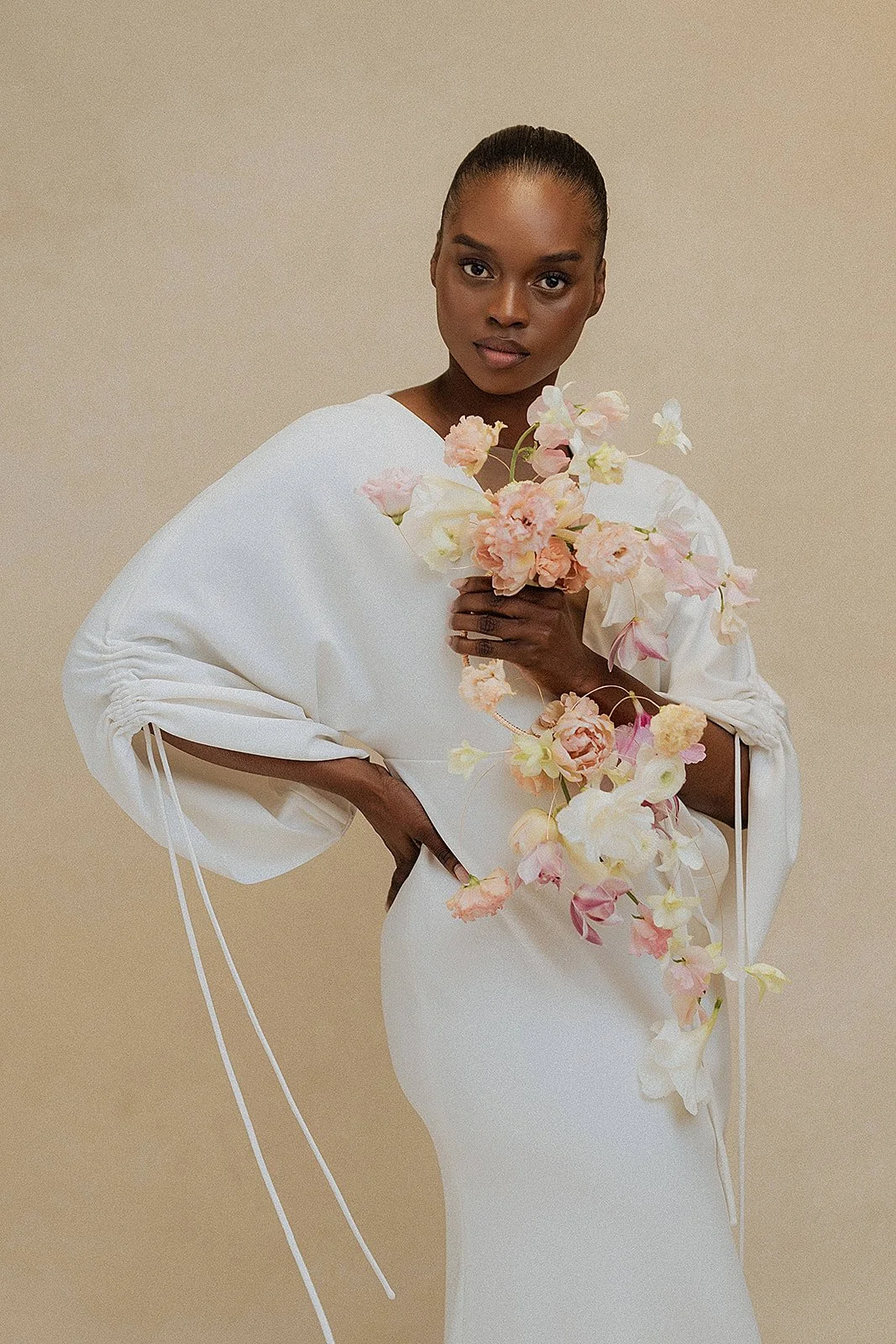
bridal fashion editorial portrait of a model in a white draped gown with ruched drawstring sleeves holding a cascading peach and pink floral arrangement against a neutral beige backdrop

Editorial bridal photography at this level does not happen on a white seamless roll. The backdrop behind every standout fashion image is a deliberate creative decision. Shop Chasing Stone hand-painted photography backdrops built for editorial work.

Color grading for fashion flat lays should enhance the existing tonal relationship between garment and surface rather than impose a new one. If the surface and garment were chosen for their analogous color relationship, a color grade that pushes the shadows toward a contrasting hue undermines the styling decision. Let the physical choices made on the styling table drive the final color story. Post-production refines. It does not reinvent.

For brands outsourcing retouching, include a reference image of the actual surface alongside every batch. The retoucher needs to know that the surface texture is intentional, not an artifact to be cloned away. For a deeper look at how canvas texture interacts with Lightroom adjustments, see our guide to professional color grading for backdrop photography.

Frequently Asked Questions

What is the best background for fashion flat lay photography?

The best background depends on the garment's complexity and the brand's visual intent. Hand-painted canvas surfaces, like those from Chasing Stone starting at $135, add depth and editorial interest to minimalist garments. GREENGUARD Gold certified fabric surfaces at $125 provide a luxurious, controlled stage for heavily detailed or patterned clothing. For most fashion brands, a combination of both types offers the greatest versatility across product lines and seasonal campaigns.

What camera settings should I use for clothing flat lays?

Set your aperture to f/8 for single garment shots or f/11 for multi-piece outfit compositions, with ISO at 100 to 200 on a sturdy overhead tripod. Use a 50mm prime lens on full frame for minimal distortion. A remote shutter release or two-second timer eliminates camera shake. Manual exposure and manual white balance (set with a gray card) ensure consistency across an entire catalog batch.

How do I light a fashion flat lay on a textured surface?

Begin with a large diffused overhead source, either a 4x6-foot softbox or north-facing window light, for even, shadow-free base illumination. Then introduce a secondary directional source at 30 to 45 degrees from the surface to reveal the surface texture without overpowering the garment. For catalog work requiring strict color consistency, continuous LED panels at 5500K provide more reliable results than natural light.

How do I choose a flat lay surface color for my clothing brand?

Select surfaces in the same color family as your brand's dominant palette for a cohesive, tonal look, or choose complementary tones for contrast and visual energy. Most brands need two to three surfaces: one warm neutral, one cool neutral, and one editorial option. Shoot every product within this defined surface palette to build visual identity consistency across your website and social media channels.

Can I use flat lay surfaces for both clothing photography and product photography?

Yes. Flat lay styling surfaces are used across fashion, jewelry, stationery, beauty, and food photography. The same principles of surface-to-subject color harmony apply regardless of the product category. Chasing Stone surfaces are used by wedding photographers, product photographers, floral designers, and fashion brands, all of whom need surfaces that collaborate with the objects placed upon them rather than competing for attention.

How do I prepare garments for flat lay photography?

Steam every garment immediately before placing it on the surface using a handheld fabric steamer rather than an iron. Employ double-sided fashion tape for collars and lapels, small hidden pins for stubborn hems or cuffs, and tissue paper rolled beneath sleeves to create the illusion of dimension. Every fold should appear natural while being carefully engineered to show the garment's best silhouette and construction details.

What size flat lay surface do I need for fashion photography?

Chasing Stone fabric flat lay surfaces measure approximately 34 by 25.5 inches, which accommodates folded garments, accessory groupings, and most outfit story compositions. For full-length garment flat lays, such as unfolded dresses or full outfits arranged at scale, consider using a hand-painted photography backdrop in the 5x8-foot size as a horizontal flat lay surface for maximum coverage.

Your Surfaces, Your Visual Language

The brands that build lasting visual identities through fashion flat lay photography and backdrop styling are the ones that treat the surface as a creative decision, not an afterthought. The garment changes with every collection. The surface remains: a consistent, considered, intentional foundation that tells the viewer something about the brand before they register the first button or seam.

Every Chasing Stone surface is built for this purpose. Hand-painted styling surfaces crafted by Jennifer over two to three days, each one unique. Fabric surfaces produced with GREENGUARD Gold certified vegan wool and entirely biodegradable packaging. Surfaces trusted by the world's most discerning photographers, stylists, and now, by clothing brands building visual identity through the discipline of flat lay photography.

For guidance on selecting the right surfaces for your fashion flat lay practice, or to discuss custom colorway options for your brand, reach us at info@chasingstone.com.

Chasing Stone Team – Premium Photography Backdrops & Styling Surfaces
Written & Reviewed by the Chasing Stone Team
Creators of premium photography backdrops and styling surfaces
Trusted by thousands of discerning creatives worldwide
Every piece is handcrafted with intention in Orange County, California
Next
Next

Luxury Product Photography Setup: How to Photograph Jewelry on Premium Backdrops (2026)

Chasing Stone

Scenario Aperture ISO Shutter Speed Lens (Full Frame) Notes
Single garment, hero shot f/8 100 1/125s 50mm prime Maximum sharpness, minimal depth needed
Multi-piece outfit story f/11 100–200 1/60–1/125s 50mm prime Deeper depth of field for layered items
Textured garment close-up f/5.6–f/8 100 1/125s 85–100mm macro