
The Wedding Detail Shot List: What to Include in Wedding Flat Lay Photos

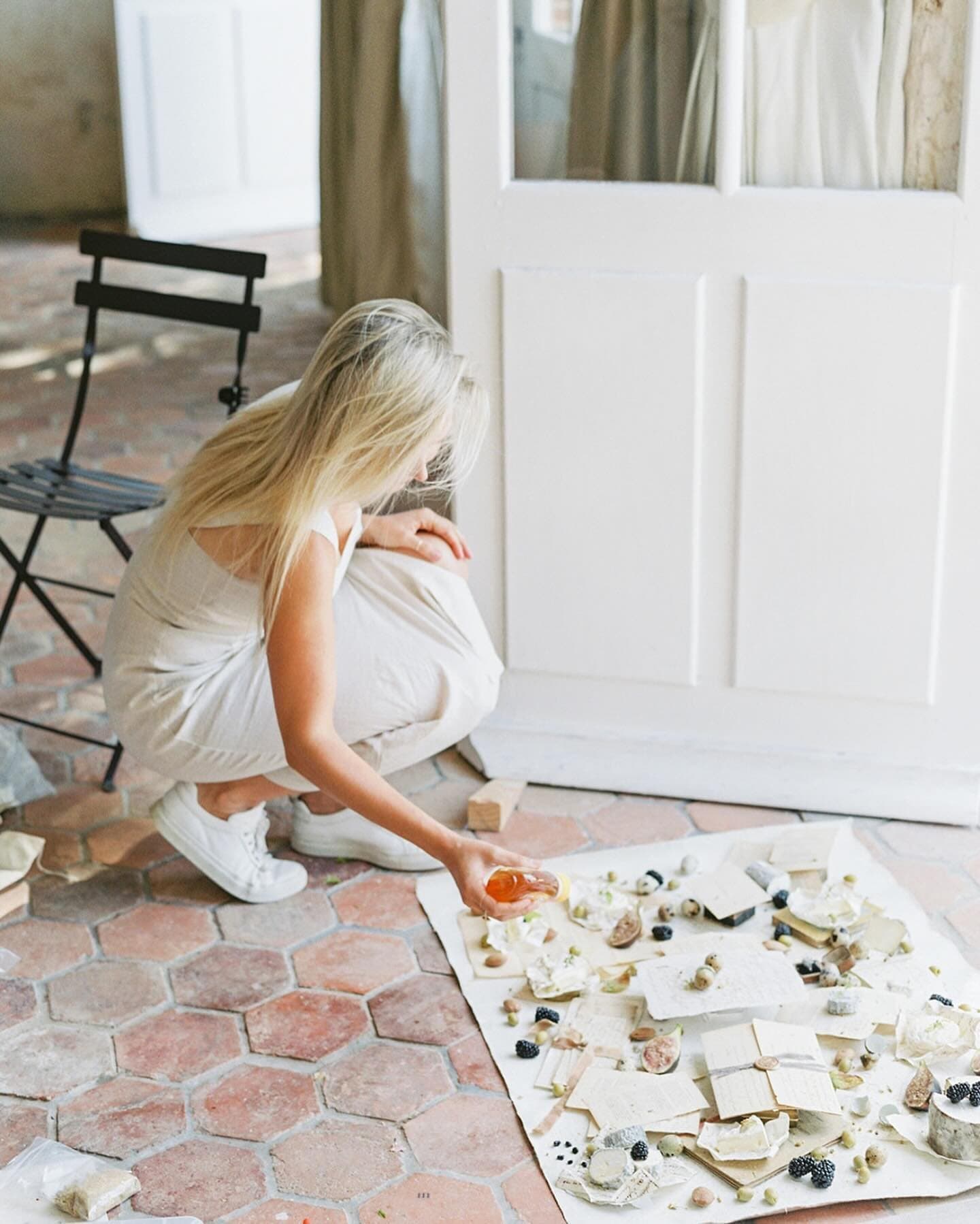
There is a particular stillness to a wedding morning, the way soft light from a hotel window falls across a ring box, a folded letter, and a pair of shoes still wrapped in tissue, each one waiting for its moment in the day. These small objects are chosen with such care, often over many months, and they hold a couple's story in miniature: the paper they fell in love with at a stationer's studio, a grandmother's pearl earrings, a ribbon pulled from the bouquet. When I paint a flat lay surface, I hope for the textures of crumbling stone and weathered plaster to sit quietly beneath something precious like this, supporting the story while letting the objects speak first. Gathering those details thoughtfully, and knowing which ones belong together, is one of the most rewarding pieces of a wedding photographer's craft.
Quick Answer
A complete wedding detail shot list covers the invitation suite and paper goods, the engagement ring and wedding bands, the ring box, heirlooms and "something old" or "something blue" pieces, florals borrowed from the florist, shoes, jewelry and hair accessories, fragrance, vow books and letters, and the groom's or partner's details such as cufflinks, a watch, and a boutonniere. Ask the couple and planner to set these aside in one bag or box before you arrive, then group them into six to ten frames: a full suite, a ring detail, an heirloom story, accessories, a personal frame, and a partner's set.
Why a Wedding Detail Shot List Matters Before the Morning Begins
Wedding flat lay photos hold the part of the day a couple can easily forget, the quiet hours before the ceremony when every object was still new and waiting to be worn or carried. They are also the frames a stationer, a florist, or a planner may hope to share with their own audience, so a thoughtful set of detail photos can become a generous gift to the vendors who helped make the day. A written shot list, prepared and shared before the wedding, turns what could feel like a scramble through suitcases and garment bags into a calm, intentional ritual.
The list serves two purposes at once. It reminds the couple of what to bring and set aside, and it reminds you, in the rush of a morning that is always moving faster than anyone planned, of the frames you promised yourself you would make. Without it, the most meaningful pieces are easily missed: the vintage handkerchief tucked in a mother's purse, the second invitation that never left the box, the note the couple wrote to one another the night before. With it, you arrive knowing exactly what story you are there to tell, and every object finds its place.
I find it helpful to think of the shot list as a set of chapters, each with a clear subject, and the morning as the time to arrange those chapters on a surface that holds them all together. If you have read our ultimate flat lay photography guide for wedding photographers, you will recognize the composition principles underneath this approach. Here we focus entirely on the gathering itself: what to ask for, when to ask, and how to group it.
How to Ask the Couple and Planner for Details Ahead of Time
The single most effective step you can take toward beautiful wedding flat lay photos happens weeks before the wedding, usually in your final questionnaire or planning call. Couples are often unsure which of their belongings will photograph well, and it may not occur to them to ask their stationer to set aside an extra, unaddressed invitation suite for exactly this purpose. Asking gently and specifically gives them the chance to prepare, and it saves you from improvising with a creased invitation pulled from someone's handbag.
I would encourage you to write your request as a warm note in your own words, explaining that you love to photograph the small pieces they chose and inviting them to gather everything into a single box or tote that can be handed to you when you arrive. Within that note, describe the categories you hope to see in flowing language, so the couple feels invited into the process: an extra full invitation suite including envelopes, inner cards, and any wax seals or ribbon the stationer used; the engagement ring and both wedding bands; any heirlooms or family pieces; their shoes, jewelry, and hair accessories; their fragrance; vow books or letters; and the partner's cufflinks, watch, tie, or other personal details. When you mention the stationer, suggest that they request loose wax seals, extra ribbon, and a spare stamp or two, since these small pieces give you so much flexibility when you style.
The planner is your second, and often most reliable, ally. A brief message to the planner a week before the wedding, sharing your detail list and asking whether the florist might set aside a few loose stems, a single bloom from the bouquet palette, or extra greenery, makes it far more likely that those pieces appear in the bridal suite at the right moment. Planners also know where the second invitation suite went, who is bringing grandmother's ring, and whether the shoes are traveling separately with a bridesmaid. Treat them as a collaborator in the story, and share a few of the finished frames with them afterward.
Finally, ask the couple one open question that reaches beyond the list: is there anything small that carries special meaning for them, something they might not think to mention? This is how you learn about a father's pocket watch, a pressed flower from a first date, or a coin carried in a shoe, and these are often the details they treasure most in the gallery.
The Complete Wedding Detail Shot List: Every Item Worth Gathering
What follows is the full list of details I would encourage you to gather, described chapter by chapter so you can adapt it to each couple. Not every wedding will include every item, and a smaller, more personal set is often more beautiful than a crowded one.
The invitation suite and paper goods
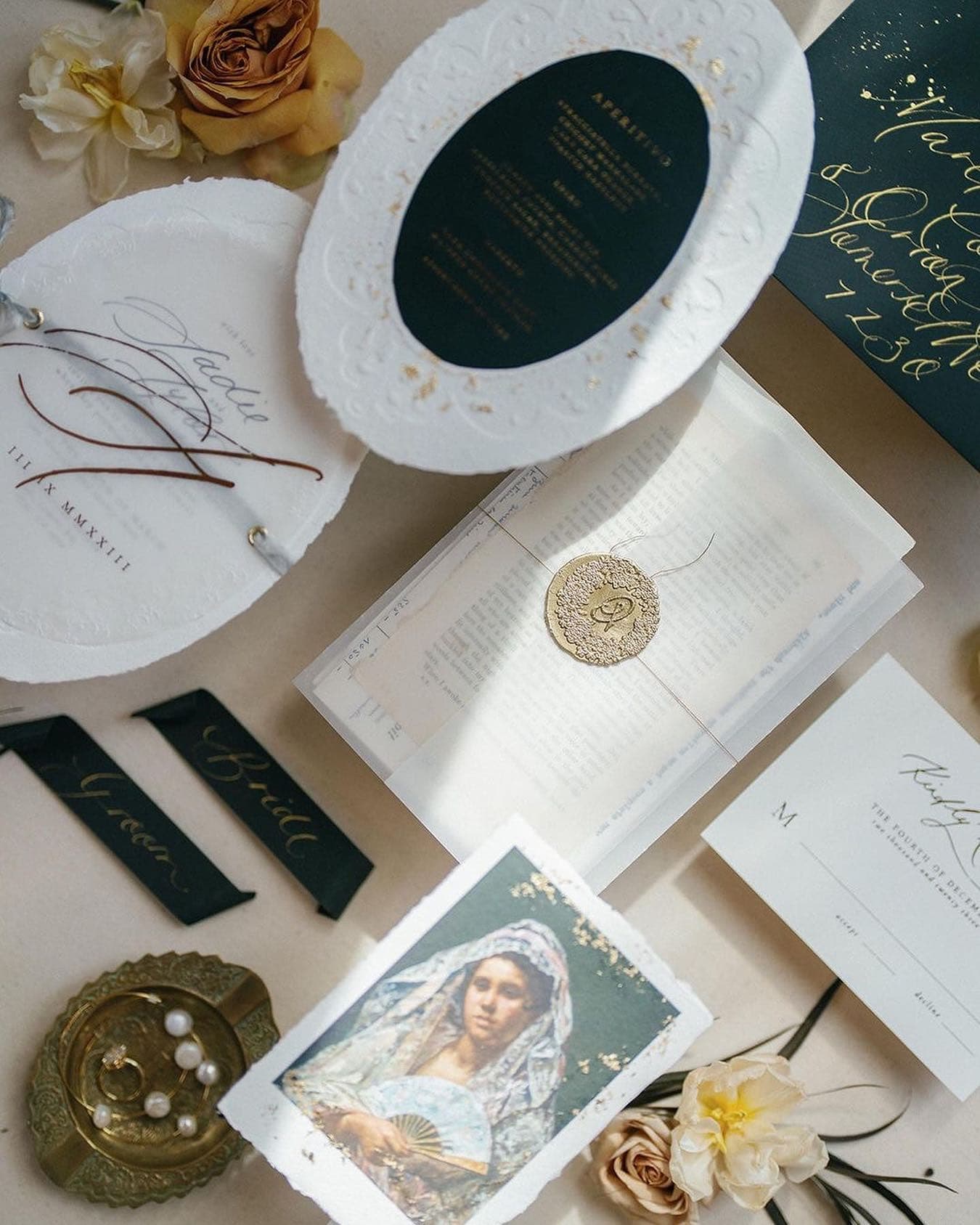
The invitation suite is the heart of most wedding flat lays, because it carries the couple's names, date, place, and the visual language they chose for the day. Ask for the complete suite in its unaddressed form: the main invitation, the reply card and envelope, any details or accommodations card, the outer envelope, an envelope liner if there is one, and any vellum wrap, belly band, or ribbon that holds it all together. Wax seals, postage stamps (especially vintage ones), and a calligraphed envelope add texture and a sense of hand. Beyond the invitation, look for the day-of paper: a menu card, a place card, the ceremony program, and any welcome note. These pieces often share the same palette and can join the suite or form a second, quieter paper frame.

Our journal post on how to style a wedding invitation suite walks through layering and spacing an invitation flat lay in depth, so I will only add one note here about gathering: if the suite arrives already sealed in its envelope, ask before opening it, and keep the original envelope intact for its own frame.
Rings and the ring box
The engagement ring and both wedding bands deserve their own frame, and often a second, closer one. A ring box gives the rings a stage and introduces another material, whether velvet, wood, silk, or a ceramic dish. Some couples bring a box chosen especially for the photographs; others have only the box the ring came in. Either is lovely, and so is a ring resting directly on a textured surface, where the stone catches window light and casts a small, soft shadow.
When you gather the rings, keep them in one place you never set down, such as a small pouch in your pocket, and return them to a named person when you finish. This small habit protects both the couple's peace of mind and your own.

Heirlooms, something old, and something blue
Heirlooms carry the deepest stories in a wedding flat lay, and they are the details most easily forgotten if you do not ask about them directly. The familiar rhyme is a gentle way to open that conversation. According to The Phrase Finder, the "something borrowed" superstition was recorded by the English folklorist William Henderson in 1866, with the fuller rhyme appearing in print through the early 1870s. The Phrase Finder also notes that the silver sixpence in the shoe was a late Victorian addition, and The Knot explains that the coin was meant to bring the couple prosperity, suggesting a penny in its place since the sixpence was retired in the United Kingdom in 1980.
On the wedding morning, these traditions translate into objects: a grandmother's brooch pinned to the bouquet wrap, a mother's lace handkerchief, a blue ribbon, a borrowed bracelet, a coin. Photograph each one with the care you would give the rings, and if you can, ask who it belonged to. A caption in the couple's gallery, or a short note to yourself for the album, gives the image its meaning years later.
For a "something blue" detail, a pale blue or soft plaster-toned surface can echo the color without overwhelming it. Our Havana hand painted flat lay is a classic, soft blue with a mild watercolor effect and lightly textured patches of white that simulate crumbling plaster, and it sits gently beneath blue ribbon, silver, and pearl.
Florals borrowed from the florist
Florals bring life and softness to every frame, and the best flat lay florals are small: a single garden rose, a few sprigs of greenery, a loose stem of the same bloom the couple chose for the bouquet, or a few petals scattered with intention. If the florist has delivered the boutonnieres to the bridal suite, one of them can visit your flat lay for a few minutes before it is pinned. Keep stems short so they rest flat, and use loose petals sparingly, since too many can make a frame feel busy rather than romantic.
Shoes, jewelry, and accessories
Shoes carry so much of a couple's personality, and they are one of the details couples most often hope to see in their gallery. Gather them early, since they are often worn sooner than you expect. Earrings, a necklace, a bracelet, hair pins or combs, a veil comb, and a clutch can join the shoes in a single accessories frame, or a statement piece can stand alone. Jewelry asks for patience: arrange it slowly, watch for reflections of the window or your own camera, and turn each piece until the light rests on it softly.

Fragrance, vow books, and personal notes
The couple's fragrance is a beautiful, quiet detail, with a bottle that often carries lovely glass and metal work. Vow books, a letter written the night before, and any small gift exchanged between the couple add a personal chapter to the story. Handle letters with discretion; photograph the envelope or a closed fold unless the couple invites you to show the words.

The groom's or partner's details
The partner's details deserve their own frame and their own care. Ask for the watch, cufflinks, tie or bow tie, pocket square, shoes, cologne, a boutonniere, and any gift from the couple. A book, a camera, or something connected to a shared hobby can make this frame feel personal. If the partners are getting ready in separate rooms, plan this frame for when a second shooter can collect these pieces, or bring them to your styling area during a quiet moment. A shared surface tone between the two rooms keeps the whole set feeling like one family of images.

Grouping the Details into Six to Ten Wedding Flat Lay Frames
Once everything is gathered, the art is in deciding which pieces belong together. A well-planned detail set usually lands between six and ten frames, enough to tell the whole story without asking the couple to scroll through dozens of near-identical images. I find it most helpful to think of eight frames as a gentle default and expand or contract from there.
I like to begin with the complete invitation suite, laid out with its envelope, reply card, inner cards, and any seals or ribbon, with perhaps one or two small floral touches. It is the frame a stationer is most likely to hope for, so give it space and keep it clean. From there, move in close for a quieter study of the paper: a single card, the wax seal, a corner of calligraphy, and one bloom, photographed near enough that the tooth of the paper and the texture of the surface beneath it become part of the image.
The rings come next, resting in their box or set directly on the surface, with nothing else to draw the eye beyond perhaps a ribbon or a few petals. The heirlooms follow as their own chapter, with the "something old, something new, something borrowed, something blue" pieces grouped together so the family story reads as one. The shoes then join the jewelry and hair accessories, styled as the pieces the couple will wear, and a more personal frame gathers fragrance, vow books, a letter, or a gift, arranged with enough restraint that the meaning carries the image.
The partner's details make the seventh frame, kept in the same visual family as the rest of the set through a shared surface tone and consistent light. I would close with one full, generous composition that brings together the strongest pieces from every chapter, a frame that often finds its way onto an album cover or a printed piece.
If you have time and the couple has more to share, additional frames might include the day-of paper goods, a separate floral study, or a second close ring detail. If time is short, the suite, the rings, the accessories, and the partner's details form a complete minimum set.
Within each frame, think about the relationships between objects, the breathing room around them, and where the eye enters and rests. Our post on the seven most common wedding flat lay mistakes covers crowding, mismatched tones, and harsh shadows in detail, and it is worth reading alongside this list before your next wedding.
Timing and Collecting Details on the Wedding Morning
Detail photographs work best when they happen early, before the getting-ready rooms fill with people, steam, and hairspray, and before the shoes and jewelry are needed. Many photographers schedule the details as the very first part of their coverage, while hair and makeup are underway, since that is when the couple is occupied and the objects are still free to borrow. When you share your detail list with the planner, ask them to protect a block of time for it in the day's timeline, so the details are never squeezed between hair touch-ups and the first look.
On arrival, I would encourage you to greet the couple, then ask the planner or a designated bridesmaid for the box or bag of details you requested. Look through it together so you know right away what is there and what is missing, and ask quietly about anything that has not appeared yet, such as the rings or the partner's watch. Give the couple a sense of how long you will need, and let them know you will return each piece to a named person when you finish.
Choose your styling spot before you unpack anything. You are looking for the largest, cleanest window in the suite, with soft light rather than direct sun, and a flat place nearby where you can lay out your surface: a bed, a desk, a dresser top, or a clear patch of floor. Our guide to getting ready photography in hotel rooms has more on reading and adapting to the light in these spaces, much of which applies directly to detail work.

Lay out everything you have collected on one side of your surface, sorted roughly by chapter, so you can reach for each piece without searching. Work through your frames in the order the objects will be needed: shoes and jewelry first if the couple will dress soon, then the rings if they must go to the officiant or best friend, then the paper goods and heirlooms, which can wait. The partner's details often arrive last, and that is fine; they can join a second surface or take their turn once the first set is returned.
As you finish each frame, return the objects that are needed and keep the rest in their chapter until the set is complete. Before you leave the room, take a moment to confirm with the planner that every ring and heirloom has gone back to its person. This small, steady discipline earns a planner's trust, and it lets the couple stop worrying about their rings and simply enjoy the morning.
Choosing a Surface for Your Wedding Flat Lay Photos
The surface beneath your details sets the tone of every frame, and it is one of the few elements of the day entirely within your control. Hotel bedspreads, painted desks, and patterned carpets rarely support the story, which is why so many photographers travel with their own surfaces. A good backdrop for wedding details is calm enough to let the objects lead, textured enough to give the image depth, and matched in tone to the palette the couple chose.
Hand painted flat lays are where so much of my own heart lives. Each one is painted by hand by me in Orange County, California, on premium cotton canvas, so no two are ever quite the same, and their surfaces carry the soft, layered texture of old world stone and plaster. They come in two sizes: the Petite at 26 by 20 inches, which suits a single ring detail or an invitation study, and the Standard at 35 by 28 inches, which gives a full suite or a combined composition enough room to breathe. They are rollable, which matters on a wedding morning when you are carrying everything up to a hotel suite, and up to three surfaces of the same size can travel together on a single core.
When choosing colorways for weddings, think about the couple's palette and the paper. Warm, neutral stone tones support cream and ivory stationery; soft blues support blue ribbon, silver, and "something blue" details; and darker, inkier surfaces lend drama to gold foil and deep florals. You can explore every colorway on our hand painted flat lays collection page.
Our fabric flat lays offer something different, and they can be a thoughtful companion to a painted surface on a wedding morning. They are made of vegan wool or textured velvet, approximately 34 by 25.5 inches, with an organic cotton canvas backing, and they are protected by the only patented GREENGUARD Gold Certified stain proofing compound, which is non-toxic and free of formaldehyde, PFAS, and PFOAs. That stain and moisture resistance is infused into each fiber to protect from within for the life of the fabric, so if a splash of champagne or a drop of water finds its way onto the surface in a busy bridal suite, you can let it roll off and blot it, and a damp terry rag will lift most marks. The beauty of a fabric surface lives in its soft weave and the way it holds light. You can see the current colors on our fabric flat lays collection page.
Every colorway can find its place on a wedding morning, though for a classic set of ivory stationery and pearl we often suggest Santorini, a natural white with pink-toned grit, or Chateau, a faint dove grey with subtle, light blue highlights. Most of the places our flat lays are named for are places we have visited ourselves, and Provence, a muted lilac with faintly golden highlights and grey undertones, is one that especially stayed with me; each name carries a connection to and appreciation for the natural world, which I hope you feel beneath the details you arrange.
Whatever surface you choose, care for it on the road. Never crease or fold a hand painted flat lay, since it may crack or dent; keep it rolled on its core between shoots with the paint side in, so that when you unroll it on a bed or desk it rests on its durable, wipeable canvas back rather than on the painted face, and if it stiffens in cold weather, roll it gently in the opposite direction to relax it.
Light, Height, and Composition for Flat Lay Detail Photos
Once your surface is down and your details are gathered, light becomes the quiet partner in every frame. Place your surface close to the window with the light falling across it from one side, so that texture in the paper, the painted surface, and the folds of a ribbon all gain a soft, dimensional shadow. Light from the side reveals texture; light from directly behind you flattens it. If the sun is falling directly through the glass, a sheer curtain or a piece of diffusion material will soften it, and a small white card or reflector on the opposite side will lift the shadows without erasing them.
For a true overhead flat lay, your camera should sit directly above the center of the surface, with the sensor parallel to it so that the edges of an invitation remain square rather than tapering. A sturdy chair or a small step stool brings you high enough over a Standard surface, and for the Petite you may be able to stand at a bed or desk without one. Check the corners of the frame after every adjustment, since even a slight tilt shows in the straight lines of stationery.
Compose with generosity. Leave space around the edges so the surface frames the objects, and give each piece room to be seen on its own before it relates to its neighbors. If a ring box or a curling card will not sit still, a small dab of removable adhesive such as museum putty is safe to use on a hand painted flat lay and holds the piece exactly where you want it. Odd groupings tend to feel more natural than even ones, and a single diagonal line, perhaps a ribbon or a stem, can guide the eye gently through the image. When you finish a frame, step back and look at it as the couple will: does every object belong, and does each one have room to tell its part of the story?
If you would like a fuller gear list for detail work, from lenses to the small tools that keep ribbons in place, our post on essential photography gear for wedding flat lays gathers it in one place.
Frequently Asked Questions
What should be included in wedding flat lay photos?
Wedding flat lay photos usually include the invitation suite with envelopes, reply cards, seals, and ribbon; the engagement ring, wedding bands, and ring box; heirlooms and "something old" or "something blue" pieces; a few loose florals from the florist; shoes, jewelry, and hair accessories; fragrance; vow books or letters; and the partner's watch, cufflinks, tie, and boutonniere. Choose the pieces that carry the couple's story, and leave out anything that feels like filler.
How many wedding detail photos should a photographer take?
A focused set of six to ten finished flat lay frames tells the story well, each built around one clear chapter: the full invitation suite, a close paper study, the rings, the heirlooms, accessories, a personal frame, the partner's details, and a combined composition. You will take several variations of each while refining the arrangement, but delivering a focused set of strong frames is kinder to the couple than many similar images.
When should wedding detail photos be taken on the wedding day?
Detail photos are best taken first, at the beginning of coverage, while hair and makeup are underway and before the couple needs their shoes, jewelry, or rings. Early morning light in a getting-ready suite is often soft and even, and the room is calmer before family and the wedding party arrive. If the partner's details arrive later, photograph them as soon as they reach you.
How do I ask a couple to prepare their wedding details?
Include a warm, specific note in your final questionnaire or planning call asking the couple to gather their details into one box or tote. Describe the categories you hope to see, suggest they request an extra unaddressed invitation suite with loose seals and ribbon from their stationer, and ask whether anything small carries special meaning. Share the same list with the planner so loose florals and family pieces reach the suite on time.
What is the best backdrop for wedding details?
The best backdrop for wedding details is a calm, textured surface in a tone that supports the couple's palette, large enough to hold a full invitation suite with breathing room. Hand painted canvas flat lays add a quiet, stone-like depth that comes alive under soft window light, while stain resistant fabric surfaces are helpful in busy bridal suites where fragrance or drinks are nearby. Bringing two or three surfaces in different tones gives you room to respond to the palette on the day.
What size flat lay surface do I need for a wedding invitation suite?
A surface around 35 by 28 inches, such as our Standard hand painted flat lay, gives a complete invitation suite with envelopes, cards, and florals enough space to breathe in an overhead frame. A smaller surface around 26 by 20 inches, such as our Petite, suits close studies of a single card, a ring box, or a pair of earrings. Carrying one of each size gives you flexibility for both full compositions and close details.
Gathering the Story, One Small Detail at a Time
Every wedding carries a handful of objects chosen with love, and the quiet hour you spend gathering and arranging them becomes part of how a couple remembers their day. A thoughtful shot list, a gentle note sent weeks ahead, and a surface that lets each piece rest in soft window light are all it takes to turn a box of belongings into a set of images the couple will treasure for a lifetime. I hope this list finds a place in your own preparations, shaped and reshaped to suit each couple you photograph.
If you are building your own collection of surfaces for wedding mornings, I would love for you to spend some time with our hand painted flat lays, each one made entirely by hand, by me, and dreamt up with moments like these in mind. Which details will you gather first at your next wedding, and what story will they tell?
Shop the look