
Wedding Photography Trends 2027: Color, Light and Texture to Watch

Every autumn, when the light through the studio windows grows lower and warmer and lingers longer across the canvases drying on the wall, I find myself thinking about the weddings that will be photographed in the year ahead. The forecasts arrive in the same season, and I read them the way I read a landscape, looking for the patterns that run quietly beneath the surface. What moved me this year is how much of the 2027 conversation returns to the things I have cared about since I founded Chasing Stone in 2018: texture you can almost feel through a photograph, color drawn from earth and stone, and light that is allowed to be imperfect and alive. I have gathered what the most credible sources are reporting, named each one so you can read further, and added what years of painting surfaces for photographers have taught me, so that you can carry these ideas into your own work with intention.
Quick Answer
The leading wedding photography trends for 2027 are editorial, cinematic portraits that feel like film stills, documentary coverage guided by gentle direction, a film look paired with direct flash and motion blur, and richer, more sophisticated color. The Knot's 2027 Wedding Trends Report names editorial-cinematic photos, a palette of merlot, plum, powder blue and moss green, and backdrops built from unexpected textures. Pinterest's 2026 Wedding Trends Report shows sharp growth in searches for drapery backdrops and grounded tones like plum and olive. Zola's 2026 First Look Report finds that some couples now ask their photographers to capture social content, and The Knot reports that weddings are stretching across several days.
How to Read the 2027 Wedding Photography Forecasts
A forecast is only as useful as the method behind it, and the sources in this guide measure very different things.
The most directly relevant is The Knot 2027 Wedding Trends Report, updated on September 28, 2026. The Knot's editors reviewed dozens of emerging ideas, then asked a Trends Vendor Council of five professionals from The Knot's vendor marketplace to confirm or refine each one, and the report notes how many of the five agreed with every trend. The editors also drew on their own on-site behavioral data through June 2026. Many trends carry a year-over-year percentage, though the report page itself does not define what is being counted; when Axios covered the report on October 18, 2026, it described those figures as growth in search activity compared with a year earlier. So when you see a Knot percentage in this guide, read it as growth in searches, a measure of rising curiosity among couples; the share of weddings that actually include a trend comes from surveys like Zola's and The Knot's own studies, which I note separately.
The second source is the Pinterest Wedding Trends Report 2026, published on April 28, 2026. Pinterest says its users made more than 7 billion wedding-related searches and saved more than 16.7 billion wedding ideas in the previous year, and the report lists the percentage growth in searches for specific terms. Pinterest does not state the comparison period or the baseline on the page, and a jump of several hundred percent can begin from a modest base, so these figures are best treated as signals of direction.
Two surveys of couples ground the picture in actual weddings. Zola's 2026 First Look Report, first published in January 2026 and updated in October, surveyed more than 11,500 couples marrying in 2026. The Knot's 2026 Real Weddings Study, released in February 2026, surveyed more than 10,000 United States couples who married in 2025 and found an average wedding cost of $34,000, an average of 117 guests, and that 88 percent of couples hired a photographer. Alongside these, I have drawn on trend features from The Knot, Green Wedding Shoes, The WED and Who What Wear, plus Bridebook's 2027 forecast for the United Kingdom.
Last year we wrote about the 2026 wedding photography trends through the lens of backdrops and texture; this guide looks forward to 2027.
Editorial-Cinematic Portraits and the Documentary Balance
What The Knot means by editorial-cinematic
All five members of The Knot's Vendor Council confirmed Editorial-Cinematic Photos as a 2027 trend, which places it among the most strongly supported items in the report. The Knot describes couples who want to feel like the stars of their own story and who approach their photography the way Wes Anderson approaches a film. Lexsey Lanzotti of Zotti & Co told The Knot that the requests she sees most are for images that feel emotional, dreamy, romantic and artful, with creative composition, and that standard posed shots are not what couples are asking for.
This builds on a direction already visible a year ago. In its 2026 trends feature, The WED described a blend it called documentary meets editorial, and photographer Savvy Quine of Sky and Savvy Photo described documentary work maturing toward emotional truth and layered storytelling. The Knot's 2026 photography trends article listed documentary coverage as well, and photographer Natalia Zuk noted there that the most spontaneous-feeling images are still thoughtfully directed, with care for light and composition.

Shooting cinematic portraits with intention
A cinematic portrait usually rests on a single, clear direction of light, a background that reads as a place with its own history, and a composition that gives the subject room to breathe, and you can build all three on a wedding day without a full studio.
For the symmetrical, storybook framing that Wes Anderson's films are known for, place your subject squarely in the center of the backdrop and shoot from roughly chest height so the lines of the canvas stay level and the edges of the frame feel deliberate. A longer lens, somewhere between 85mm and 135mm, compresses the space and lets the texture of the backdrop fill the frame without distortion at the corners. For the moodier, painterly version of the look, let a single window or a softbox fall from one side and allow the far side of the face to drift into shadow; the backdrop will hold a gentle gradient from light to dark, and that gradient is what gives a frame its quiet drama. We have written more about building this kind of depth in our guide to cinematic portrait photography techniques with backdrops.
Distance between subject and backdrop is the quiet control behind all of this. At three to four feet, the brushwork of a hand painted canvas stays visible and tactile, which suits the artful, fashion-led side of the trend. At six to eight feet, with a wide aperture, the same surface softens into an atmospheric wash of tone, which suits the dreamier, film-still side. Moving between those two distances within one ten minute session gives a couple two quite different chapters from a single setup.
Breaking up the portrait block
The documentary side of the trend is also changing when portraits happen. In Green Wedding Shoes' 2026 photography trends feature, Kelsey Newkham-Sjostrom, founder of Ruét Photo, described replacing a single long portrait session during cocktail hour with several short couple sessions of five to ten minutes each in different places around the venue, and said that the flash-lit, late-night style of portrait is here to stay. A portable backdrop fits this rhythm beautifully, because you can set it once in a quiet corner near the reception and return to it two or three times through the evening, each visit capturing the couple in a different emotional register. If you are working inside an unpredictable venue, our guide to venue backdrop setup in tight, unpredictable spaces walks through placement, stands and safety in detail.
Film, Flash and Motion: Texture Inside the Image
Several sources describe couples wanting images that carry their own texture, whether that comes from grain, from the hard edge of a flash, or from the blur of movement.
The film look
The Knot's 2026 photography trends article reported that the film aesthetic is returning, and photographer Julian Ribinik observed there that many couples want the look of film without necessarily asking for actual film, and the same article describes hybrid coverage, in which a photographer moves between digital and film cameras, as a practical path. The WED placed what it called film frames first among its twelve 2026 trends, with Ellen Ross of The Light + Color describing nostalgia as one of the strongest influences in wedding photography, which the magazine connects to renewed interest in 35mm film. In Bridebook's 2027 forecast for the United Kingdom, celebrity wedding planner Mark Niemierko describes the return of film photography, disposable cameras and Polaroids. Pinterest's 2026 report points the same way in its Nostalgic Tech Touches theme, where searches for analog photobooths grew 155 percent and searches for camcorder weddings grew 90 percent.
What film and film-inspired editing share is a softness in the highlights and a gentle, organic grain, and both of those qualities sit naturally against a surface with real tonal variation. A flat, uniform background can look oddly synthetic once grain is laid over it, while a painted surface, with its layers of lighter and darker pigment, gives the grain something to settle into. If you are emulating film in post, I would suggest keeping the backdrop a step lower in contrast than you might for a clean digital edit, so the shadows retain their detail when the curve is lifted.
Direct flash
Direct flash appears across nearly every source. The Knot's 2026 article included direct-flash photography among its trends, and photographer Craig Peterman advised using it with restraint, a few bold hits balanced with the warmth of the room's own light. Green Wedding Shoes described a paparazzi effect, with photographer B Erkmen explaining that it gives images a caught-in-the-moment feeling, and The WED called its version Pop and Flash, with photographer Masha Sakhno describing bold color and flash returning with purpose. Direct flash and a textured backdrop can be wonderful together, though it helps to understand what the flash does to the surface. Light that travels straight from the camera strikes the canvas head on, which flattens the relief of the brushwork, and the subject casts a hard, sharp-edged shadow onto the backdrop just behind them. If you want that crisp shadow as part of the look, keep the subject within two or three feet of the canvas. If you would rather keep the texture alive, move the flash a little off axis, even by holding it at arm's length on a cord or bouncing it from a nearby wall, so that the light rakes across the paint at a slight angle. To bring back the warmth Peterman describes, slow your shutter to somewhere between 1/15 and 1/30 of a second and let the ambient candlelight or tungsten glow fill in behind the flash. We explored how a single surface shifts in character under different light in our piece on how lighting changes your backdrop's entire personality.

Motion and blue hour
The Knot's 2026 article named blurred-action photography as a trend for dance floors, for portraits in which the wedding party moves past a still couple, and for transitions such as guests moving from cocktail hour into the reception, and Green Wedding Shoes included motion blur as well, with Joshua Fournier of The Fourniers among those quoted. The WED listed blue hour, the dim window just before sunrise or after sunset, among its 2026 directions. These two ideas pair naturally: in the soft, cool light of blue hour, a slower shutter speed is often necessary anyway, and a veil or skirt in motion against a still, textured backdrop creates a lovely tension between what moves and what stays. A shutter around 1/8 of a second with a pop of flash holds the face while movement trails through the fabric.
The 2027 Wedding Color Palette: Plum, Moss, Powder Blue and Muted Terracotta
Color is where the forecasts agree most closely, and the agreement is toward depth and sophistication.
The Knot's 2027 report lists Sophisticated Colors as a trend confirmed by all five council members, with a 127 percent year-over-year increase (by Axios's reading, growth in searches), and names merlot, plum, powder blue and moss green as the leading shades, with blush and champagne as secondary accents. Pinterest's 2026 report describes a theme it calls Rooted Romance, in which searches for plum and olive weddings grew 1,380 percent, muted terracotta 545 percent, fig weddings 515 percent and merlot weddings 370 percent. Another theme, Ethereal Shimmer, points toward glowing, iridescent finishes, with searches for the opalite aesthetic up 2,710 percent and muted mauve up 365 percent. Remember that these are rates of search growth from an unstated baseline, so they show which ideas are gathering curiosity fastest while leaving open how many couples will finally choose them. In Who What Wear's July 2026 look at 2027 wedding design, florist Katie Wachowiak expected rich browns and deep reds to remain strong, with lilac and pastel blue emerging.
The survey data helps keep these signals in proportion. Zola's 2026 First Look Report, which surveyed couples about their own plans, found green to be the most popular wedding color, incorporated in 53 percent of all weddings, with 30 percent of couples choosing sage green specifically, and it names dusty blue and terracotta among the other frequently mentioned shades. So while plum and merlot are rising quickly in searches, greens remain the foundation of what couples are actually choosing.

Translating the palette into backdrop choices
When a couple's palette leans toward these deeper tones, the backdrop becomes part of the color story, and I would encourage you to choose it the way a painter chooses a ground, as the layer that everything else rests upon.
For moss green, our Serpentine hand painted backdrop is a dark moss green with vibrant green highlights and mild black dappling, and it carries the earthy, garden-born depth of the Rooted Romance theme. Olivine, a dusty sage green that leans cool, sits closer to the softer sage tones in Zola's findings. For powder blue, Celestite is a light sky blue that photographs with an airy calm, a natural companion to the pastel blue Wachowiak describes. Plum and wine are harder to place on a wall without overwhelming a white gown, so I tend to suggest Purpurite, a dark mauve with a magenta undertone, for couples who want that depth in portraiture, or Ametrine, a warm, dusty mauve purple, for a gentler reading of the same idea. Clay, a faded terracotta brown, speaks to muted terracotta and fig, and Umber, a dark chestnut brown, holds the rich browns that florists like Wachowiak expect to stay. For the lilac Who What Wear mentions, Lavender Quartz is a faded lilac that leans warm, and Rose Quartz, a soft pastel pink, sits comfortably beside blush and champagne.
The questions I hear most often from photographers are about color itself: how a colorway will sit beside different skin tones, which colors belong to the vision of their brand, and, for a particular shoot, which colorways will offer variety while still complementing one another. As palettes deepen toward plum, moss and merlot, those conversations about color theory feel more meaningful than ever, and I always love helping a photographer find the canvas that answers them.
A few principles help these deeper colors work in practice. A white or ivory gown against a dark backdrop creates strong value contrast, so expose for the dress and let the canvas fall a little darker than it appears to the eye; the color will stay rich and clear. Saturated backdrops can cast color onto skin when the subject stands close and the light bounces off the surface, so for plum, wine or deep green settings I would keep the couple at least four to six feet forward and light them from the side, which lets the backdrop hold its color without tinting the face. When a palette leans toward iridescence and shimmer, as in Pinterest's Ethereal Shimmer theme, a quieter, matte backdrop is often the better partner, because it allows silver, chrome and pearl details to catch the light without competing with a reflective surface behind them.
Texture, Lace and Set Design: Wedding Backdrop Trends for 2027
For anyone who builds sets or carries a backdrop to weddings, this is the richest part of the 2027 forecasts.
What the reports say about backdrops and sets
The Knot's 2027 report includes a trend it calls Prop Surrealism, confirmed by three of its five council members, in which creative couples ask for unexpected textures in their backdrops and design layouts. Micaela Erickson of Vesper told The Knot that this lets couples show their taste, creativity and interests, and creates playful photo moments that step away from tradition. The same report describes Interior Design Weddings, where couples design their celebrations to feel like a comfortable home, with table lamps, menu tassels and coffee table guestbooks, and a trend called The Arts as Inspiration, up 195 percent, in which painting, sculpture, music and photography shape wedding design. Axios, covering the report, explained that this figure is the growth in mood board searches for references such as Monet's water lilies, Gustav Klimt and stained glass. The Knot also lists Antique Lace, with searches up 280 percent, moving into stationery, tablescapes and decor, and Monofloral Installations, up 113 percent, built around a single plant such as hydrangea, moss or wisteria. Danielle Elder of Classic Events described that floral look to The Knot as loose, tailored and organic, like a still-life painting.
Pinterest's 2026 report shows the same instinct in its Messy Coquette Decor theme, where searches for drapery backdrops grew 1,510 percent, stained glass wedding arches 750 percent, book wall backdrops 555 percent and flower installations 195 percent, and in a neighboring Sensory Styling theme, where searches for moss tablescapes grew 90 percent. In Who What Wear's look at 2027, Sunna Yassin of Bash Please predicted that moss would become more prominent and that paper goods would turn more tactile. And in Green Wedding Shoes' 2026 photography trends feature, hand painted backdrops appear as a trend in their own right. April Raymond of April and Mike described how a distinctive surface adds depth and sophistication to a wedding's design, and how carrying the wedding's color story into it makes each frame feel like a work of art, and the feature itself suggests that couples can later keep the surface as art for their home.

Building a painterly set on a wedding day
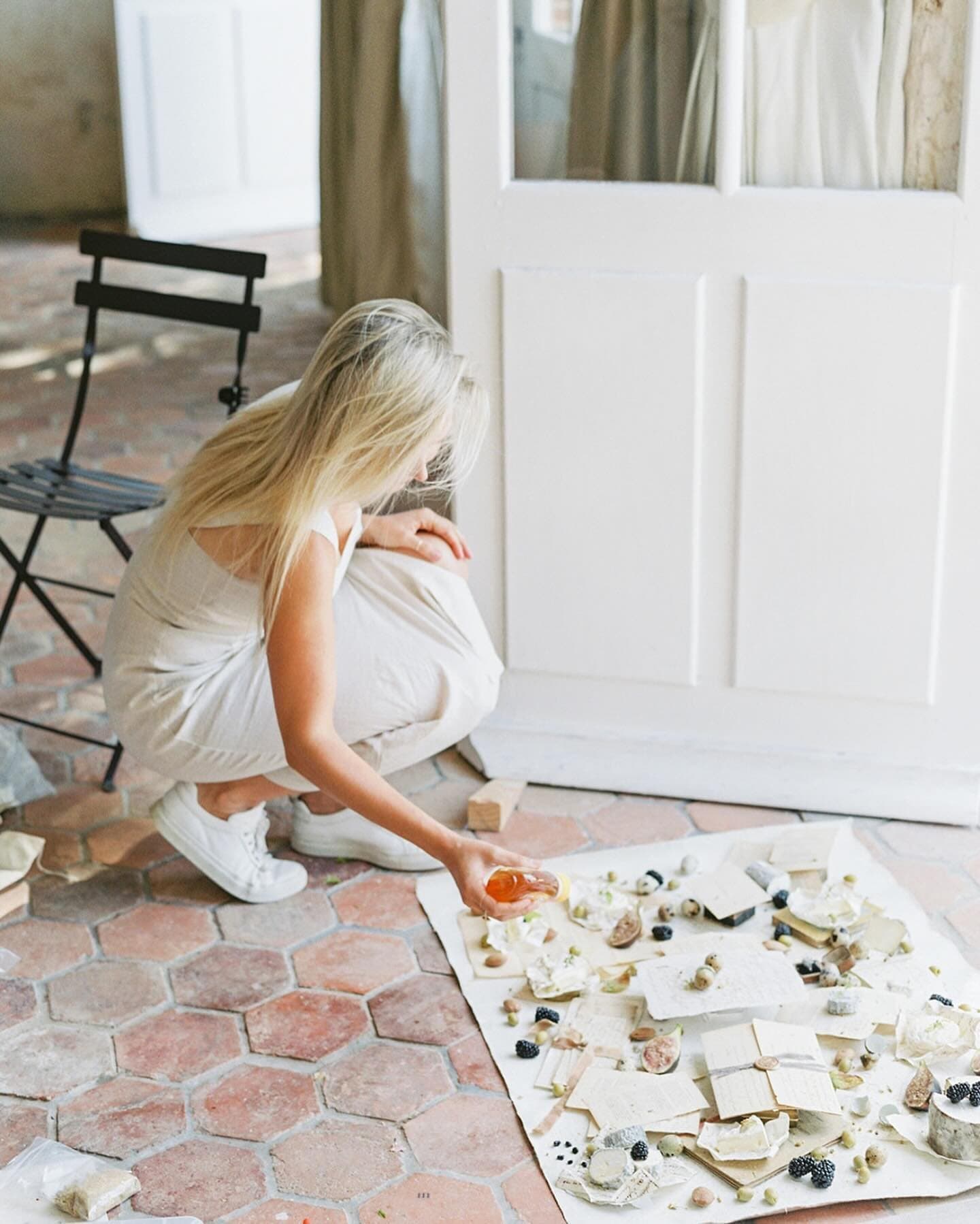
I love these trends because they ask photographers to think like painters composing a still life, and a still life is built in layers. The backdrop is the wall of the room, the first and largest field of color and texture. In front of it, a plinth, a stool or a small side table creates a middle ground and a place for a single-variety arrangement, which echoes The Knot's monofloral installations and gives the frame a clear focal point. In the foreground, a swag of antique lace, a length of draped linen, a table lamp or a stack of old books adds the domestic warmth of an interior design wedding and the tactile quality Pinterest's searches point toward.
When you layer drapery in front of a painted backdrop, keep the fabric lighter or darker in value than the canvas so the two surfaces separate in the photograph; two mid-tones of similar value will merge into one flat plane. Let lace fall within a foot or two of the backdrop and light it from the side, which throws its pattern into relief and lets a little shadow from the lace fall across the paint. For the stained glass and fine art references the forecasts describe, think about color temperature as well as color: a warm practical lamp in the frame, with a cooler window light falling on the couple, creates the quiet interplay of warm and cool that the old interior painters loved.
I have seen moments like these in styled shoots, where one of our canvases is layered with drapery, a fall of lace or the warm glow of a small lamp, and they never stop moving me, because the painted surface begins to read as the wall of a lived in room, holding the people and the objects before it with a quiet sense of place.
Detail Photography and Flat Lays, From Morning to Midnight
The Knot's 2026 photography trends article described messy detail shots as a rising style, with reception flat lays of messy tables, half-eaten cake and dance floor props, and photographer Hannah Nowack advised there that the objects in a frame should still make sense together. The article contrasts curated daytime flat lays, with neatly lined cards and delicate florals, with looser nighttime flat lays often made with hard, direct flash. Green Wedding Shoes made a similar observation: its feature describes reception flat lays of signature cocktails, menus, vintage glassware and tablescapes, and Becca Davis of Adam and Becca Photography and Videography said these end-of-night details, such as a cocktail resting beside the cake and the rings, add variety to a gallery. Zola's 2026 First Look Report found couples choosing simpler tablescapes that photograph more cleanly, and placing florals where cameras will capture key moments.
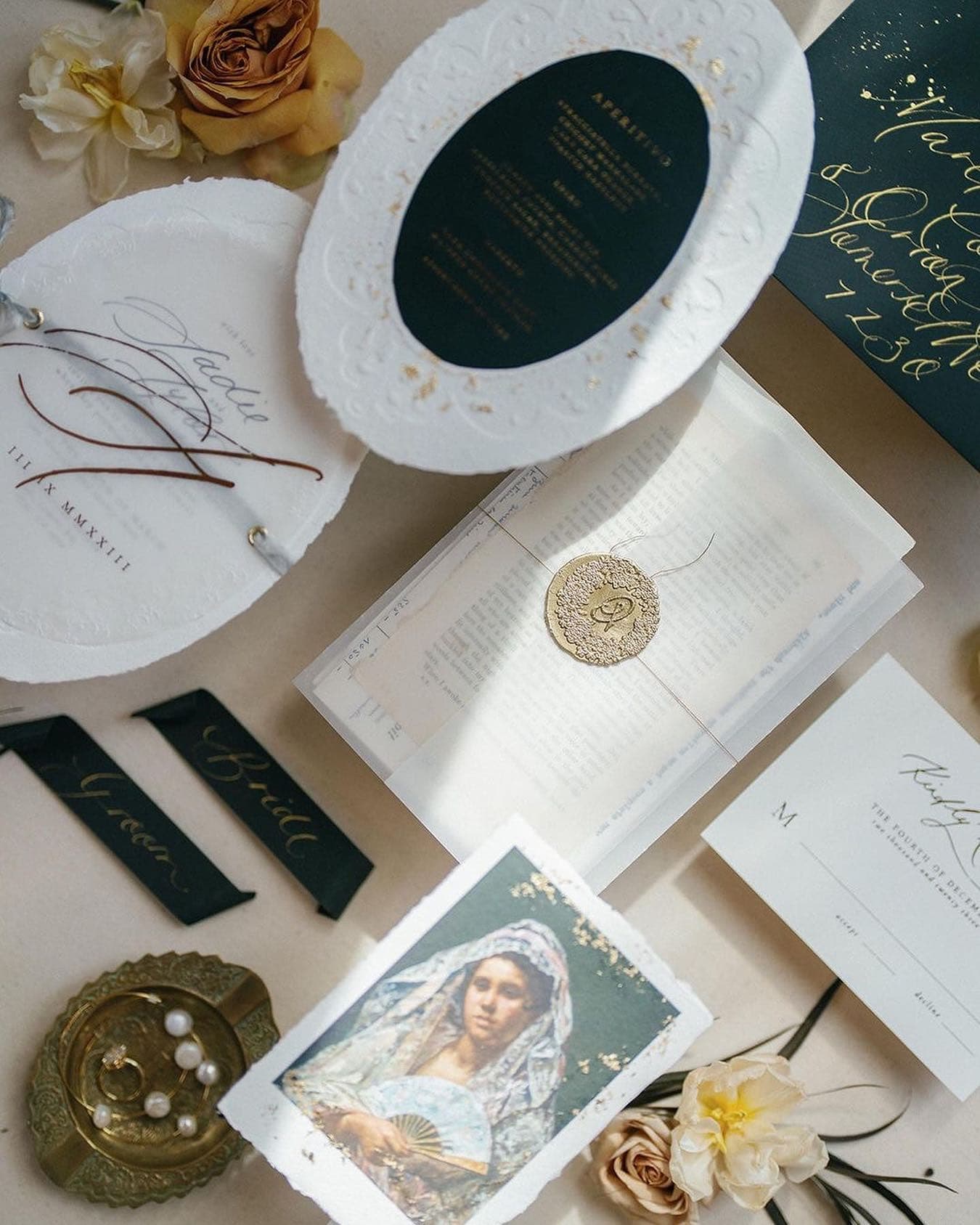
Stationery is changing in ways that matter for detail photographers, too. The Knot's 2027 report lists Experiential Stationery, up 77 percent, with custom illustration, handwritten lettering and pop-up designs on menus and program fans, and a trend it calls The Wedding Brand, up 100 percent (Axios describes this as growth in searches for custom crests and monograms), with a recognizable crest or illustration carried from the save-the-date through the wedding website. In Who What Wear, Sunna Yassin described paper goods moving away from flat, minimal suites toward artisanal finishes that feel more tactile and collected.

Two flat lay sessions in one wedding day
The clearest way to answer these trends is to plan for two distinct detail sessions. In the morning, while the light is soft and the couple is getting ready, build your curated flat lay of the invitation suite, rings, heirloom pieces and florals on a painted surface chosen to sit within the wedding palette; for a powder blue wedding, Havana, a soft blue with a mild watercolor effect and scattered patches of white like crumbling plaster, carries that palette beautifully, while Matera, a warm taupe with slightly cooler undertones, suits the earthy, rooted palettes. Then, late in the evening, return with a flash and gather what the night has left behind: a half-empty glass, a menu with a ring of wine on its corner, a slice of cake, a pair of shoes kicked off beneath the table. The morning frame shows what the couple planned, and the evening frame shows how it was lived, and together they tell a fuller story than either could alone.
For textured stationery, raking window light at a low angle across letterpress, deckled edges or handmade paper reveals relief that overhead light would flatten. Our ultimate flat lay photography guide for wedding photographers covers surfaces, composition and lighting for these sessions in full.
Albums, prints and heirlooms
The desire for tangible things runs through the reports as well. The Knot's 2026 photography trends article named tangible visual keepsakes, including printed photographs, albums and framed art, as a returning trend. Pinterest's report includes a theme of Analog Activities and Keepsakes, and The Knot's 2027 report lists Analog Registries, with couples asking for retro camcorders and record players. For photographers, this is a gentle encouragement to design galleries with print in mind: images with quiet backgrounds, generous negative space and consistent color across a sequence lay out gracefully on an album spread, and a portrait with real texture behind it often holds up better on paper than one with a flat, featureless wall.
Video, Social Content and the Multi-Day Wedding
The Knot's 2027 report lists Extending the Wedding as an Editors' Choice trend, with couples stretching their celebrations through courthouse ceremonies and welcome parties, and Axios, in its coverage of the report, cited The Knot's finding that nearly one in three weddings now spans at least three days. Zola's survey of 2026 couples offers a slightly different measure of the same movement: 18 percent of couples planned a full two-to-three-day wedding weekend, and 37 percent planned to host at least one additional event, such as a welcome party or a day-after brunch. The Knot's 2026 photography trends article noted that photographers are increasingly asked to document welcome dinners, recovery brunches and private family moments around the wedding.
Content is part of that widening. Zola's 2026 First Look Report found that 21 percent of couples marrying in 2026 plan to create their own social-first content on the wedding day, and that of those couples, 40 percent are asking their professional photographers and videographers to capture it, which works out to roughly one couple in twelve overall. Zola also reported that many couples add videography to their budgets because TikTok showed them how much they wanted video. Green Wedding Shoes included social media integration among its 2026 trends, with Lisette Gatliff describing shareable images and gallery previews delivered almost immediately, and The WED described mixed media coverage that brings photography, video, drone, Super 8 and analog work together under one team. Pinterest's report found searches for video guestbooks up 240 percent.

Keeping a wedding weekend visually consistent
When coverage spans several days and several venues, a portable backdrop becomes a thread of continuity. The same canvas can appear behind the couple at a welcome dinner, on the wedding day and again at a farewell brunch, so that the portraits from each event sit together naturally in the final gallery. For a long weekend, I would bring one backdrop that belongs to the couple's palette and one quieter neutral for anything unexpected.
For video and short-form content, a few adjustments help a textured backdrop read well in motion. Continuous light, from a window or a soft LED panel, behaves more predictably on video than flash, and a gentle side angle keeps the brushwork visible as the camera moves. Vertical framing, which most social platforms favor, asks for more height than width, so position the couple a little lower in the frame and let the backdrop rise above them, which suits a 5 by 8 canvas beautifully, since every one of our backdrops hangs on its short side, five feet wide and eight feet tall.
Frequently Asked Questions
What are the wedding photography trends for 2027?
The Knot's 2027 Wedding Trends Report names editorial-cinematic photography, with portraits that feel like film stills, as a trend confirmed by all five of its vendor council members. Across The Knot, Green Wedding Shoes and The WED, photographers also describe documentary coverage with gentle direction, a film look, direct flash, motion blur and more portraits after dark. The Knot's color forecast leans toward merlot, plum, moss green and powder blue, and its Prop Surrealism trend points to backdrops with more unexpected texture.
Is direct flash still popular in wedding photography?
Yes. The Knot, Green Wedding Shoes and The WED all included direct flash among their 2026 wedding photography trends, and Green Wedding Shoes described it as a paparazzi effect that feels caught in the moment. Photographer Craig Peterman advised The Knot to use it with restraint, a few bold hits balanced with warm room light. Green Wedding Shoes linked the style to more portraits late at night, and The Knot described nighttime detail flat lays made with hard, direct flash.
What wedding colors are trending for 2027?
The Knot's 2027 report names merlot, plum, powder blue and moss green as leading shades, with blush and champagne as secondary accents. Pinterest's 2026 report shows strong search growth for plum and olive, muted terracotta, fig and merlot, alongside opalescent and muted mauve tones. Zola's 2026 survey of couples found green incorporated in 53 percent of all weddings, so greens remain the foundation of real weddings while deeper jewel and earth tones gather search interest.
Is film photography still a wedding trend?
The film look remains a strong direction. The Knot reported its return in 2026, with photographer Julian Ribinik noting that many couples want the aesthetic of film more than film itself, and the article describes hybrid digital and film coverage as one answer. The WED listed film frames first among its 2026 trends, and in Bridebook's 2027 UK forecast, planner Mark Niemierko describes the return of film photography, disposable cameras and Polaroids.
What are the wedding backdrop trends for 2027?
The Knot's 2027 report describes Prop Surrealism, with couples requesting unexpected textures in their backdrops and layouts, alongside Interior Design Weddings and art-inspired design. Pinterest's 2026 report shows searches for drapery backdrops up 1,510 percent and book wall backdrops up 555 percent, measured as search growth. Green Wedding Shoes named hand painted backdrops as a 2026 trend, with photographer April Raymond describing the depth and sophistication they add to a wedding's design.
What is editorial-cinematic wedding photography?
Editorial-cinematic wedding photography blends the art direction of fashion photography with the mood and composition of film. The Knot describes couples approaching their photos like a Wes Anderson film, and photographer Lexsey Lanzotti told The Knot that couples ask for emotional, dreamy, romantic and artful images over standard posed portraits. In practice it relies on directional light, considered framing, a background with character and genuine emotion captured with gentle guidance.
A Year of Texture, Color and Feeling
When I set these reports side by side, I see couples asking for weddings that feel personal, artful and lived in, and photographs that hold the warmth of a real place and a real hand. Those are the qualities that first drew me to weathered plaster and crumbling stone, and the reason I still begin each canvas by thinking about how light will move across it long after it leaves the studio. The trends will continue to shift, as they always do, yet the desire for images with depth, honesty and beauty feels steadfast.
If one of these ideas has stirred something for your 2027 season, perhaps a moss green portrait set, a powder blue morning or a painterly corner built for after-dark flash, I would be honored to have one of our hand painted backdrops become part of it. What will the year ahead look like through your lens?
Shop the look