
What Is a Flat Lay? Meaning, Origins and How Photographers Use It

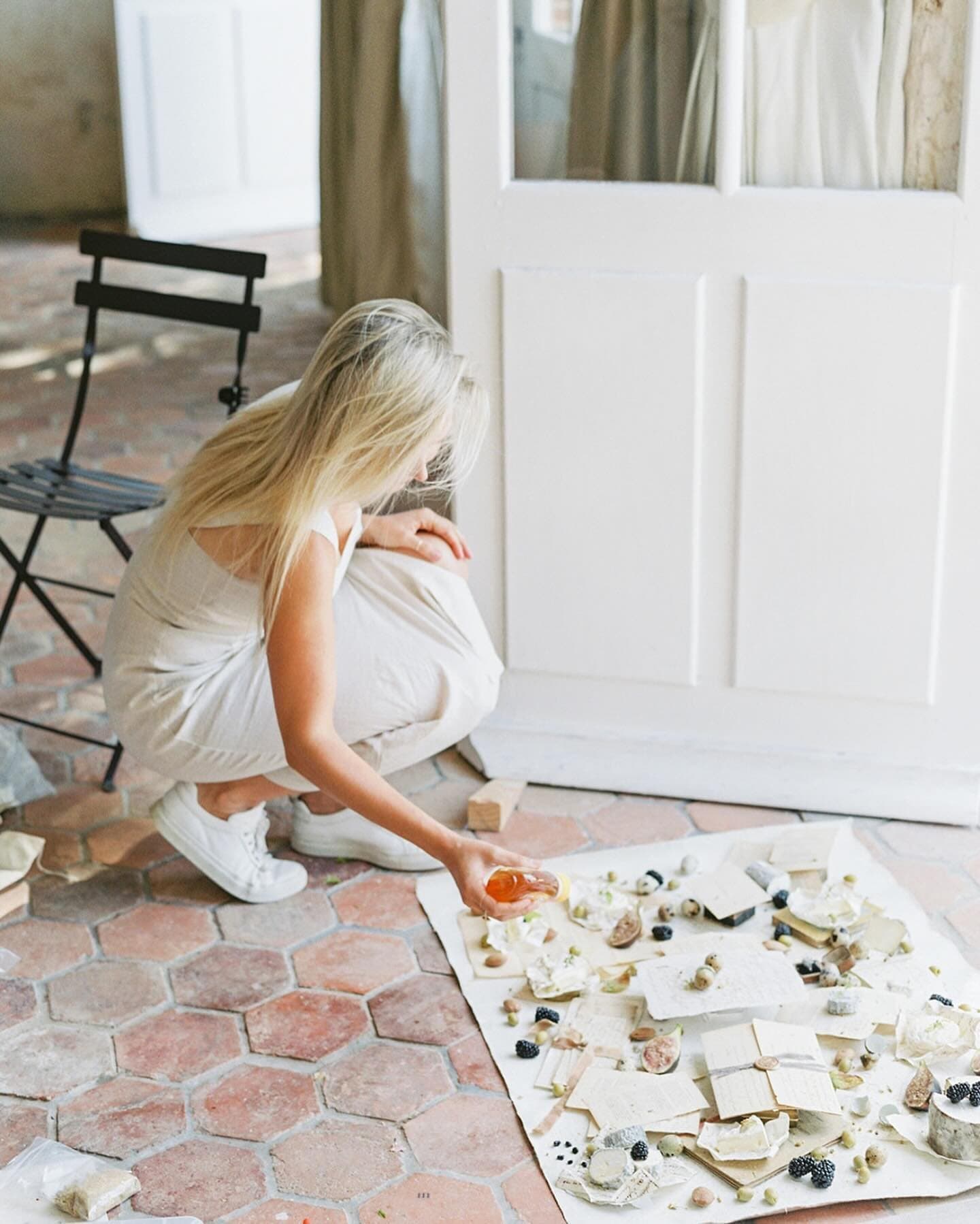
When I walk a beach or a canyon trail, I often find myself looking down rather than out, at the way a pale stone rests beside a curl of dried kelp, or the way lichen spreads across a boulder in rings of rust and sage, and I think of those small arrangements as the first flat lays I ever loved. Nature composes on the ground all the time, setting texture against texture beneath an open sky, and the light that falls across it from above is soft, even and endlessly patient. The flat lay is our way of borrowing that view. We gather a handful of meaningful objects, lay them on a surface with intention, and stand over them the way we might stand over a tide pool, letting the light and the ground beneath them carry as much of the story as the objects themselves.
Quick Answer
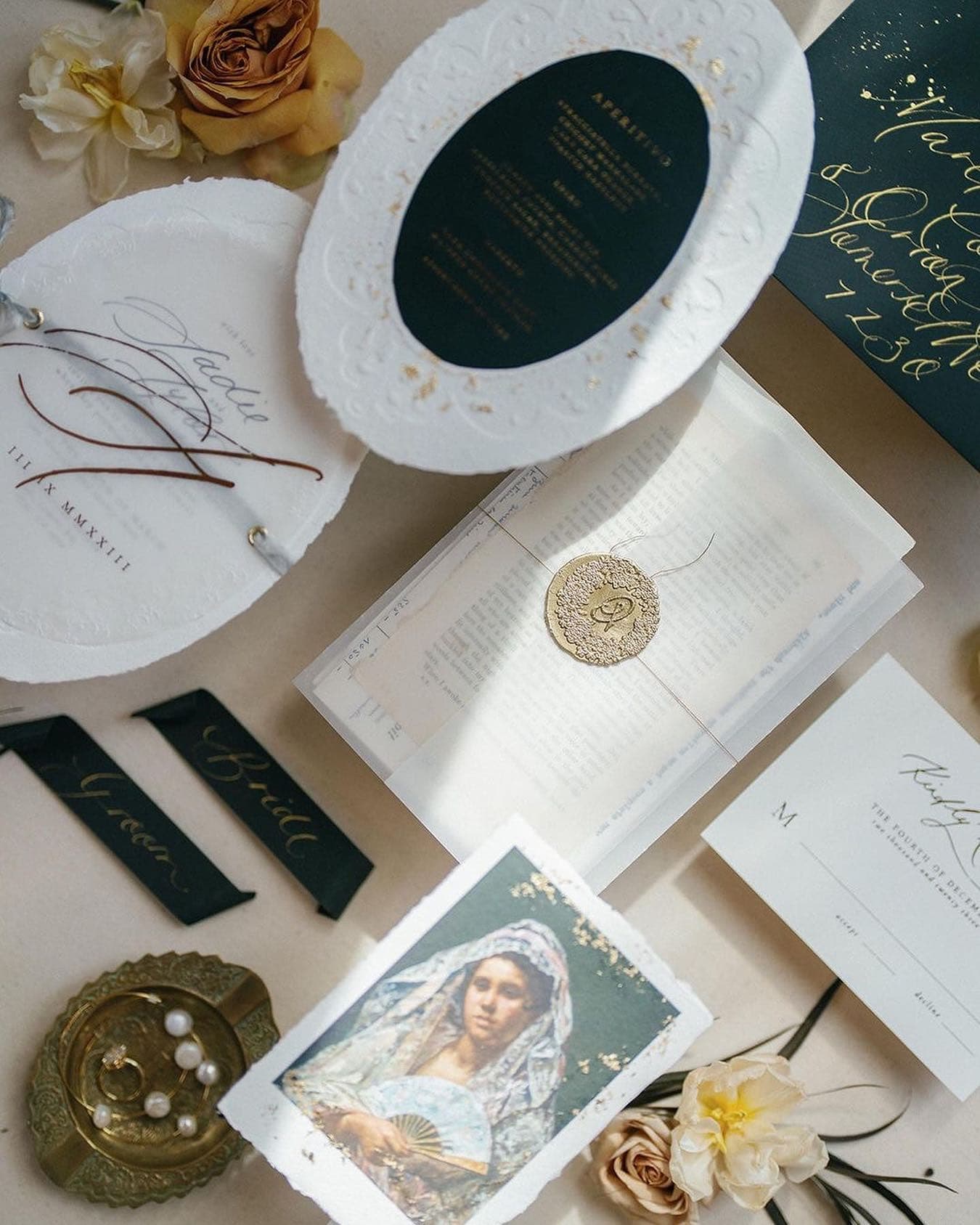
A flat lay is a photograph of objects arranged on a flat surface and captured from directly above, with the camera held parallel to the surface so that everything sits on a single plane. The term describes both the arrangement and the resulting image. Flat lays are used in wedding photography for invitation suites, rings and heirloom details, and widely in product, food, fashion, stationery and floral work. A good flat lay depends on four things working together: a surface with the right color and texture, soft directional light, a considered composition, and a clear story about who or what the objects belong to.
What a Flat Lay Means in Photography
At its simplest, a flat lay is an overhead photograph. The objects rest on a horizontal surface such as a table, the floor or a styling board, and the camera looks straight down at them, so that the image has no horizon, no vanishing point and very little sense of depth beyond the gentle shadows the objects cast. Adobe's own photography guide describes flat lays as images that tell stories through the arrangement of objects on a flat surface, and it quotes a blogger who calls them photographs taken from a bird's eye view. That phrase is a lovely shorthand, because the bird's eye view is exactly what gives a flat lay its calm, graphic quality.
The word is used in two ways, and you will hear both on any wedding day or product set. As a noun, a flat lay is the finished image, or the arrangement itself before it is photographed, so a photographer might say she is "building the flat lay" while she adjusts a ribbon. As a description, flat lay photography is the broader practice of styling and shooting from above. When people search for what flat lays are in photography, they are usually asking about both at once: what the picture looks like, and what goes into making it.
What a flat lay is not is also worth naming gently, because it helps you choose the right approach for a given subject. A photograph of a bouquet resting on a table shot from eye level is a tabletop or still life image. A shoe photographed at a three quarter angle on a plinth is a product shot. Both can be beautiful, and both can live in the same gallery as your flat lays, but they read differently, and the camera angle is the line between them.

Where the Overhead Style Came From: Knolling and the Rise of the Flat Lay
The flat lay as we know it has a charming and slightly unexpected ancestor, a habit of tidying called knolling. According to Make: magazine and Kinfolk, the word was coined in 1987 by Andrew Kromelow, who worked as a janitor in Frank Gehry's furniture shop. At the end of the day he gathered the scattered tools and arranged them at precise right angles, and he named the habit after Knoll, the furniture company Gehry was designing for at the time, because the arrangements echoed the angular lines of Florence Knoll's designs. Reading Design notes that the sculptor Tom Sachs was working in Gehry's furniture studio during those same years, and that he adopted the practice and set down its rules.
Sachs went on to make knolling a creed in his own studio under the motto "Always Be Knolling," a playful riff on the "Always be closing" line from Glengarry Glen Ross, and he wrote it into his 2009 studio manual, Ten Bullets. A history published by the fashion platform Lyst traces how the idea moved from the workshop into visual culture, with Sachs publicizing it widely around 2009, design blogs devoted to neatly organized objects appearing around 2010, and Instagram becoming, by 2014, what Lyst calls the unofficial home of knolling, as bloggers and brands began photographing their arranged belongings from above.
I find it moving that a style now so associated with weddings and soft florals began with a working person caring for the tools of a workshop. Knolling is strict: every object squared to the frame, evenly spaced, grouped by kind. The flat lay that grew out of it on social media is looser and more emotional. It allows overlap, organic curves, a scattering of petals, a ribbon that wanders off the edge. Most photographers today move between the two languages, using a knolled grid for a groom's accessories or a product catalog and a softer, layered arrangement for an invitation suite or a bridal morning. Knowing where the style came from gives you permission to use either, and to choose deliberately.
How a Flat Lay Differs from Tabletop and 45 Degree Product Photography
The difference between a flat lay and its close cousins comes down to where the camera sits and what that does to the objects. In a true flat lay, the sensor is parallel to the surface, often described as shooting at 90 degrees. Everything lies at roughly the same distance from the lens, so a single focal plane holds the whole arrangement in focus even at fairly open apertures, and the shapes of the objects become the composition. A round ring dish reads as a perfect circle, an envelope reads as a clean rectangle, and the negative space between them becomes as important as the objects.
A 45 degree shot, which product and food photographers use constantly, tilts the camera down at an angle so that you see both the top and the front of an object. It is the angle at which a cup of coffee shows its crema and its handle at the same time, or a perfume bottle shows its label and its cap. It gives depth and dimension, and it lets the background behind the object fall softly out of focus. A tabletop or straight on shot, closer to eye level, treats objects almost like portrait subjects standing in front of a backdrop.
Each angle suits different objects. Tall things such as bottles, candles, vases and cakes usually look their best at 45 degrees or straight on, because from above they shrink into a circle and lose their character. Flat or low things, such as stationery, rings, ribbon, jewelry, folded textiles, food on a board and pressed florals, are at their most legible from above. For photographers who are new to detail work, the most useful habit I can suggest is to ask, before arranging anything, whether the object's beauty lives on its face or on its profile. Objects whose beauty lives on their face belong in the flat lay, and the rest can be photographed upright beside it.
It helps to remember that the surface plays a different role at each angle too. At 45 degrees the surface becomes a foreground that recedes into a background, so its texture blurs as it moves away from the lens. In a flat lay the surface fills the entire frame at the same distance, edge to edge and in full focus, which means its texture, color and value are present in every part of the image, and it is the reason the surface carries so much weight in overhead work.
Where Photographers Use Flat Lays
Wedding Flat Lays
A wedding flat lay is an overhead photograph of the couple's details, typically made on the wedding morning while the bride and her party are getting ready. The invitation suite is usually the centerpiece, surrounded by the rings, shoes, perfume, heirloom jewelry, vow books, a sprig of the bouquet and small personal pieces such as a grandmother's handkerchief. These images open many wedding galleries and albums, they are shared by stationers, planners and florists in their own portfolios, and they hold the quieter story of the day, the things a couple chose, kept and inherited. For a complete walk through of styling these images from start to finish, our ultimate flat lay photography guide for wedding photographers goes deep on the morning itself.

Stationery and Paper Goods
Stationery designers live in the overhead view, because paper is flat by nature and a flat lay shows every detail of the design without distortion. A well made flat lay lets a client see the letterpress impression, the deckled edge, the color of the envelope liner and the way the pieces of a suite relate to one another. Because stationers often present their work online this way, consistency of surface and light across a collection matters a great deal.
Florals
Florists use flat lays to show the ingredients of a design before it is assembled, a scattering of stems and blooms laid out by color, or to photograph small finished work such as boutonnieres, corsages, flower crowns and pressed or dried pieces. Seen from above, a bloom becomes almost a mandala, and the overhead view is especially kind to flat faced flowers such as ranunculus, anemones, garden roses and cosmos. Taller arrangements usually belong upright against a backdrop, so the flat lay tends to be one chapter of a florist's portfolio rather than the whole of it.

Product Photography
For makers and brands, the flat lay is a quiet storefront. Skincare, jewelry, candles seen from above in their tins, ceramics, small leather goods and apparel all appear in overhead images on websites, marketplaces and social media. The flat lay allows a brand to show a product in context, surrounded by the botanicals that scent it, the tools that made it or the everyday objects that hint at how it is used, while keeping the product itself perfectly legible.

Food
Food photographers have long loved the overhead view for a table full of dishes, a board of pastries, a spread of ingredients or a single bowl with its garnish. From above, plates become circles, cutlery becomes line, and the colors of the food can be arranged almost like a painter's palette. If you photograph food on any styling surface that was not made for contact with food, including ours, please use a barrier such as a plate, a board or a sheet of parchment, since our painted surfaces are not food safe.
Fashion and Lifestyle
Fashion flat lays show a complete outfit or the contents of a travel bag laid out as though the person had just stepped away, and lifestyle flat lays capture a morning routine, a desk or a creative practice, drawing directly from the knolling tradition when arranged in a tidy grid. If you would like a wide well of starting points across every one of these niches, our collection of flat lay photography ideas with more than 100 examples is a generous place to begin.
The Four Elements of a Good Flat Lay
Across every niche, I have come to believe that a flat lay rests on four elements: the surface, the light, the composition and the story. When one of them is missing, the image feels like a record of objects. When all four are present and in conversation with one another, the image feels like a small world you could step into.
The Surface
Because the surface fills the frame from edge to edge, it sets the mood of a flat lay before a single object is placed. Its value, meaning how light or dark it is, determines how your objects separate from it. Pale objects such as white invitations and ivory ribbon need a surface a few steps darker to hold their edges, while dark objects such as black velvet ring boxes and deep burgundy florals glow against something lighter. Its color either harmonizes with or contrasts against the palette of the objects, and its texture adds a layer of tactile meaning that a plain white board cannot. A softly mottled surface reads as old plaster or weathered stone, which carries a feeling of permanence and handwork that suits heirloom pieces and fine stationery especially well.
This is the heart of why I began painting. I wanted a surface that held the crumbling, layered character of old world stone and plaster yet could be rolled up and carried to any hotel room or studio, and that wish became the hand painted flat lays I still make entirely by hand on premium cotton canvas here in Orange County, a canvas I love for its luxurious, heavy weight feel and for being light enough that one person can maneuver it with ease. Each one is made to order and is unique, so no two hold quite the same pattern of texture. They come in a Petite size of 26 by 20 inches and a Standard size of 35 by 28 inches, and they are named for places, from the soft blue of Havana, with its scattered patches of subtle white that simulate crumbling plaster, to the warm taupe of Matera and the natural white with pink toned grit of Santorini. For photographers who work around champagne, makeup and morning coffee, our fabric flat lays in vegan wool and textured velvet are a different kind of surface entirely: they are not painted, and they are protected by a patented GREENGUARD Gold Certified stain proofing compound infused into each fiber, so spills roll off rather than soaking in.
If you are choosing your first surfaces, I would gently suggest beginning with one light neutral, one mid-tone and one color that echoes a palette you photograph often. Our complete flat lay surface guide for wedding photographers explores those choices in far more detail.

The Light
Soft, directional light is what gives an overhead image its dimension. A large window with indirect daylight, positioned to one side of your arrangement, is the most reliable source most of us will ever have. Light coming from the side, rather than from directly above or behind the camera, rakes gently across the surface and reveals its texture, gives each object a small shadow that anchors it to the ground, and lets ribbon and paper show their dimension. Light from directly overhead tends to flatten everything, and a hard sun patch creates bright hot spots and inky shadows that compete with the objects.
A practical starting point that works in many hotel rooms and studios is to place the surface on the floor or a low table about three to six feet from a north facing or shaded window, with the window to the left or right of the frame as you look down. Place a white foam board or a reflector on the opposite side to lift the shadows if they feel too deep, and move it closer or farther until the shadow side of each object still holds detail. If the light through the window is direct and harsh, a sheer curtain or a diffusion panel softens it beautifully. Turn off overhead room lights and lamps whenever you can, because mixing a warm tungsten bulb with cool daylight leaves color casts across the surface that are difficult to correct evenly afterward.
Textured surfaces respond to light the way stone does in nature, which is why I love them so much. The same hand painted surface can look softly velvety when the window is broad and close, and more sculpted and dimensional when the light comes from a lower, narrower angle. It is worth moving your arrangement a few feet nearer to or farther from the window and simply watching what changes.
When I photograph our own surfaces in the studio, I work with soft, diffused but bright white light at around 5300K, because it is natural for skin tones and accurate for color, and because the way it falls away across a painted canvas is dynamic and interesting, so the layered texture reads with depth rather than flattening into a single tone.
The Composition
Composition in a flat lay is the art of arranging shapes on a plane. A few principles serve almost every style. Begin with a hero object, usually the invitation in a wedding flat lay or the product in a brand image, and place it first, often slightly off center. Build outward with supporting objects of varying size, and let some of them overlap or leave the frame at the edges so the arrangement feels like part of a larger world. Leave intentional negative space so the eye can rest, and vary the shapes, mixing rectangles with circles and soft organic lines such as ribbon, stems and petals.
Odd numbers of supporting elements tend to feel natural, and a gentle triangle of visual weight across the frame keeps the eye moving. Pay close attention to edges and tangents: when the corner of an envelope just kisses the edge of a ring box, the eye snags on it, and a half inch of space or a deliberate overlap reads as more intentional. Our guide to flat lay composition rules walks through grids, triangles, layering and negative space with many more examples.
Two compositional languages run through most flat lays, and it is helpful to choose one before you begin. The knolled or grid approach squares every object to the frame, evenly spaced, which feels orderly, modern and catalog-like and suits menswear, tools, products and technical gear. The organic or layered approach allows angles, overlap and scattered natural elements, which feels romantic and lived in and suits wedding mornings, florals and heirlooms. Mixing the two in one frame usually looks undecided, while committing to one gives the image a clear voice.
The Story
The final element is the one that makes a flat lay memorable. Every arrangement should answer a quiet question: whose things are these, and what moment do they belong to? A wedding flat lay tells the story of a particular couple through their stationery, their grandmother's ring and the dried lavender from the farm where they met. A product flat lay tells the story of a ritual, the slow evening routine a skincare brand hopes to be part of. When choosing props, I like to ask whether each object deepens that story or simply fills space. A sprig from the bouquet belongs, because it carries the day's flowers into the image, while a generic prop that could appear in anyone's flat lay usually adds very little.
Story also lives in restraint. A flat lay with six meaningful objects almost always holds more feeling than one with twenty, and leaving room for the surface to breathe lets its texture add atmosphere rather than background noise.
Equipment Basics for Flat Lay Photography
You do not need a great deal of equipment to make beautiful flat lays, and many photographers make their best overhead images with the same camera and lens they use for the rest of the day. What matters most is holding the camera steady and parallel to the surface.
For the camera itself, a standard zoom in the range of roughly 24 to 70 millimeters is versatile for overhead work, and a 50 millimeter prime is a lovely, light option. Wider lenses can be used for large spreads, but at very wide focal lengths straight lines near the edges of the frame begin to bow and bend, which is especially noticeable with stationery. A macro lens is invaluable for ring details and engraving within a larger flat lay session. Because everything sits on roughly the same plane, you rarely need to shoot wide open; apertures in the middle range, around f/4 to f/8, will usually keep the whole arrangement crisp, and you can choose a shallower setting deliberately if you want the edges of a layered arrangement to soften.
Holding the camera parallel is the part that takes practice. Many photographers simply stand on a sturdy chair or a small step stool and shoot handheld, watching the camera's electronic level or grid overlay to keep the sensor square to the surface. For repeatable product work or slower shutter speeds, a tripod with a lateral arm or an overhead boom lets you fix the camera in place and adjust the arrangement below it without the frame drifting between shots. Shooting tethered to a laptop or using a tilting screen also makes it much easier to see the whole composition from above without craning over the viewfinder.
The rest of the kit is small and tactile: a reflector or a few white foam boards for shaping light, a black foam board for deepening shadows when you want more drama, tweezers and museum putty for placing and steadying tiny things such as rings and earrings, a removable adhesive that is safe to use on our hand painted flat lays, a small steamer for ribbon and silk, and a soft brush for sweeping lint and petal dust from the surface. We have written about the full kit in our guide to essential photography gear for wedding flat lays, so I will leave the detailed packing list there.
Making Your First Flat Lay: A Gentle Walk Through
If you are new to the form, it can help to imagine the whole process in one unhurried pass. Begin by choosing your location before you choose your objects, since the light will decide much of what is possible. Find the softest, broadest window in the room, clear the floor or table nearest to it, and lay down your surface with the window to one side. Look at the surface through your camera before anything is placed on it, checking that the light falls evenly from one side to the other and that there are no hot spots or shadows from window frames.
Next, gather more objects than you think you will need, and then edit them before they ever touch the surface. Choose a hero object, two or three supporting pieces that share its palette, and one or two organic elements such as a stem, a ribbon or a few petals. Place the hero first, step up onto your chair, and look down at it through the camera. Then add each supporting object one at a time, returning to the camera between each placement, because an arrangement that looks balanced from where you are kneeling often looks quite different from directly above.
When the arrangement feels close, make a test frame and look at it carefully on the camera's screen or a tethered laptop. Check the edges for tangents and stray lint, look for any object whose shadow falls in an awkward direction, and confirm that the camera is still square to the surface. Then make a series of frames, adjusting one small thing between each: a ribbon's curve, the spacing between two pieces, a bloom turned slightly toward the light. Finish with a few close details within the same arrangement.
When Something Looks Off
Most trouble in a flat lay comes from a few recurring sources, and each has a simple remedy. A slight keystone effect, where a rectangular invitation looks wider at one end than the other, means the camera is tilted; checking the level and squaring the sensor to the surface fixes it, and small corrections can be made later in editing. Objects that seem to float without grounding usually need light from a lower side angle, so that each casts a small shadow. A surface that looks flat and lifeless almost always needs the light moved to its side rather than overhead. An arrangement that feels crowded needs editing, often by removing the two least meaningful objects. And a color cast across the whole image usually comes from mixed light sources, which turning off the room lights resolves.
Creases, dents and lint are the other quiet thieves of a flat lay. Painted canvas surfaces should never be folded; ours are rolled paint side in, so that when you unroll one it rests on its durable, wipeable canvas back rather than on the painted face, and a light dent can be eased by ironing the backside on low to medium heat. A soft brush or lint roller, kept within reach throughout the session, will save a great deal of retouching later.
Frequently Asked Questions
What is a flat lay photo?
A flat lay photo is an image of objects arranged on a flat surface and photographed from directly above, with the camera held parallel to the surface. Because everything sits on one plane, the picture has a calm, graphic quality, and the shapes of the objects and the space between them become the composition. Flat lay photos are common in wedding detail work, stationery, product, food, floral and fashion photography, and they rely on a well chosen surface, soft side light and a clear story.
What is the difference between a flat lay and knolling?
Knolling is a specific, strict style of arrangement in which objects are aligned at right angles and evenly spaced, a practice named in 1987 in Frank Gehry's furniture shop and later popularized by the artist Tom Sachs. A flat lay is the broader category of any overhead arrangement photographed from above. Every knolled image photographed from overhead is a flat lay, yet many flat lays are looser, layered and organic, allowing overlap, angles and scattered natural elements such as petals and ribbon.
What is a wedding flat lay?
A wedding flat lay is an overhead photograph of a couple's wedding details, usually styled on the wedding morning. It often centers on the invitation suite and includes the rings, shoes, perfume, heirloom jewelry, vow books and a few stems from the bouquet. These images open many wedding galleries and albums, preserve the meaningful objects of the day, and are frequently shared by stationers, planners and florists. They are typically photographed by a window on a textured styling surface.
What angle should I shoot a flat lay from?
Shoot a flat lay from directly above, with the camera's sensor parallel to the surface, which is often described as a 90 degree angle. Use your camera's electronic level or grid overlay to keep it square, and stand on a sturdy chair or use a tripod with an overhead arm. If an object looks better from the side, such as a tall bottle or a vase, photograph it separately at about 45 degrees rather than forcing it into the overhead frame.
What is the best background for flat lay photography?
The best flat lay background is a surface whose value separates clearly from your objects and whose texture adds atmosphere without competing. Pale stationery and ivory details hold their edges on a light to mid-tone surface, while dark objects glow on something lighter. Textured, hand painted surfaces suggest old stone and plaster and suit heirloom and wedding work, while plain paper suits graphic product images. Rollable surfaces make it easy to bring the same look to every location.
Do I need special equipment for flat lay photography?
You need very little beyond the camera you already use. A standard zoom or 50 millimeter lens, a sturdy step stool, a reflector or white foam board, and soft window light will carry you through most flat lays. A tripod with an overhead arm helps with repeatable product work, a macro lens helps with ring details, and tweezers, museum putty, a steamer and a soft brush make styling small objects far easier. A thoughtful surface matters more than any single piece of gear.
What are flat lays used for?
Flat lays are used wherever small, flat or low objects need to be shown clearly and beautifully. Wedding photographers use them for invitation suites and details, stationers for their collections, florists for small work and the ingredients of a design, brands for product photography and social media, food photographers for overhead spreads, and fashion and lifestyle creators for outfits, routines and travel essentials. Their calm, graphic quality also makes them useful as backgrounds for cards, banners and web pages.
Finding Your Own Way into the Overhead View
The flat lay asks something gentle of us as artists: to slow down, to choose a few things with care, and to look at them from a place we rarely stand. It began in a workshop with a person squaring tools on a bench at the end of the day, and it has grown into one of the most intimate ways we have of telling the story of a wedding morning, a maker's craft or a quiet personal ritual. Whatever you photograph, the same four elements will serve you well, a surface with character, soft light from the side, a composition that breathes, and a story worth keeping.
If you would like to bring a little old world stone and weathered plaster into your own overhead work, you are warmly invited to explore our hand painted flat lays, each one made entirely by hand, or our spill proof fabric flat lays for the mornings when champagne and coffee are close at hand. What small world will you arrange, and what story will it hold?
Shop the look