
Professional Headshot Backdrops: What Corporate Clients Actually Need
Posted on Mar. 17, 2026
Corporate headshot work is the most underrated revenue stream in portrait photography.
It doesn't generate Instagram engagement. Nobody pins headshots on Pinterest. Wedding photographers won't envy your portfolio. But the photographers quietly building headshot businesses are generating consistent, year-round income from clients who rebook on schedule, refer their colleagues without being asked, and never haggle on price because their company is paying the invoice.
The catch is that corporate clients have specific expectations that differ from every other portrait niche. They need consistency across teams, efficiency during on-site sessions, and a final product that works across LinkedIn, company websites, internal directories, and print materials simultaneously. The backdrop you choose either supports all of that or it doesn't.
Most headshot backdrop advice online is written for the person getting photographed, not the photographer building a headshot business. It tells clients to "choose a background that matches your personal brand" without addressing the practical realities of shooting 40 people in a single afternoon at a corporate office. This guide is for the photographer. The one showing up with gear, managing expectations, and trying to produce consistent results in unpredictable conditions across every corporate environment imaginable.

The right backdrop doesn't just look professional. It performs consistently from the first subject to the last. Chasing Stone hand-painted canvas delivers the same tone and texture session after session, year after year.
Why Corporate Headshot Backdrops Are Different from Every Other Portrait Backdrop
Portrait photography in general rewards variety. A family photographer benefits from having multiple backdrop options to offer different looks. A senior portrait photographer might change backdrops between setups to show range. Even boudoir photographers rotate between moody darks and romantic lights within a single session.
Corporate headshot work rewards the opposite. Consistency is the product. When a company hires you to photograph their team, they need every person's headshot to look like it belongs in the same visual family. Same backdrop. Same tonal quality. Same relationship between subject and background. Whether you photograph the CEO on Monday and the newest hire three months from now, those images need to sit side by side on the company website without anyone noticing they were taken at different times.
This consistency requirement changes everything about how you select a backdrop. You're not choosing a surface that creates a mood or tells a story. You're choosing a surface that becomes invisible, that flatters dozens of different skin tones and clothing choices without adjustment, and that you can reproduce identically across sessions months apart.
That last point is where cheap backdrops fail. Seamless paper gets scuffed, torn, and dirty during a 40-person session. You cut off the damaged section and unroll fresh paper, but the tone shifts slightly as manufacturing batches vary. Muslin wrinkles develop personality over time, meaning the backdrop in your September session doesn't match the one from June. Vinyl discolors under repeated use and storage. Your client doesn't notice any of this consciously, but when they put the team page together and someone's headshot looks subtly different from everyone else's, it registers. And they don't call you back for next year's update.
Hand-painted canvas solves this problem entirely. The surface is durable enough to survive high-volume sessions without deterioration. The hand-painted texture means minor wear is invisible because the surface already has organic variation built in. And unlike paper or muslin, the color doesn't shift with age. The backdrop you shoot on in February looks identical in October. If you're evaluating backdrop materials more broadly, our Ultimate Photography Backdrop Guide covers the full canvas vs. paper vs. vinyl vs. muslin comparison, but for headshot work specifically, material durability and color consistency aren't nice-to-haves. They're the entire foundation of a sustainable corporate photography business.
The Colors That Work for Corporate Headshots (And Why Most Advice Gets This Wrong)
Online headshot guides overwhelmingly recommend three options: white, grey, or black. They're not wrong that these are safe. But "safe" and "optimal" aren't the same thing, and understanding why matters if you want to differentiate your headshot business from the photographer down the street charging half your rate with a roll of Savage seamless paper.
The Problem with Pure White
White backgrounds are the most commonly requested corporate headshot backdrop, and they're also the most technically demanding to execute well. White requires precise, even lighting across the entire backdrop surface. Any falloff creates grey patches that look dirty. Light bouncing off the white surface fills onto your subject from behind, reducing contrast and flattening skin texture. And white forces higher exposure on the background, which narrows your exposure latitude on the subject's face.
White also offers zero visual interest. It's clinical. It reads as "ID photo" more than "professional portrait." For companies that want headshots that feel approachable and human rather than institutional, white can work against that goal even when it's technically executed well.
Where white does make sense: companies that need headshots with transparent or removable backgrounds for flexible placement on marketing materials. If the brief includes "we need to be able to drop these onto any background in InDesign," white is the right call because it simplifies extraction. But that's a specific use case, not a default recommendation.
The Problem with Pure Black
Black backgrounds create drama and contrast. They look striking on a screen. But they introduce practical problems for corporate work that most guides ignore.
Dark-haired subjects disappear into black backgrounds, requiring careful edge lighting or hair lights that add setup complexity and time. Black absorbs light aggressively, meaning your lighting ratios change for every subject depending on their clothing and hair color. During a 40-person corporate session, you don't have time to re-meter and adjust lighting for each individual. You need a backdrop that performs consistently regardless of who sits down in the chair.
Black also reads as formal and serious in a way that doesn't suit every company culture. The law firm, sure. The tech startup that wants to feel innovative and approachable, less so.
The Case for Warm Neutrals
Here's what the generic guides miss: warm, textured neutrals outperform white, grey, and black for corporate headshot work across nearly every metric that matters to working photographers.
A warm taupe or putty tone like BENTONITE or LIMESTONE flatters every skin tone because the warm undertones harmonize with the warm tones present in human skin. Light-skinned subjects, dark-skinned subjects, and everyone in between all look natural against warm neutrals. You don't need to adjust your white balance or lighting between subjects. The backdrop does the work of complementing them all.
Textured neutrals add dimension without creating distraction. When light hits a hand-painted surface, it creates subtle tonal variation that gives the background just enough interest to feel intentional rather than blank, without ever competing with the face. The result photographs as "refined professional setting" rather than "we shot this in a conference room with a roll of paper." That distinction matters to companies paying premium rates.
And warm neutrals work across platforms. They look good on LinkedIn. They look good on a company website. They look good printed on a conference room wall. They look good cropped tight for a Slack avatar and wide for an annual report. White looks different across every screen calibration and print setting. Warm neutrals maintain their character consistently because the tone has enough body to hold up under compression and color space conversions.
When to Offer Alternative Colors
Not every corporate client wants neutrals. Some companies have strong brand identities with specific color palettes, and they want headshots that feel connected to their visual brand.
For these clients, muted, sophisticated colors work better than bright or saturated ones. A soft SLATE grey reads as polished and modern without the technical challenges of pure white or black. A muted CELESTITE blue creates approachability and trust, qualities that financial services and healthcare companies in particular tend to value. A subtle CELADONITE sage works for wellness brands, sustainability-focused companies, and organizations that want to feel organic and human. These aren't wild creative choices. They're strategic ones that align the headshot program with the company's visual identity in a way that grey seamless paper never can.
The key is matching color temperature to the company's brand personality. Cool-toned companies (finance, law, technology) lean toward greys and blues. Warm-toned companies (hospitality, real estate, wellness) lean toward taupes and earth tones. If you're newer to selecting backdrop colors for specific contexts, our Color Theory for Photographers guide covers the foundational principles of how color relationships work in portrait settings, and our Complete Chasing Stone Color Guide walks through specific color recommendations by use case.
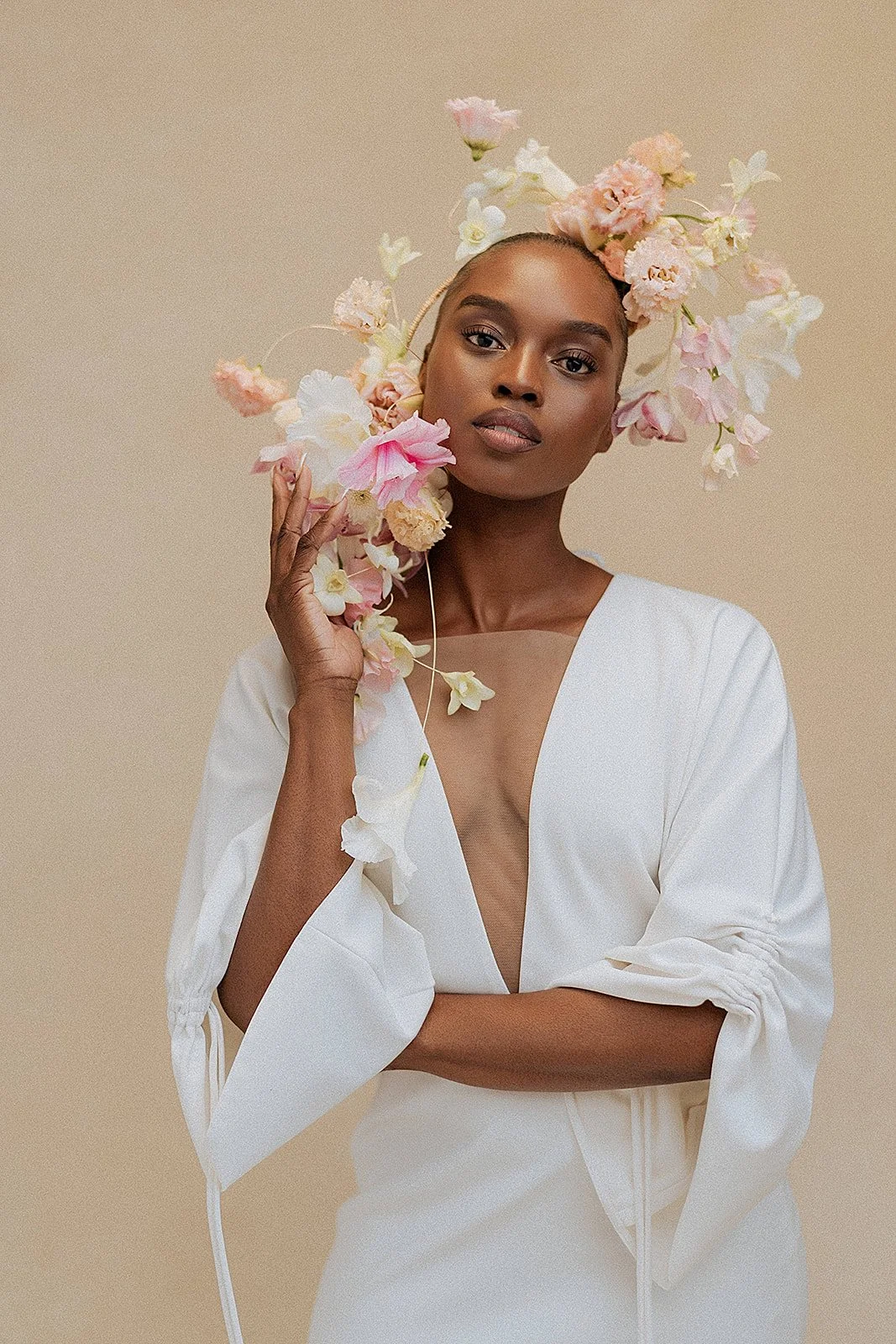
Every skin tone. Every subject. One backdrop that flatters them all. Shop warm neutral canvas backdrops at chasingstone.com.
What Size Backdrop Do You Actually Need for Headshots?
Size selection for headshot work is more straightforward than most portrait photography because headshots involve tight framing. You're shooting head-and-shoulders or head-to-waist. You're not photographing full-length poses, groups, or movement.
The 5x8 Sweet Spot
A 5x8 foot backdrop handles the vast majority of headshot work comfortably. At standard headshot shooting distances of 4-6 feet between subject and camera, a 5x8 provides ample coverage for head-and-shoulders and three-quarter compositions with room to spare. Your subject can shift, gesture, and move naturally without any risk of the backdrop edge creeping into frame.
The 5x8 also has practical advantages for corporate on-site work. It's lighter than larger formats, which matters when you're loading gear into an elevator and setting up in a conference room. It fits through standard doorways while rolled. And it occupies less floor space during setup, giving you more flexibility in cramped office environments.
For on-site headshot work, the 5x8 is my recommendation for most photographers. If you want a deeper look at how backdrop sizing works across different photography contexts, our Photography Backdrop Buying Guide breaks down every size option and their ideal use cases.
When to Go Bigger
There are situations where an 8x10 makes sense for headshot work. If your headshot sessions also include three-quarter and full-length standing poses (common for executive portraits and personal branding work), the larger canvas gives you that flexibility. If you're shooting in a studio where the backdrop stays mounted permanently, the extra coverage means you never worry about framing. And if you offer both headshots and other portrait services from the same backdrop, the 8x10 serves double duty across your business.
The 8x14 is rarely necessary for pure headshot work. If you're photographing individuals only, the additional height and width is coverage you'll never use. Save the 8x14 for group portraits, bridal work, and full-length fashion, or if you're building a studio system where one backdrop serves every session type. Our guide to building a permanent studio backdrop system covers how to set up multi-backdrop systems that accommodate headshots alongside other portrait work.
On-Site Corporate Sessions: The Logistics Nobody Talks About
The most profitable headshot work happens at the client's location. Companies will pay a premium for a photographer who shows up at their office, sets up efficiently, photographs the team with minimal disruption, and clears out without leaving a trace.
This is where your backdrop choice has enormous practical impact that extends beyond how the photos look.
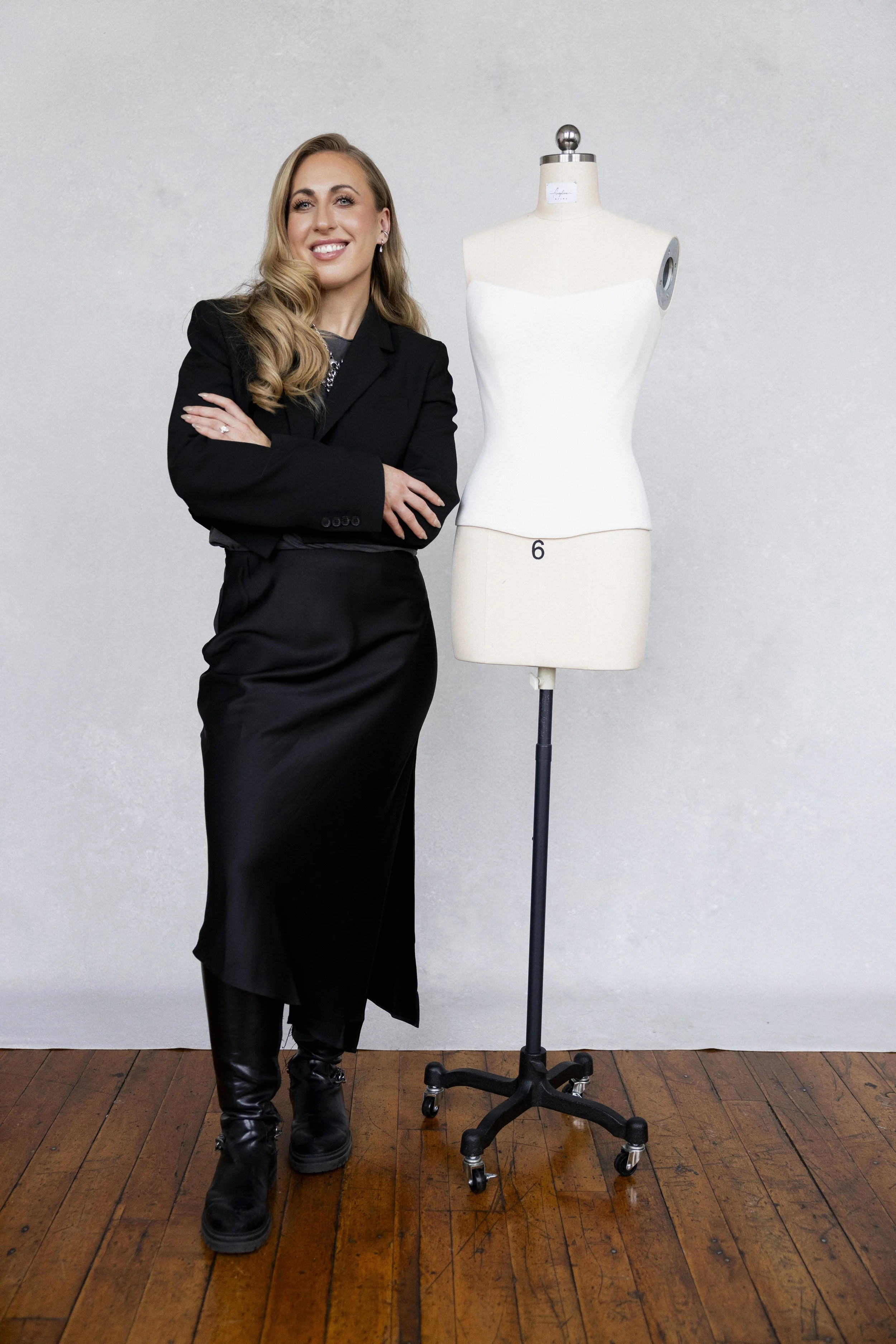
Personal branding clients want something that feels like them. A textured neutral backdrop gives every subject a foundation that looks intentional without competing with their personality.
Setup Time Is Money (Yours and Theirs)
Corporate clients are watching the clock. They've blocked conference room time, coordinated employee schedules, and assigned someone from HR to manage the flow. If your setup takes 30 minutes, you're eating into shooting time and making everyone wait.
Canvas backdrops set up faster than any alternative. You roll it out, hang it from a stand system or tape the top edge to a wall, and you're shooting. No steaming wrinkles out of muslin. No taping down curling seamless paper. No wrestling with a collapsible reflector backdrop that wants to fold itself back up. For corporate on-site work, the time between walking into the conference room and firing the first frame should be under ten minutes. Canvas makes that realistic. Our backdrop setup guide walks through the complete process, but the short version is that canvas arrives ready to shoot. No prep, no treatment, no hoping the wrinkles fall out before the first subject arrives.
Surviving the Conference Room
Conference rooms are terrible shooting environments. Fluorescent overhead lighting with green color casts. Low ceilings that prevent you from raising your backdrop high enough. Windows on one side creating mixed lighting. A table that needs to be moved. Chairs that get in the way. Outlets that are on the wrong wall.
You can't control most of these variables. But you can control your backdrop, which becomes the one element in the room that photographs professionally regardless of everything else happening around it. When the overhead fluorescents cast a sickly green onto the walls and furniture, your backdrop maintains its intended color because you're lighting it independently. When the room's beige walls would create a forgettable background, your hand-painted surface provides the subtle texture and warmth that separates a professional headshot from a webcam photo.
For a detailed walkthrough of setting up backdrops in tight, unpredictable venue spaces, see How Wedding Photographers Use Hand-Painted Backdrops Successfully. The venue challenges wedding photographers face (cramped rooms, bad lighting, time pressure) are identical to what headshot photographers encounter at corporate offices.
The Flow: Moving People Through Efficiently
High-volume corporate headshot sessions require a system. You'll photograph anywhere from 10 to 100+ people in a single day, with each person getting 5-10 minutes in front of your camera. At that pace, you need a backdrop that performs identically from the first subject at 8 AM to the last subject at 5 PM.
Paper backdrops degrade over the course of a day. Scuff marks from shoes appear. The surface gets touched, smudged, and worn. By afternoon, you're cutting fresh paper and hoping the new section matches the morning's footage. Canvas handles full-day sessions without any degradation. There's nothing to scuff, nothing to tear, and nothing to replace mid-day. The backdrop at hour eight looks exactly like it did at hour one.
This durability also means you travel lighter. One canvas backdrop replaces the multiple rolls of paper you'd need for a full-day session. Less gear means faster load-in and load-out, which means a smoother experience for the client and less physical strain on you. And for proper long-term care, our backdrop cleaning and maintenance guide covers everything you need to keep your investment performing across hundreds of sessions.
Lighting Headshots on Textured Backdrops
One concern photographers raise about textured backdrops for headshot work is whether the texture becomes too prominent, too distracting, too present. This is a legitimate question with a simple answer: lighting control and subject distance.
Subject-to-Backdrop Distance
Headshot photographers should position their subject 4-6 feet in front of the backdrop. At this distance, shooting with a portrait lens in the 85mm to 135mm range at apertures between f/2.8 and f/4, the backdrop texture softens into a pleasant, dimensional blur. You see warmth and subtle tonal variation without being able to identify individual brushstrokes. The effect reads as "professional studio environment" rather than "canvas painting."
If you push the subject closer (2-3 feet), the texture sharpens and becomes more visible. That's not necessarily wrong. For creative headshots and personal branding work, visible texture adds an artisanal quality that distinguishes your work from the flat, sterile look of seamless paper. But for conservative corporate clients, more distance equals more softness, which equals a more traditional headshot aesthetic.
Lighting the Backdrop Separately
When precision matters, light your backdrop independently from your subject. A separate background light (even a small speedlight with a grid) allows you to control exactly how much light hits the backdrop surface. More light flattens the texture. Less light deepens it and allows the brushwork to cast tiny micro-shadows that create dimension.
For most corporate headshot scenarios, you won't need to fuss with this. Standard portrait lighting with a key light at 45 degrees and a fill card or reflector produces beautiful results on textured canvas without any separate backdrop lighting. But if a client requests a very clean, very flat background look, adding a background light gives you that option without switching to a different surface. For a deeper understanding of how both natural and studio light interacts with hand-painted surfaces, our lighting guide covers the technical details.

The best headshot photographers know their backdrop is half the job. Chasing Stone hand-painted canvas gives you a clean, consistent surface that lets your subjects shine every single session.
Building a Headshot Backdrop Collection Strategically
If headshot photography is your primary or secondary business, you don't need a massive collection. You need one workhorse and one or two strategic alternatives.
Start Here: One Warm Neutral
Your first headshot backdrop should be a warm, mid-toned neutral that works for literally any corporate client. BENTONITE in 5x8 is the recommendation I give to every headshot photographer who asks. It handles conservative industries and creative ones. It flatters every skin tone. It photographs beautifully under both natural and studio light. And at the 5x8 size, it's portable enough for on-site work without being unwieldy.
This single backdrop will handle 80% of your corporate headshot bookings without complaint. If you only buy one backdrop for headshot work, make it this one.
Add Depth: One Cool Option
Your second backdrop should offer a different temperature. If your workhorse is warm, add something cool. SLATE provides a cool grey option that reads as modern and polished. It gives you range for clients who specifically request grey backgrounds, and it creates visual contrast when you're producing content for your own portfolio or website.
Two backdrops, one warm and one cool, cover roughly 95% of corporate headshot scenarios. You can offer clients a choice, which they appreciate, without overcomplicating your kit or your workflow.
Optional: One Mood Piece
If you want to attract personal branding clients, executive portrait work, and creative professionals alongside your corporate headshot business, a third backdrop with more personality opens doors. A deep GRAPHITE charcoal creates dramatic executive portraits. A muted LAPIS blue adds energy and modernity for tech and creative industries. Choose based on the type of clients you want to attract.
Three backdrops total. One warm workhorse, one cool alternative, one mood piece. That collection handles every headshot scenario from Fortune 500 teams to solopreneur personal branding sessions. Our portrait photography backdrop guide covers collection-building strategies across all portrait niches if your work extends beyond headshots.
The Business Case: Why Headshot Clients Are Worth Pursuing
Headshot photography doesn't just pay well per session. It generates the kind of recurring, predictable revenue that transforms a photography business from seasonal hustle to sustainable operation.
Recurring Revenue
Companies update headshots regularly. New hires need headshots within their first week. Team page updates happen quarterly or annually. Rebrands require full team re-shoots. Once you're a company's headshot photographer, you become an ongoing vendor rather than a one-time booking. A single corporate client can generate three to five sessions per year without you lifting a finger to market to them.
Referral Velocity
Corporate headshot clients refer at a rate that no other portrait niche matches. When the marketing director loves her headshot, she mentions your name at the next industry networking event. When the CEO's portrait shows up on the conference speaker page, someone from another company asks who took it. Headshot referrals happen in professional contexts where people are actively thinking about their professional image, which means the leads that come in are pre-qualified and ready to book.
Premium Pricing Justification
Companies budget differently than individuals. A family might compare your portrait session pricing to the photographer down the street. A company compares it to the cost of their marketing team spending a day coordinating headshots internally. When you show up with professional backdrops, produce consistent results across their team, and deliver files formatted for LinkedIn, website, and print simultaneously, the value proposition is obvious and the budget conversation is short.
The backdrop investment itself is easy to justify in a corporate headshot business. A single 5x8 canvas backdrop at $497 pays for itself within your first corporate session if you're charging $200-300 per person, which is standard for on-site corporate headshot work. Everything after that is pure return.
What to Deliver: File Specifications Corporate Clients Expect
This is the part most headshot guides skip entirely, but it directly affects whether clients rebook. Corporate clients have specific technical requirements for their headshots, and meeting those requirements without being asked separates professionals from amateurs.
Deliver files in multiple formats and sizes. A high-resolution file (minimum 2400x3000 pixels) for print and website hero images. A web-optimized file (800x1000 pixels, under 200KB) for company directories and internal platforms. A square crop (1000x1000 pixels) optimized for LinkedIn profile photos. If you can deliver all three versions for each person without the client having to request them, you demonstrate that you understand their workflow and you've removed friction from their process.
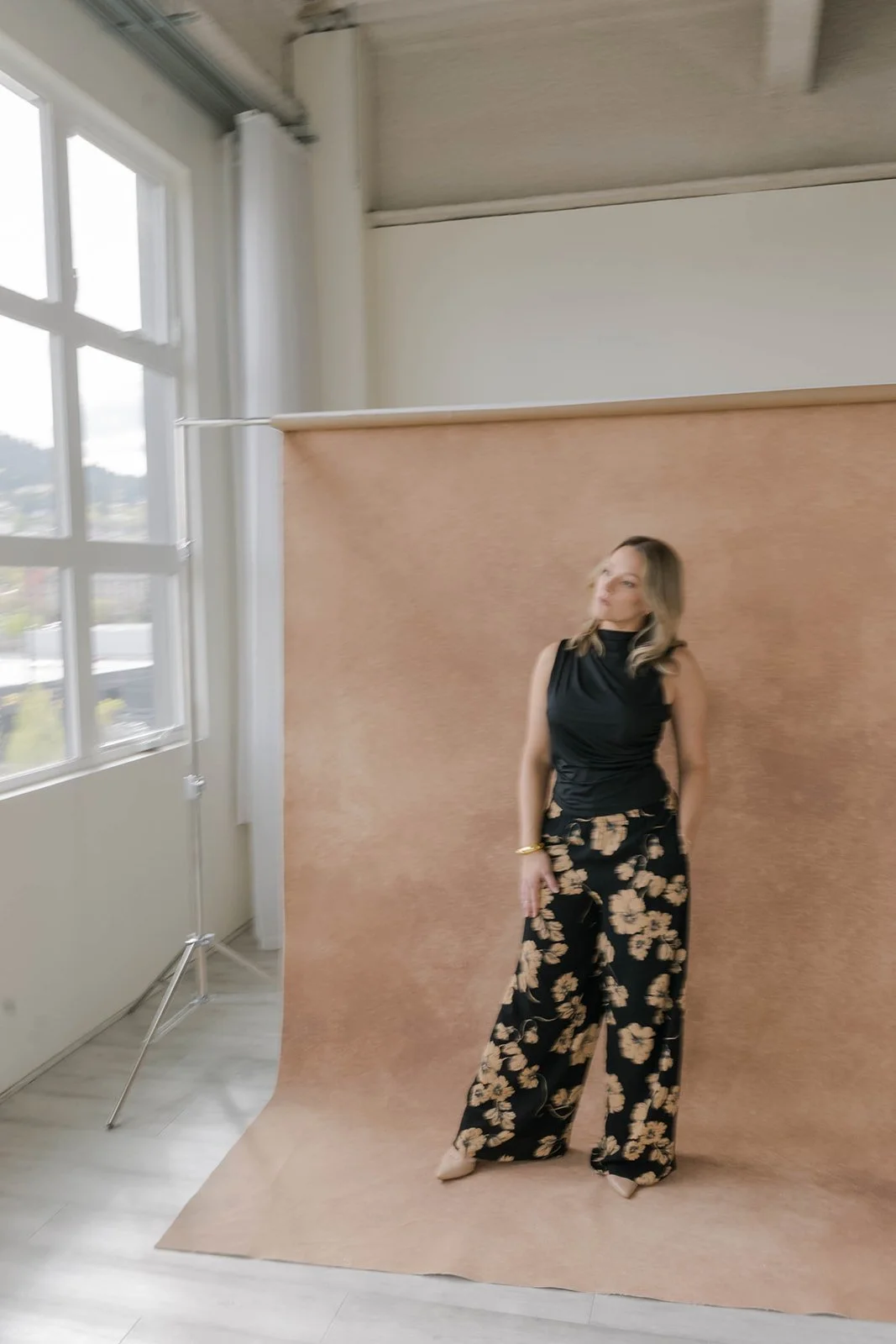
Natural light. Warm neutral canvas. No adjustments needed. This is what a Chasing Stone backdrop does for your studio sessions from the first frame to the last.
Name files using a consistent convention the client can work with. "LastName_FirstName_Headshot_2026.jpg" is infinitely more useful than "IMG_4582.jpg." If you're photographing a team of 40 people, delivering 120 files with logical naming saves whoever manages the website hours of work. They'll remember that, and they'll hire you again.
The backdrop plays a role here too. Consistent backdrop quality across all subjects means the marketing team can drop any headshot onto the website without color-correcting individual images to match. When your backdrop produces identical tones from session to session, you've just saved their designer significant post-production time. That efficiency is part of the value you're selling, even if you never articulate it directly.
Making the Shift: Adding Corporate Work to Your Existing Business
If you're currently a wedding photographer, family photographer, or generalist considering corporate headshot work as an additional revenue stream, the barrier to entry is lower than you think. You already own a camera, lenses, and lights. You already understand portraiture. The gap is having the right backdrop and understanding corporate client expectations.
Start with one warm neutral backdrop in the 5x8 size. Photograph yourself, your friends, and your family members in headshot framing to build an initial portfolio. Approach three to five local businesses and offer a discounted first session to build case studies and testimonials. Once you have five to ten corporate headshot sessions under your belt, you'll have the portfolio, the workflow, and the confidence to price competitively and market aggressively.
The photographers generating $50,000 or more annually from headshot work alone aren't doing anything fundamentally different from what you already know. They showed up consistently, delivered reliable results, and invested in the tools that make consistency possible. A professional backdrop is the most visible of those tools, the one the client sees and subconsciously associates with the quality of the experience.
Ready to book corporate headshot clients with confidence? Explore hand-painted canvas backdrops built for professional portrait work at chasingstone.com. See our full collection of backdrop colors and find the warm neutral that becomes your headshot workhorse.
Sources and Further Reading
Corporate Photography and Branding:
Hurter, B. (2007). The Best of Portrait Photography: Techniques and Images from the Pros. Amherst Media. (Professional portrait lighting ratios and backdrop-to-subject distance principles applied throughout the lighting and setup sections.)
Adler, L. (2015). The Headshot: The Secrets to Creating Amazing Headshot Portraits. New Riders. (Industry-standard reference on headshot-specific lighting, posing, and client management workflows referenced in the session flow and delivery sections.)
Color Psychology in Professional Contexts:
Eiseman, L. (2017). The Complete Color Harmony: Expert Color Information for Professional Results. Rockport Publishers. (Color temperature and emotional response research informing the warm vs. cool backdrop recommendations and industry-specific color guidance.)
Heller, E. (2009). Psychologie de la couleur: Effets et symboliques. Pyramid. (Cross-cultural color perception research referenced in the discussion of blue as trust-signaling and warm neutrals as universally approachable.)
Professional Photography Business:
Lilley, E. (2019). The Photographer's MBA: Everything You Need to Know for Your Photography Business. Peachpit Press. (Business model frameworks for recurring corporate revenue and referral-based growth strategies discussed in the business case section.)
Orlando Sydney Photography. "Professional Headshot Background Options for Corporate Teams." OrlandoSydney.com. (Corporate team headshot consistency requirements and background selection criteria for marketing managers and HR teams referenced in the consistency discussion.)
Lighting for Portrait Photography:
Hunter, F., Biver, S., & Fuqua, P. (2021). Light: Science and Magic: An Introduction to Photographic Lighting (6th ed.). Routledge. (Single-source portrait lighting, fill ratios, and managing specular reflections on textured surfaces discussed in the lighting section.)

Creators of premium photography backdrops and styling surfaces
Trusted by thousands of discerning creatives worldwide
Every piece is handcrafted with intention in Orange County, California